
A calm home isn’t just a visual thing.
It’s the feeling of walking in and not immediately needing to deal with something. It’s a kitchen surface that stays clear long enough to actually use. It’s a bedroom that feels finished, not in progress.
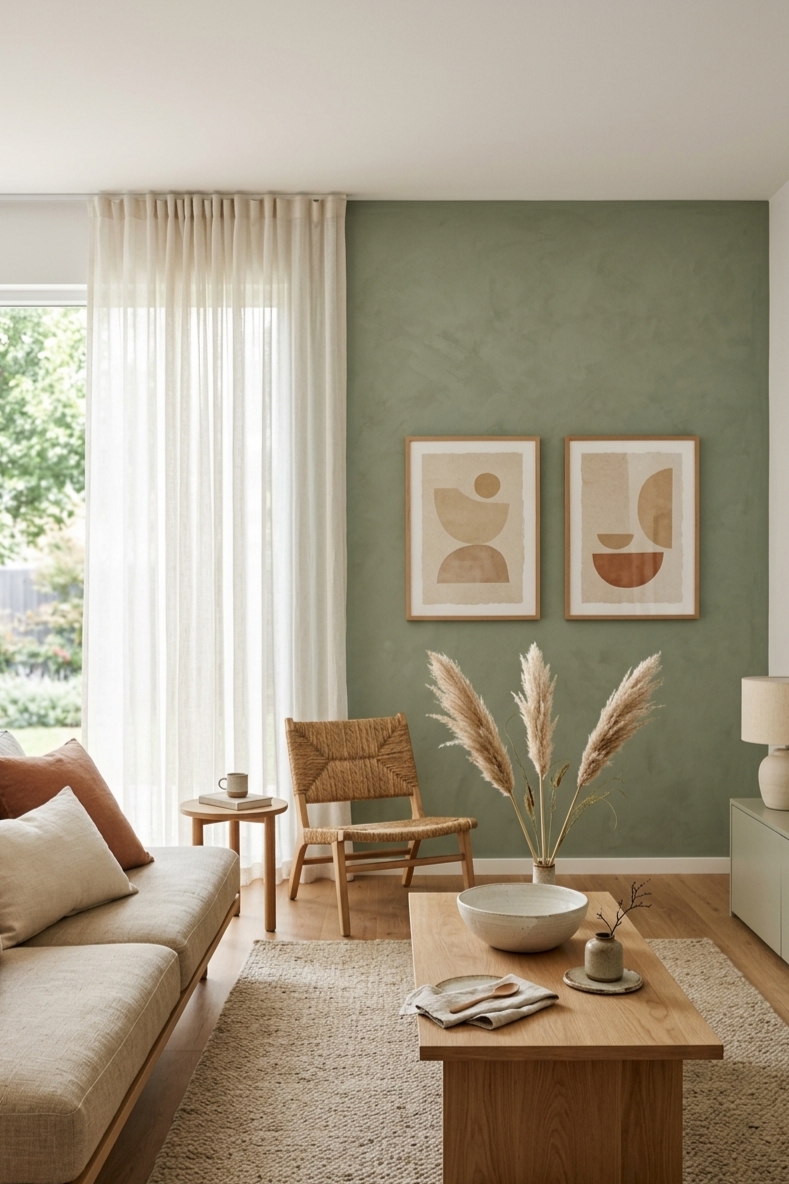
Japandi interiors get this right in a way most design trends don’t. It’s because the philosophy covers both how a space looks and how it functions. Calm aesthetics and calm systems, working together.
Here’s how to build both.
Start With Colour
Before rearranging furniture or buying anything, decide how you want the room to feel.
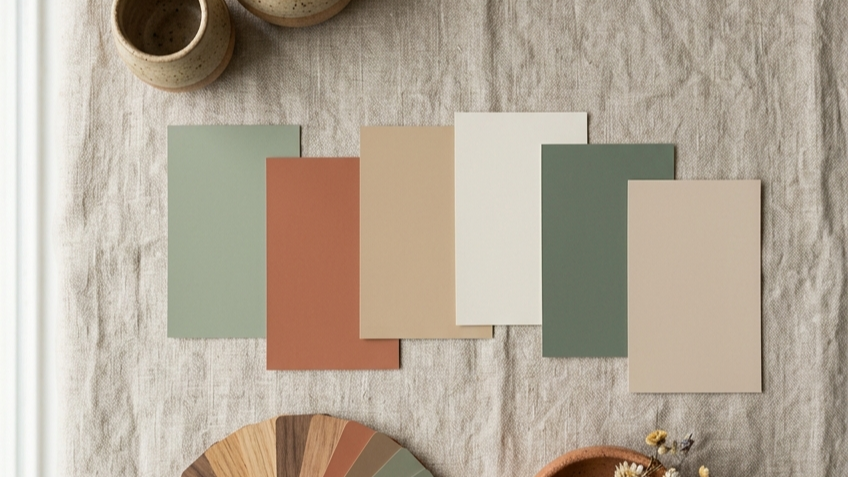
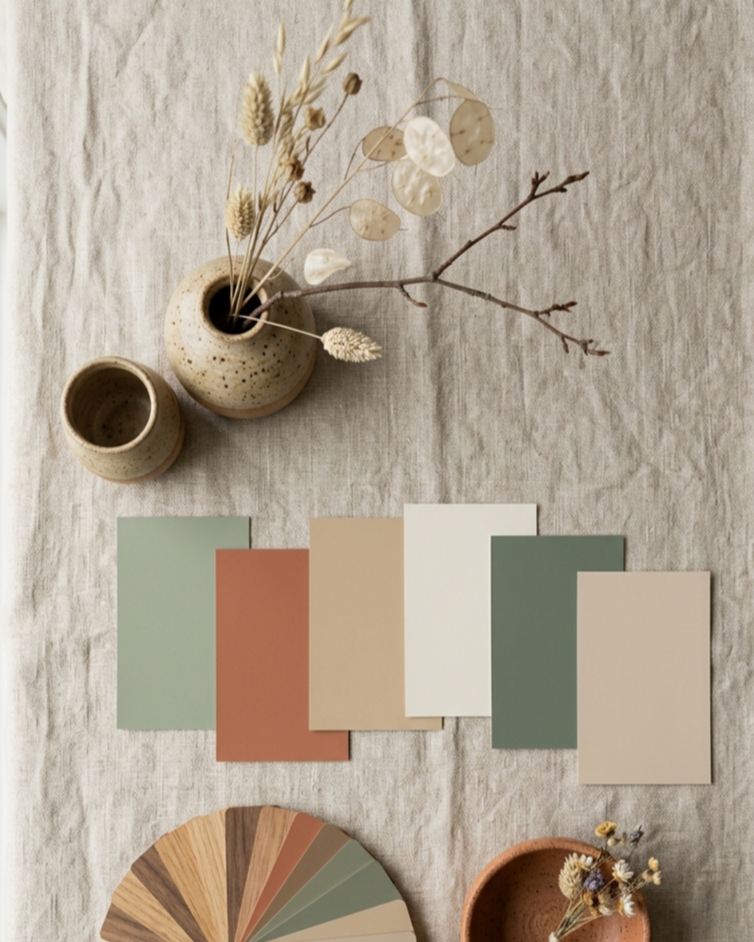
Japandi palettes are built around restraint. One dominant neutral, one or two supporting tones, and a single accent that gives the whole room a quiet pulse. Get that foundation right and everything placed inside it tends to look intentional, even if it isn’t.
The hardest part for most people is choosing colours that genuinely work together rather than colours that each seem nice on their own. This post on finding colours that actually go together covers that in detail.
If you want something more concrete to work from, the free Japandi Colour Palette Guide has 12 complete palettes — each with five named colour roles and hex codes — including a guide to the 60–30–10 rule and where each tone belongs in a room. It’s printable and worth keeping nearby when you’re making decisions.
Clear the Surfaces
A Japandi room earns its calm through what’s absent as much as what’s present.
The goal isn’t emptiness. It’s that every object on a surface has a reason to be there. The most useful shift is giving things a home that isn’t a horizontal surface. Lidded containers, organised drawers, a tray that collects the items you genuinely reach for every day.
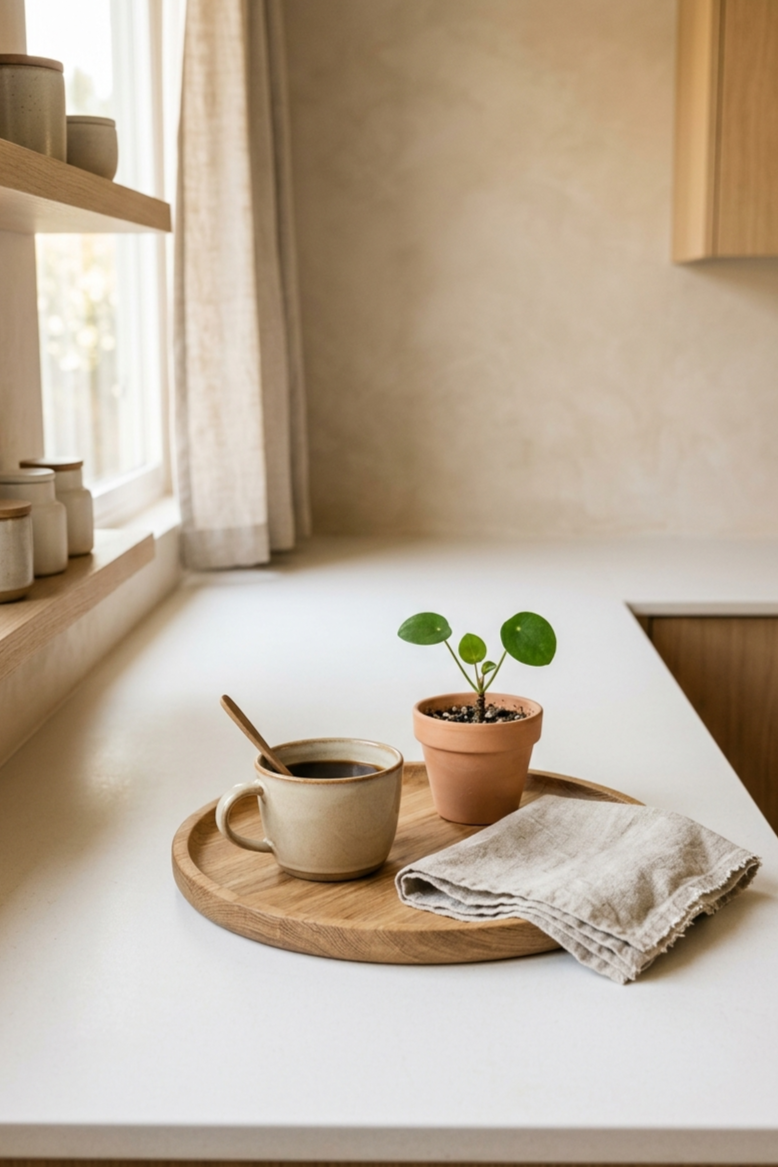
A simple tray for morning essentials does more than it looks like it should. Things feel easier when the first objects you reach for are already grouped and stable. Same with lidded containers — putting things away without having to make decisions each time reduces the low-level noise that accumulates through the day.
A minimalist serving tray in shared spaces works similarly, giving visual order to areas that tend to collect things gradually.
For more on this, the post Why Some Homes Always Feel Temporary goes into what actually makes a home feel settled rather than still in progress.
Plan the Home, Not Just the Look
A calm-looking room that runs on friction isn’t really calm.
The homes that feel easy to live in are usually the ones with a quiet system underneath. A place where information lives, where weekly rhythms are tracked without having to hold everything in your head.
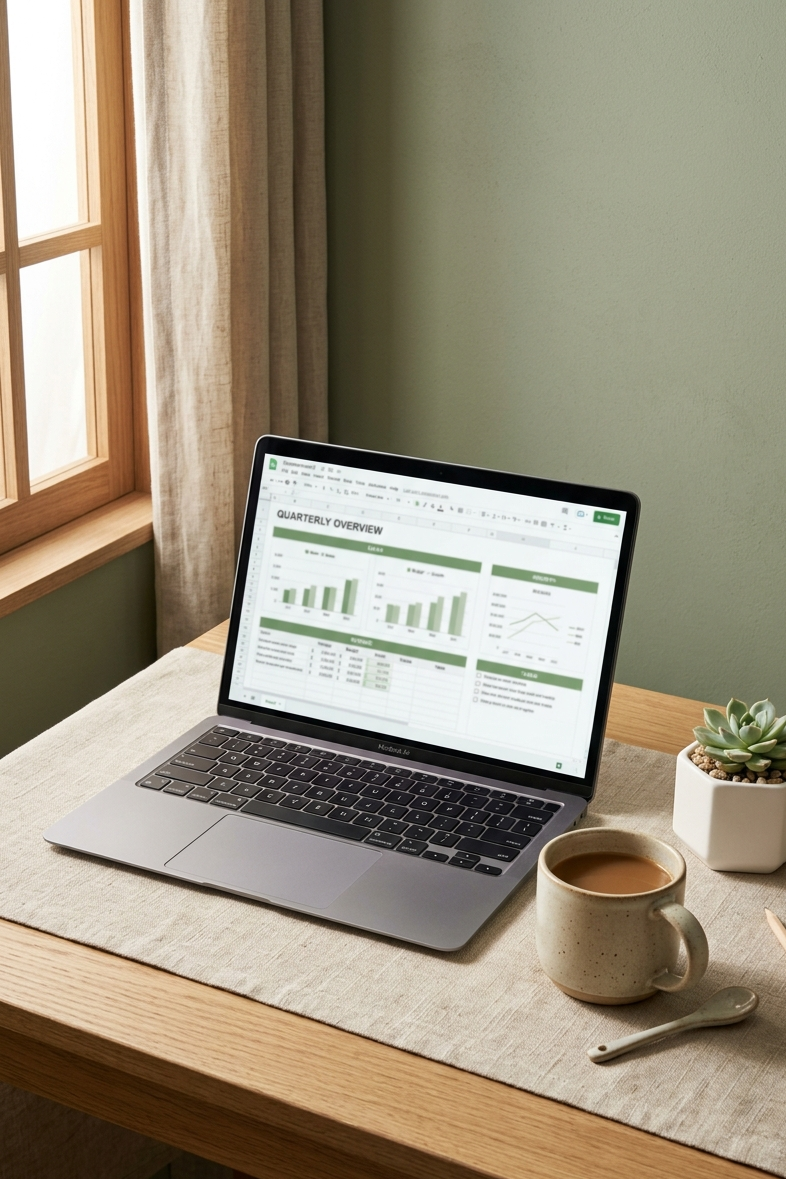
A household dashboard that covers budgets, shopping lists, cleaning schedules, and routines in one place makes that possible without any effort once it’s set up. The Calm Home Household Dashboard for Google Sheets from the shop is built for exactly this — eight connected tabs, auto-updating formulas, ready to use.
If you have young children, a separate Nursery Planner Spreadsheet tracks everything from feeding schedules to baby shopping checklists in the same calm, minimal format.
These aren’t dramatic systems. They’re the kind that you set up once and then forget about — which is exactly the point.
Let the Walls Do Quiet Work
Once the surfaces are clear and the systems are in place, the walls become something you actually notice.
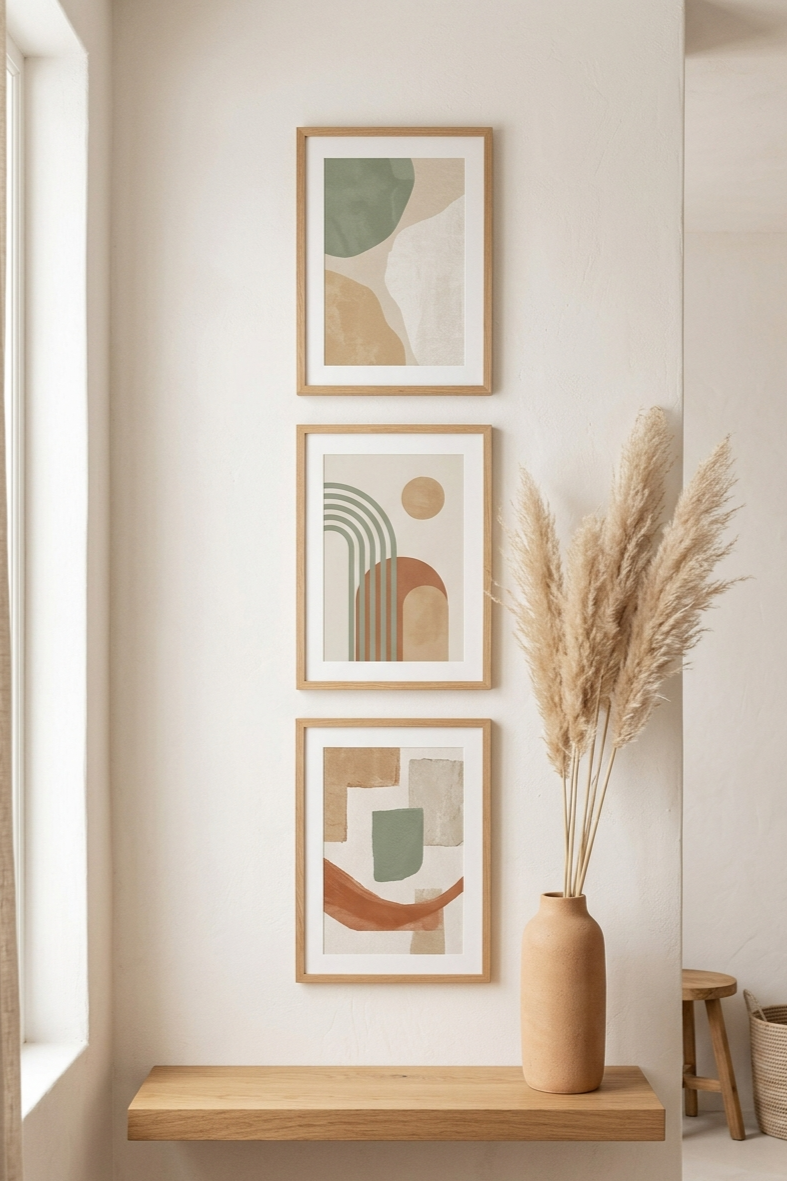
Japandi wall art works best as a finishing note rather than the main event. Something that confirms the feeling the room already has rather than trying to create it on its own. Organic shapes, layered landscapes, botanical line art. Nothing that demands attention, but everything that rewards it.
The 7 Interior Design Rules That Instantly Make a Home Feel Calm covers how art placement, proportion, and negative space interact — worth reading before hanging anything.
A few pieces from the Peaceful Mind Living shop were designed around these ideas specifically — sets that work as a triptych or individually, in palettes that match the Japandi colour guide above.
Evening Is Where It’s Tested
A home that feels calm in the morning but chaotic by evening hasn’t fully solved the problem.
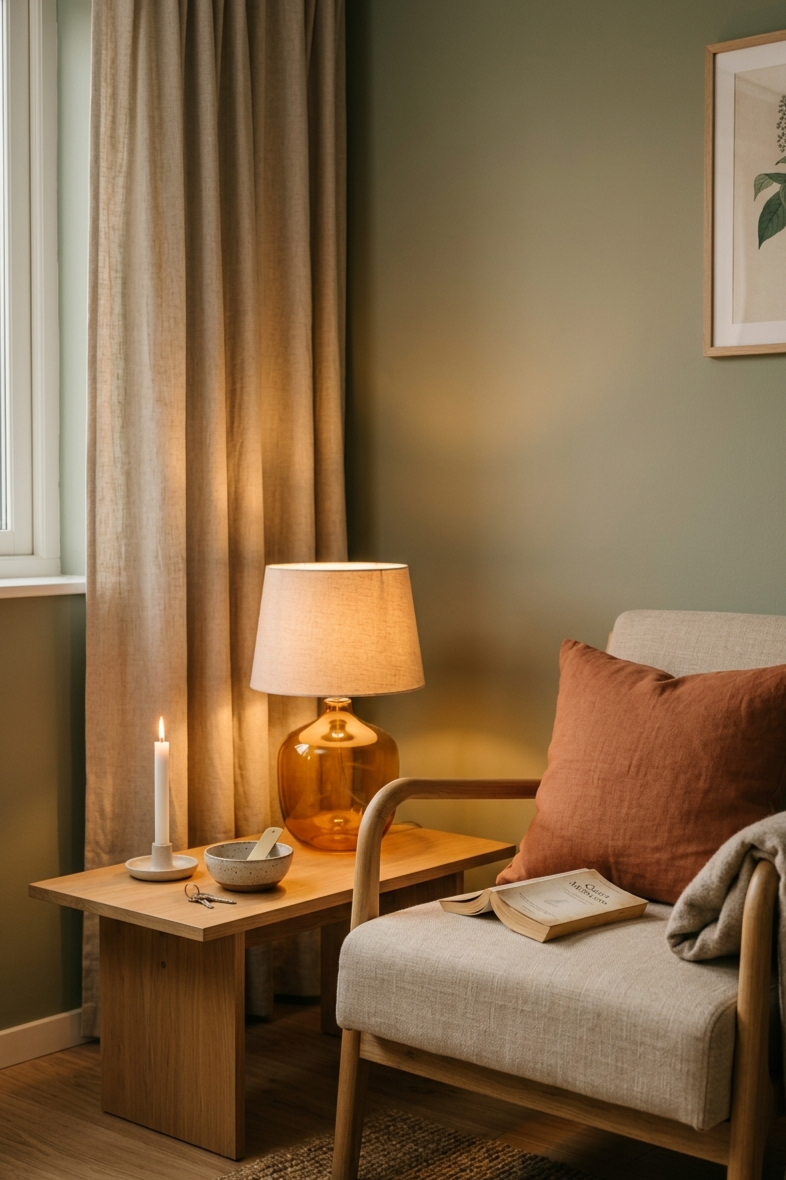
Lighting is the most underrated part of this. Switching off overhead lights and moving to softer lamp light in the evening changes the feeling of a room more quickly than most physical changes. Linen or blackout curtains that block outside light help the room feel finished rather than still open to whatever’s outside.
For a smaller-scale version of this, the post on how to create a calm corner at home is a good place to start, one corner that consistently feels settled tends to anchor the rest of the space.
A calm home is built in layers. Colour first, then surface habits, then the systems that keep it from unravelling, then the details that make it feel considered. None of it has to happen at once.
The page A Few Things That Help at Home collects the specific objects that quietly support this kind of daily rhythm, if you’re looking for somewhere to start.
This post contains affiliate links. If you purchase through them, I may earn a small commission at no extra cost to you.