
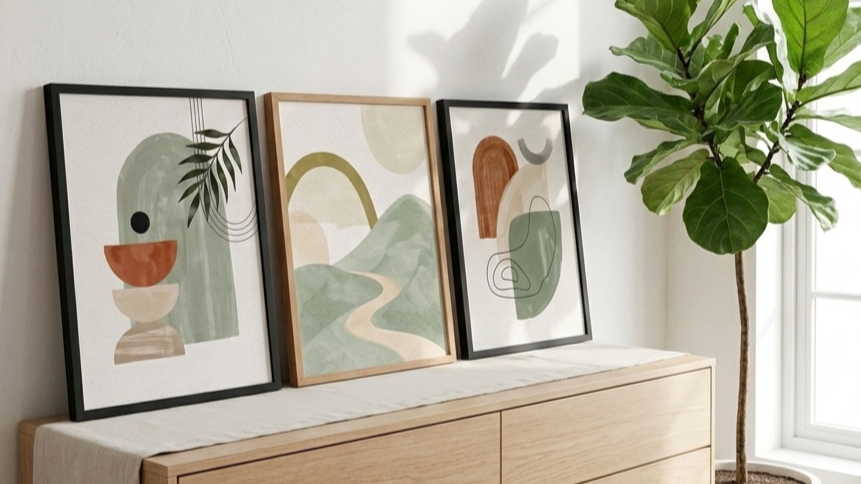
Japandi interiors have become popular for a simple reason. They feel calm. The style blends the warmth of Scandinavian design with the simplicity and balance of Japanese interiors. The result is a home that feels minimal but still warm and lived in.
Wall art plays an important role in creating that atmosphere. Too much decoration breaks the calm feeling, but empty walls can make a room feel unfinished. Japandi wall art sits somewhere in between. It tends to use neutral colours, natural shapes and simple compositions that add interest without overwhelming the space.
If you’re decorating a Japandi inspired room, here are several wall art ideas that work beautifully with this aesthetic.
Abstract Neutral Art
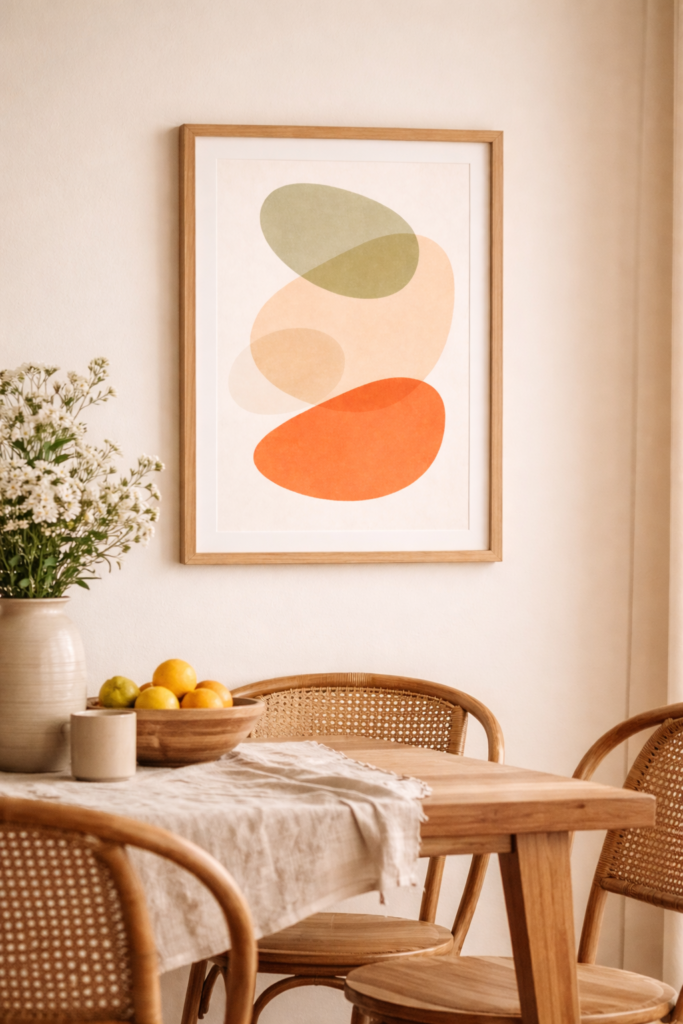
One of the easiest ways to decorate a Japandi wall is with abstract art in soft neutral colours. Think beige, warm white, sage green, clay or muted brown tones. These colours echo natural materials like wood, stone and linen, which are common in Japandi interiors.
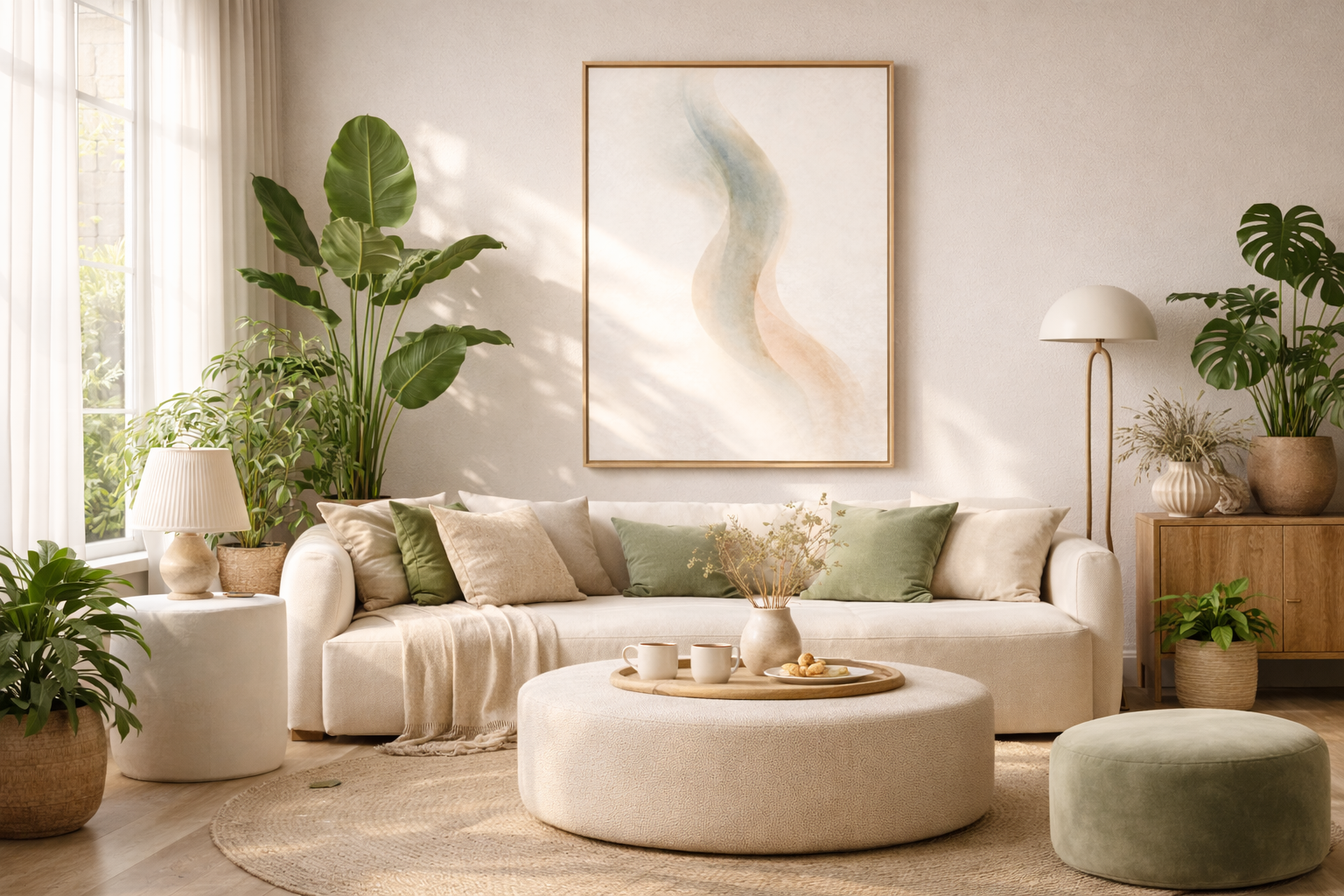
Abstract prints work well because they add visual texture without creating clutter. Soft shapes, layered colour blocks and gentle brush textures can make a room feel more interesting while still keeping the calm atmosphere intact.
This kind of artwork works especially well above a sofa, bed or console table where you want a focal point that still feels relaxed.
Japandi Wall Art Sets
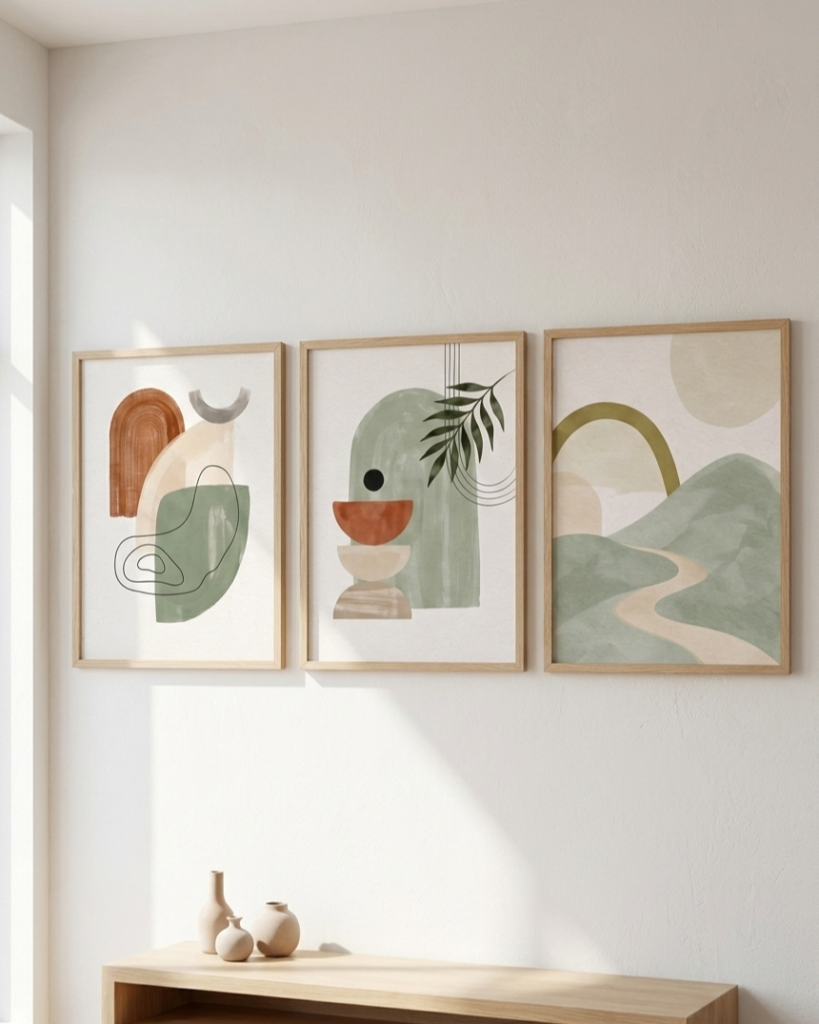
Instead of one large artwork, many Japandi homes use sets of two or three prints arranged together. A small gallery wall keeps the composition balanced and minimal while still giving the space a designed look.
Sets often work best when the prints share a similar colour palette. For example, a trio of neutral abstracts or organic shapes can feel cohesive and calming. Keeping the frames simple also helps maintain the minimalist aesthetic.
If you’re creating a gallery wall, leaving a little breathing space between the prints helps keep the arrangement light and uncluttered.
Organic Shapes and Natural Forms
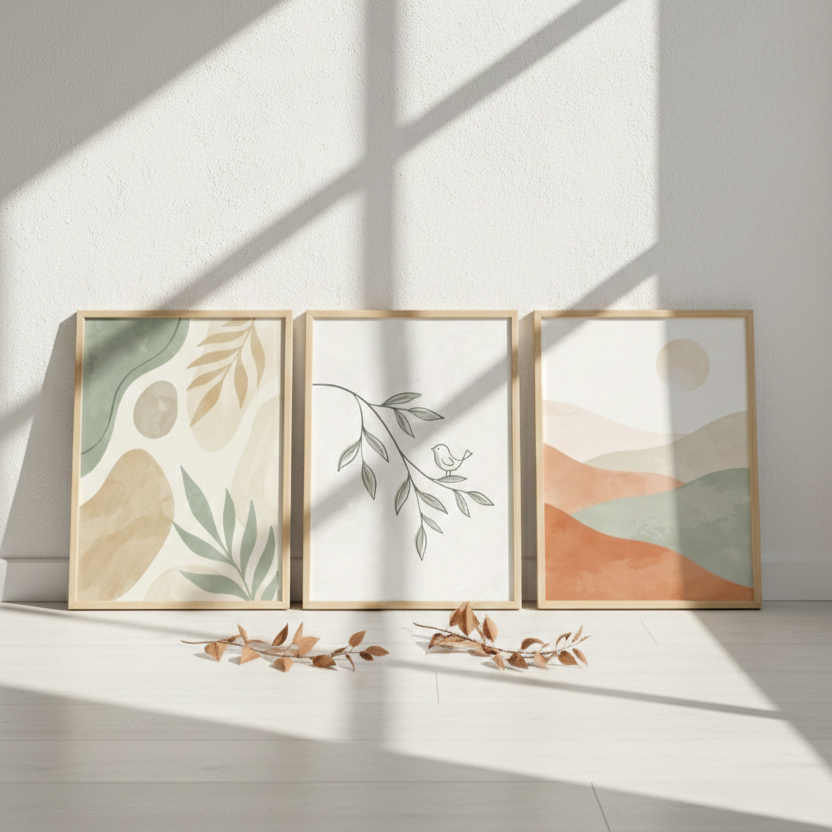
Another idea that works beautifully with Japandi decor is artwork that references natural forms. This might be soft curved shapes, stone-like textures or simple silhouettes inspired by leaves and plants.
Japandi design often focuses on nature and organic materials, so artwork that echoes those shapes fits naturally into the space. These pieces feel calm and grounded, especially when paired with wooden frames or light oak furniture.
Placed above a bed or sideboard, this type of art adds character without distracting from the simplicity of the room.
Soft Green and Earth Tones
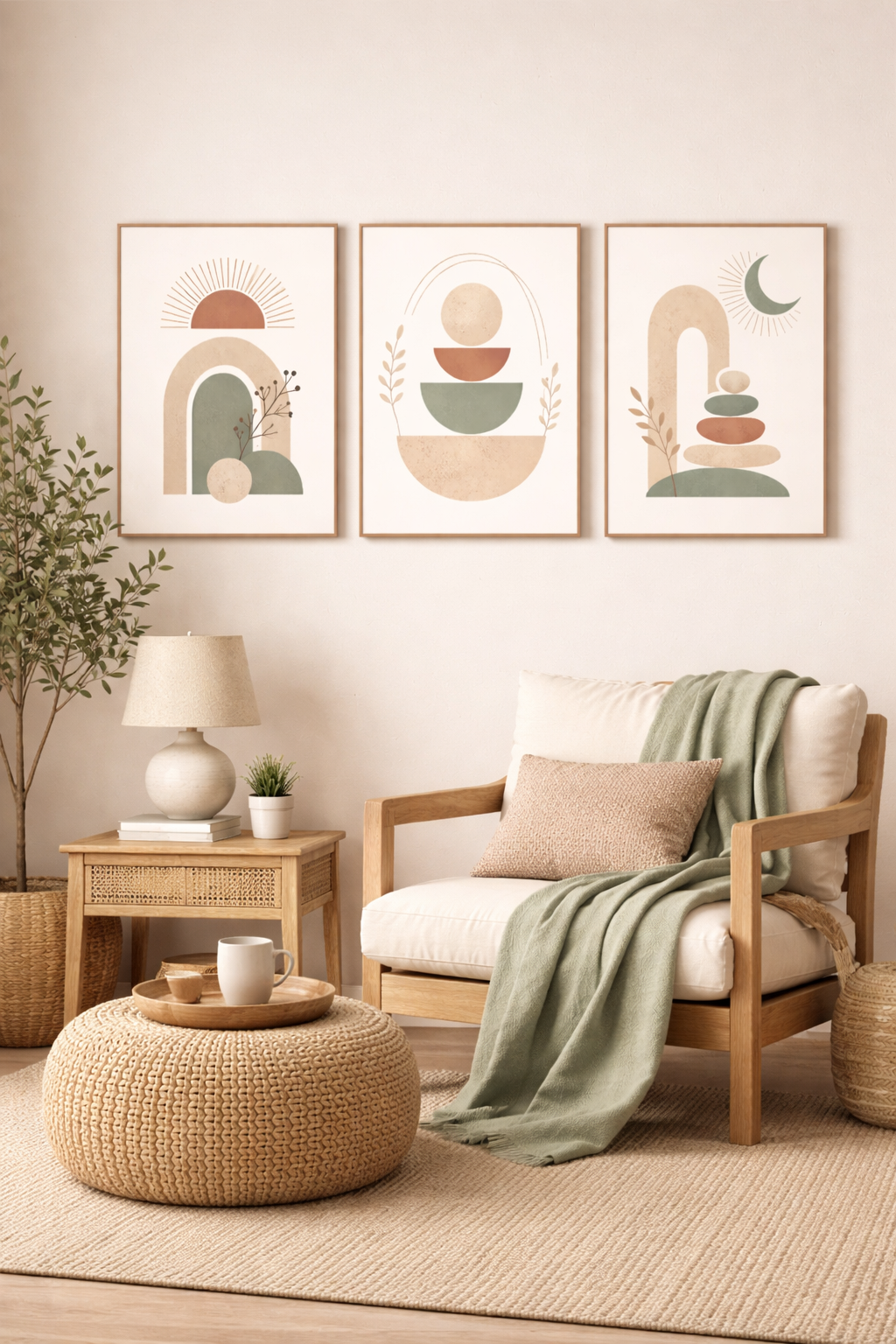
Soft green has become one of the most popular colours in Japandi interiors. Sage, olive and muted green tones pair beautifully with wood, linen and neutral walls.
Artwork that incorporates gentle green shades can subtly tie the room together, especially if there are plants or natural materials in the space. It brings a sense of calm and nature indoors without feeling bold or overpowering.
Even a small amount of colour can make a minimalist room feel more layered and thoughtfully designed.
A Simple Free Printable for Nursery Spaces
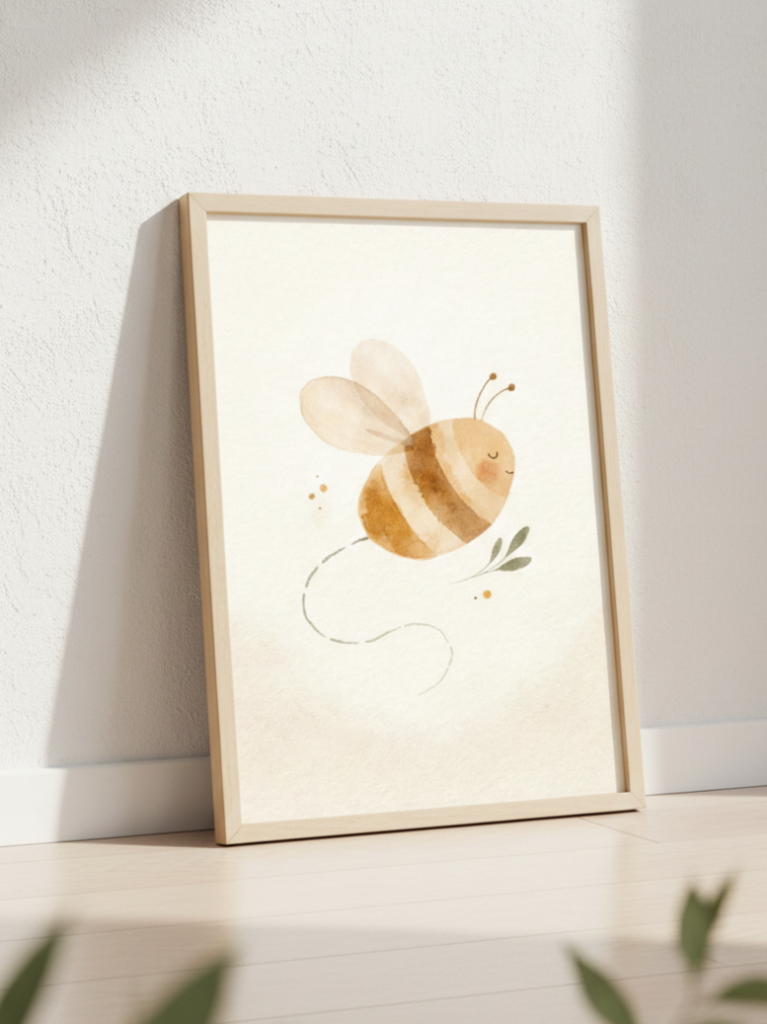
While Japandi style is often used in living rooms and bedrooms, it can also work beautifully in a nursery. Soft colours, natural materials and minimal decoration create a calm environment that feels peaceful for both parents and babies.
If you’re decorating a nursery with a neutral or minimalist look, you might enjoy this free printable wall art designed specifically for calm nursery spaces. It follows the same soft colour palette and simple style that works so well with Japandi inspired interiors.
You can download the free printable here:
Free printables are also a great way to try out a style before committing to a full gallery wall.
Choosing the Right Frames
Frames can make a big difference in how artwork fits into a Japandi room. The goal is usually to keep things simple and natural.
Light oak frames are one of the most popular choices because they match the warm wood tones often used in Japandi furniture. Black frames can also work well, especially when paired with line art or very minimal prints.
Avoid overly decorative frames. Clean lines and natural materials keep the focus on the artwork itself and maintain the calm atmosphere of the space.
Creating a Calm Wall Composition
When arranging wall art in a Japandi room, less is usually more. One large print or a balanced set of two or three pieces often feels more intentional than filling a wall with many small frames.
Spacing also matters. Leaving a little empty space around the artwork helps the wall feel calm and breathable, which is a key principle in both Japanese and Scandinavian design.
The goal isn’t to fill every part of the wall. It’s to create a focal point that quietly complements the rest of the room.
Final Thoughts
Japandi wall art works best when it follows the same principles as the rest of the style. Simple forms, natural colours and thoughtful placement can transform a plain wall into something that adds warmth and calm to a space.
Whether you choose a single abstract piece or a small gallery wall of coordinated prints, the key is keeping the composition balanced and uncluttered. A few well chosen pieces can make a room feel complete while still maintaining the peaceful atmosphere that makes Japandi interiors so appealing.