

(This post contains affiliate links. As an Amazon Associate, I earn from qualifying purchases at no extra cost to you.)
There is a particular kind of low-level tension that has nothing to do with how a room looks.
The space is considered. The palette works. The surfaces are clear and the proportions feel right. And yet something is still running quietly in the background. A faint sense of things unresolved. Tasks without a home. Decisions deferred to later, which never quite arrives.
Most decorating advice has nothing to say about this. Because it is not a decorating problem.
Two kinds of calm
A home can be visually calm and functionally chaotic at the same time.
Visual calm is what happens when colours are quiet, surfaces are clear and the materials in a room have a kind of harmony with each other. It is the kind of calm that photographs well and that most home decor advice is designed to help you achieve.
Functional calm is different. It is what happens when the home more or less runs itself — when you know where things stand with the budget, when the maintenance doesn’t pile up invisibly, when the week’s meals aren’t being decided in a tired rush on Wednesday evening.
One is about how the home looks. The other is about how much space the home takes up in your head.
Both matter. Most of the time, people work hard on the first and let the second slide.
The invisible weight
There is a certain kind of mental overhead that comes specifically from running a home — and it lives in the background in a way that is easy to underestimate.
The appliance that needs a service but has no date in the diary for it. The bill that is probably fine but you are not entirely sure you did not miss it. The subscription you think you cancelled. The things that accumulate in a kind of soft mental list with no clear home, which means they never quite get resolved and never quite go away.
This is not anxiety in any clinical sense. It is just the low hum of things that need tracking and don’t have a container.
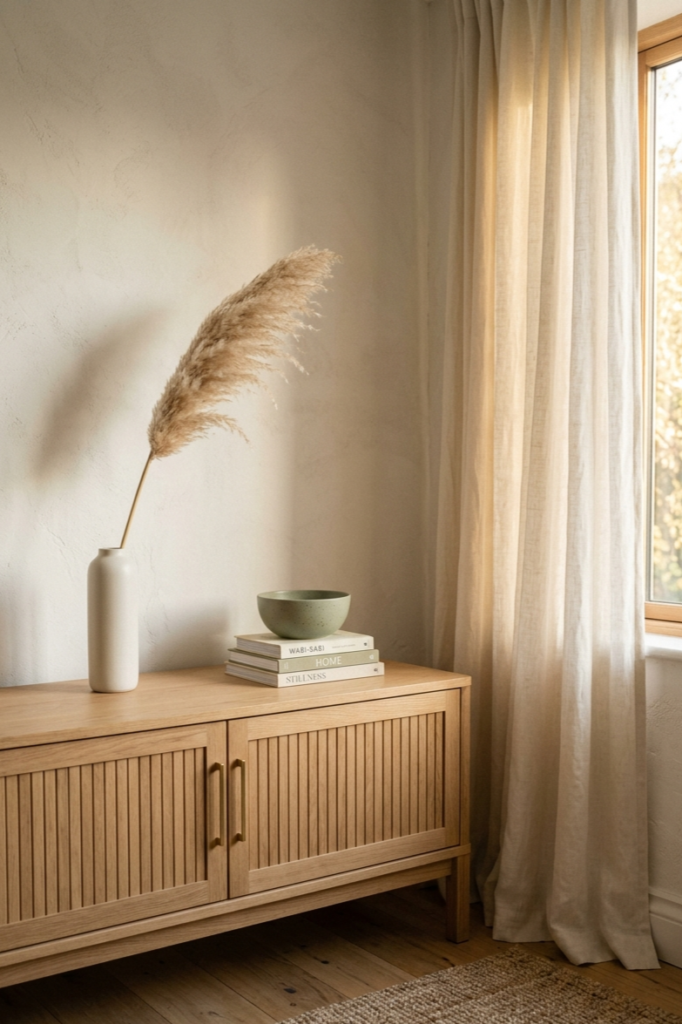
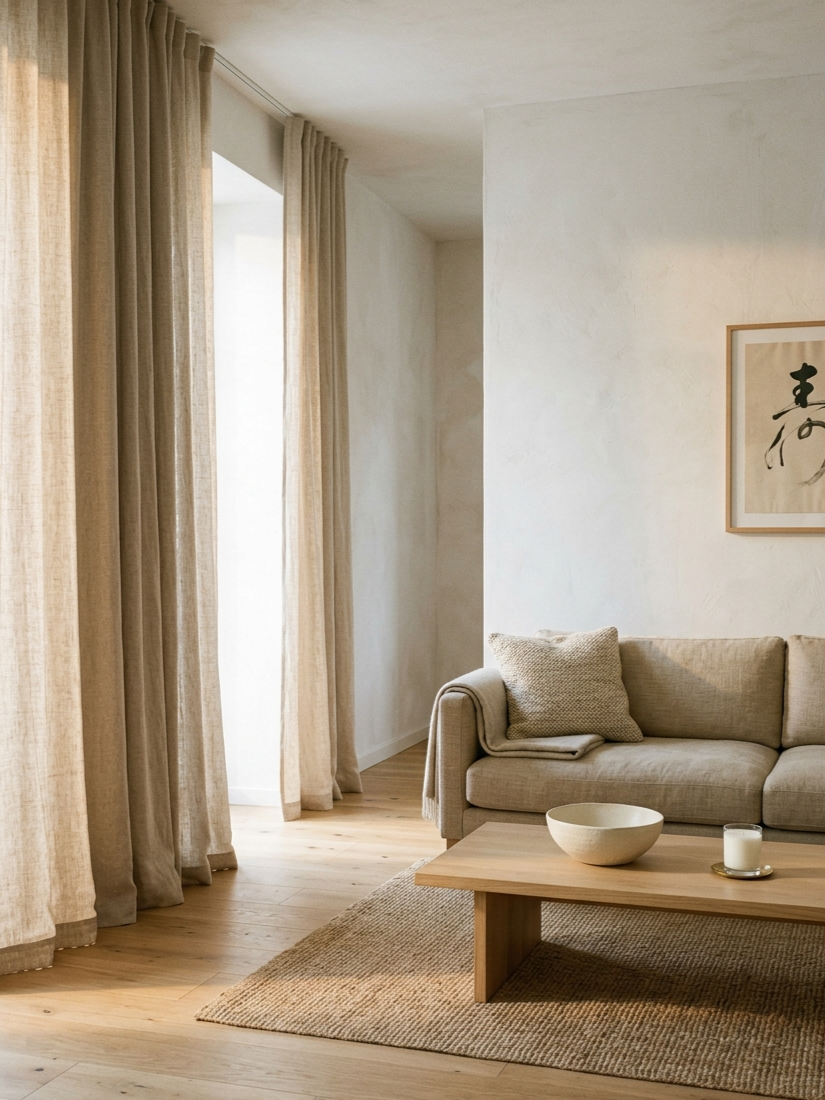
A beautifully styled room sits inside that hum. The candles are right and the cushions are considered and the linen curtains filter the morning light correctly, and in the background, the filter change is overdue and the grocery list lives in four different places and nobody is quite sure when the boiler was last serviced.
The room looks calm. It does not feel calm.
What a system does
The word system tends to suggest something clinical. Spreadsheets and productivity culture and the kind of relentless optimization that is exactly the wrong energy for a home that is supposed to be restful.
That is not what this is.
A simple household system is less like a productivity tool and more like a clear surface. It is not there to make you more efficient. It is there to give things a place to live so they stop living in your head.
When the maintenance schedule exists somewhere and the budget has a structure and the grocery list builds itself as the week’s meals take shape — the background hum quiets. Not because everything is perfect, but because everything has a container. There is a place to look when you need to know something, and a place to put things when they come up, and that is genuinely most of what the system needs to do.
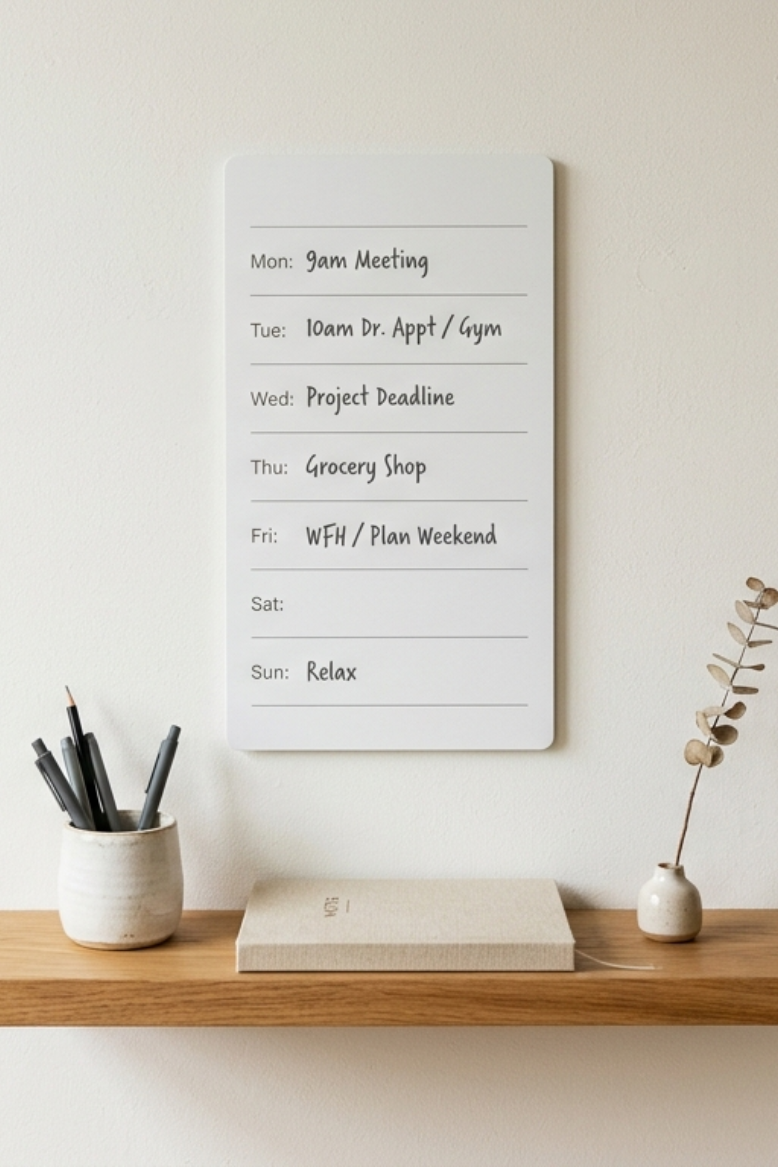
A wall-mounted weekly planner in the kitchen does a version of this for some households — the week visible at a glance, meals and tasks in one place, legible to whoever needs to see it. A simple notebook kept in one consistent place does it for others. The format matters less than the habit of having one.
The maintenance problem specifically
Home maintenance is the category that slips most silently.
Cleaning is visible — the room tells you when it needs attention. Finances have consequences that make themselves known. But maintenance sits in a different register. The filter that was supposed to be changed three months ago does not announce itself. The boiler service that is technically overdue does not create a mess. The smoke alarm with a dying battery usually announces itself at 3am.
Most of it is not urgent until it suddenly is, which is why it tends to not get done until something breaks or costs more than it should have.
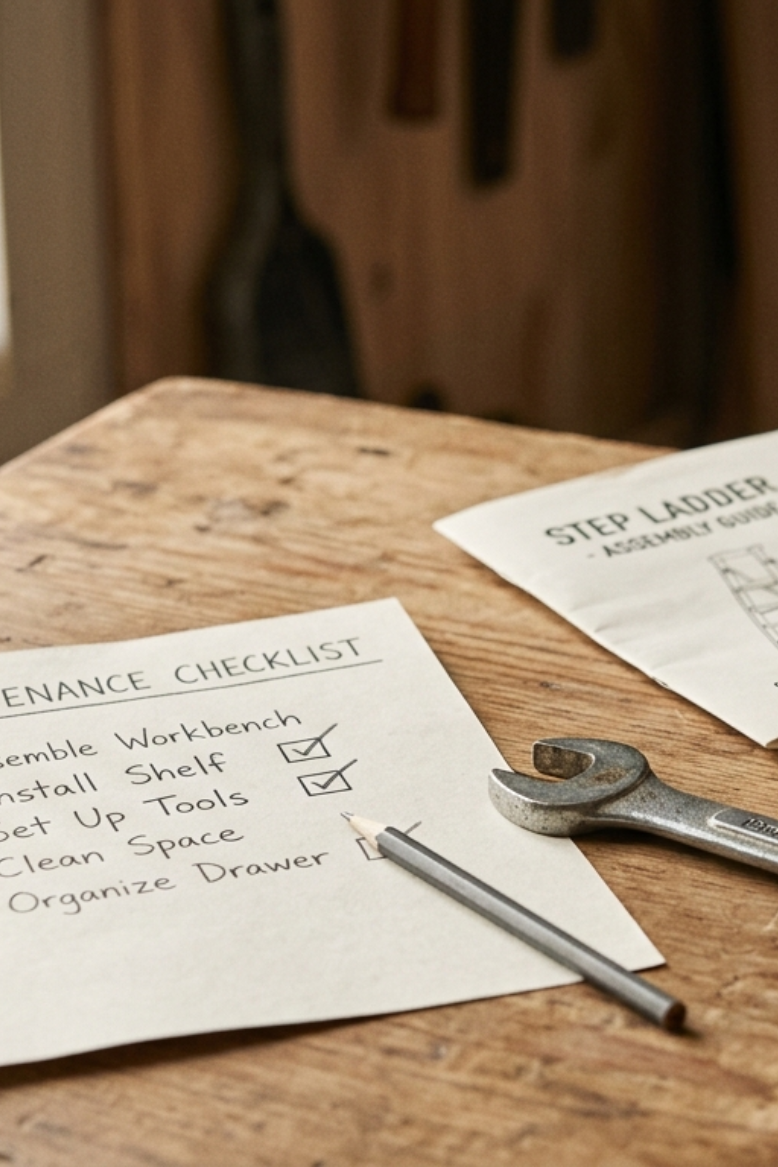
A simple checklist on the fridge handles some of this for smaller households. For anything more involved — appliances, HVAC, gutters, plumbing checks — having the items written down with dates attached is the only approach that actually works across the whole household. The list does not need to be complicated. It needs to exist somewhere you will actually look at it.
The budget problem
Financial background noise is its own category.
This is not about budgeting in the way financial advice means it — allocating percentages and tracking every coffee. It is about having a rough picture of where things stand. Whether the month is within range. Whether the subscriptions are still the ones you chose or have grown quietly into something else.
The households where this runs most smoothly tend to have one place where the numbers live, updated with enough regularity that the picture is roughly current. Not obsessively monitored — just not lost.
A weekly planning pad that includes a budget section keeps this in frame for some people. Others prefer a digital tool. The important thing is that it is not spread across three apps, a notes document, and a rough mental sense of things that turns out to be slightly wrong every month.
What one place does to the feeling of a home
There is a specific relief that comes from closing a tab.
Not the browser tab — the mental one. The task that was living in the back of your mind as a vague obligation, which is now written down somewhere real and dated and assigned to a specific time. The moment it is outside your head and inside a container, the background hum drops a register.
A home that has one place for the functional layer — budget, cleaning, maintenance, meals, calendar, all of it visible together — tends to feel different to inhabit than one where those things are scattered. The visual calm of the rooms is not undermined by the invisible friction of things unmanaged.
This is the layer that most home decor advice skips, because it is harder to photograph and more difficult to describe. But it is also, for many people, the layer that makes the larger difference to how a home actually feels to live in day to day.
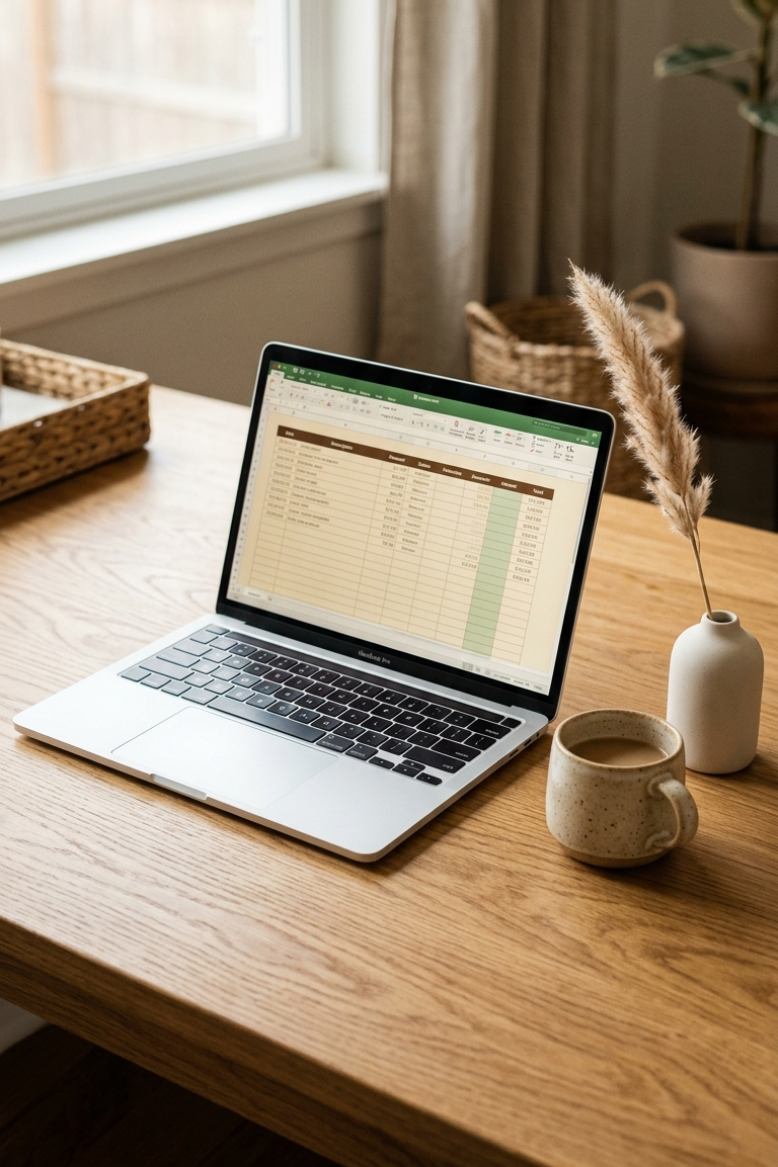
For the functional side of this, I put together a complete household dashboard in Google Sheets. A single file covering budget across all 12 months, cleaning schedules, maintenance tracking, weekly meals, calendar, and a home inventory with warranty tracking. It is available as an instant download in the shop for anyone who wants a ready-made version rather than building one from scratch. The point is not the specific tool. The point is having one.
A few things that help
For anyone working on this layer of the home, these are the pieces worth having:
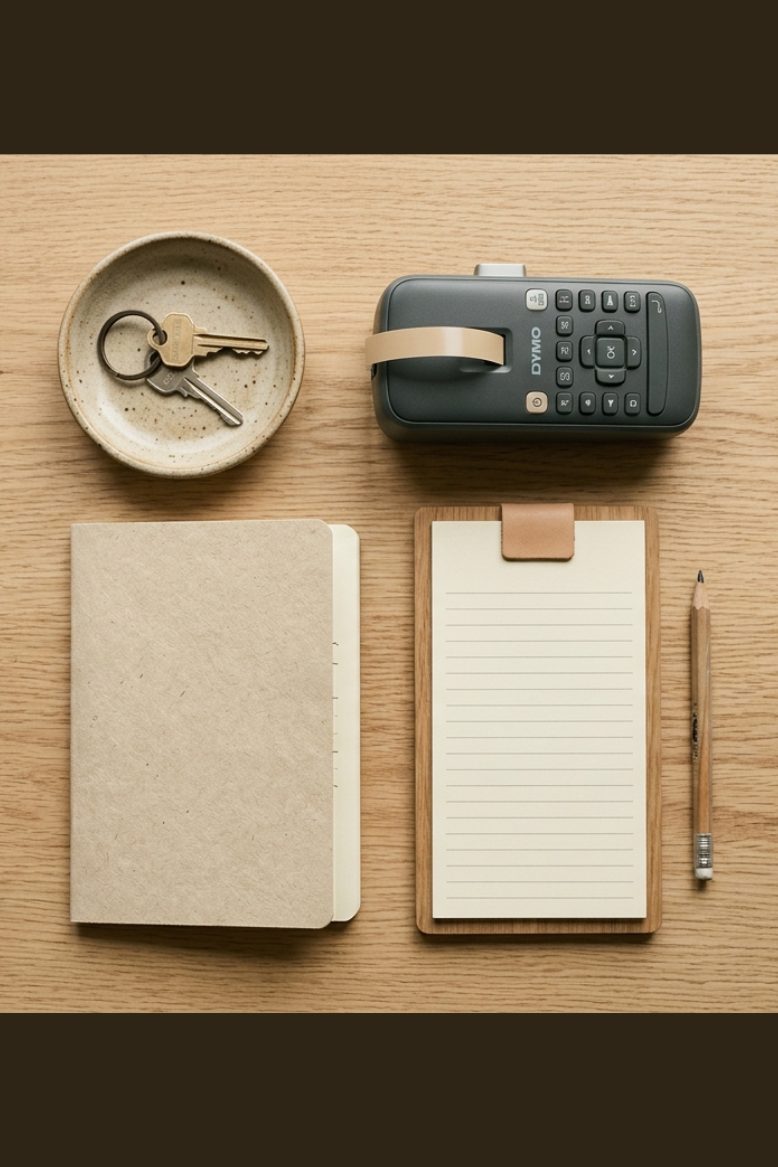
- A wall-mounted weekly planner in the kitchen — meals, tasks, and the week at a glance in one visible place
- A simple household notebook kept in a consistent location — useful for smaller households that prefer analog
- A magnetic whiteboard for the fridge — for the grocery list that gets built across the week rather than written in a rush before shopping
- A ceramic tray or dish near the door for mail, keys, and small items that would otherwise scatter — a physical container for the daily functional layer
- A label maker if the home has a lot of shared storage — reducing the mental effort of finding things in a household with multiple people
None of these are significant expenses. Their value is in the small but real reduction of friction that comes from things having a clear home.
The two layers together
A home that feels genuinely calm to be inside is usually one that has been worked on in both directions — the aesthetic layer and the functional one.
The aesthetic layer is the one that is visible and easier to talk about: the palette, the materials, the light, the art. The functional layer is quieter, less Instagram-friendly, and just as important to how the home actually feels on a Tuesday evening when you are tired and just want to sit down without a list running in the back of your mind.
Both are worth the attention. And the good news is that the functional layer, once set up, largely takes care of itself. It does not require constant tending. It just needs a shape.
Give it one, and the background hum settles. The room looks the same. It feels different.
For calm, minimal wall art designed to hold a mood without demanding attention, the full collection is at Peaceful Mind Living on Etsy. And if the visual side of the home is the current project, this post on why rooms feel wrong to live in covers the other half.