
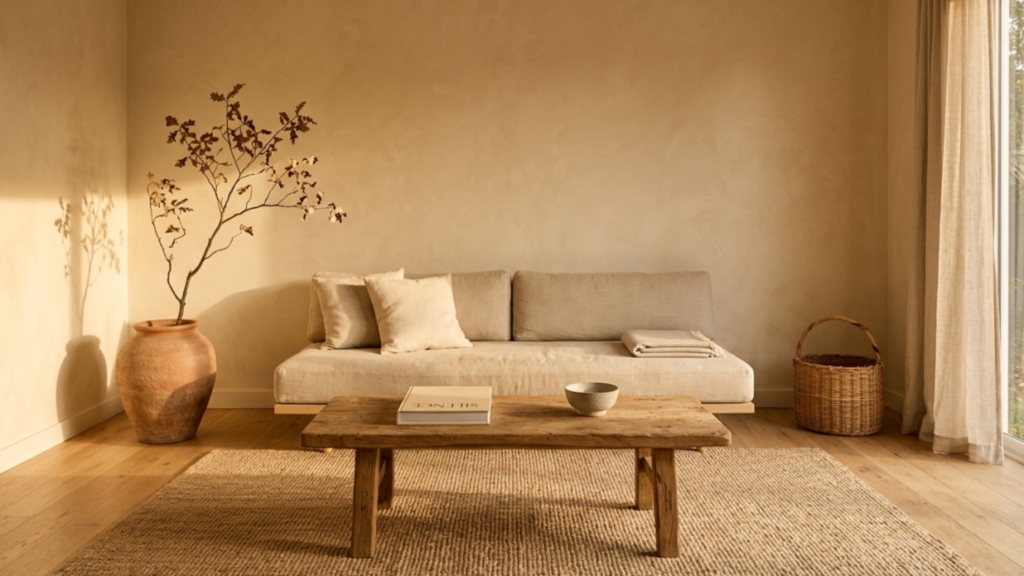
Most afrohemian rooms you see online are maximalist. Bold pattern on bold pattern. Every wall covered. Every surface layered. It is full, rich and expressive. For many people, it is also exhausting to live inside.
But the principles behind afrohemian are not actually about volume. They are about depth. Cultural meaning. Material honesty. Things that last. Those principles sit very comfortably inside a calm, considered home. You just have to edit differently.
This post is for anyone drawn to the warmth and soul of afrohemian design but who also values quiet. Who wants a room that feels grounded and personal — not loud.
What Afrohemian Actually Is (Beyond the Mood Boards)
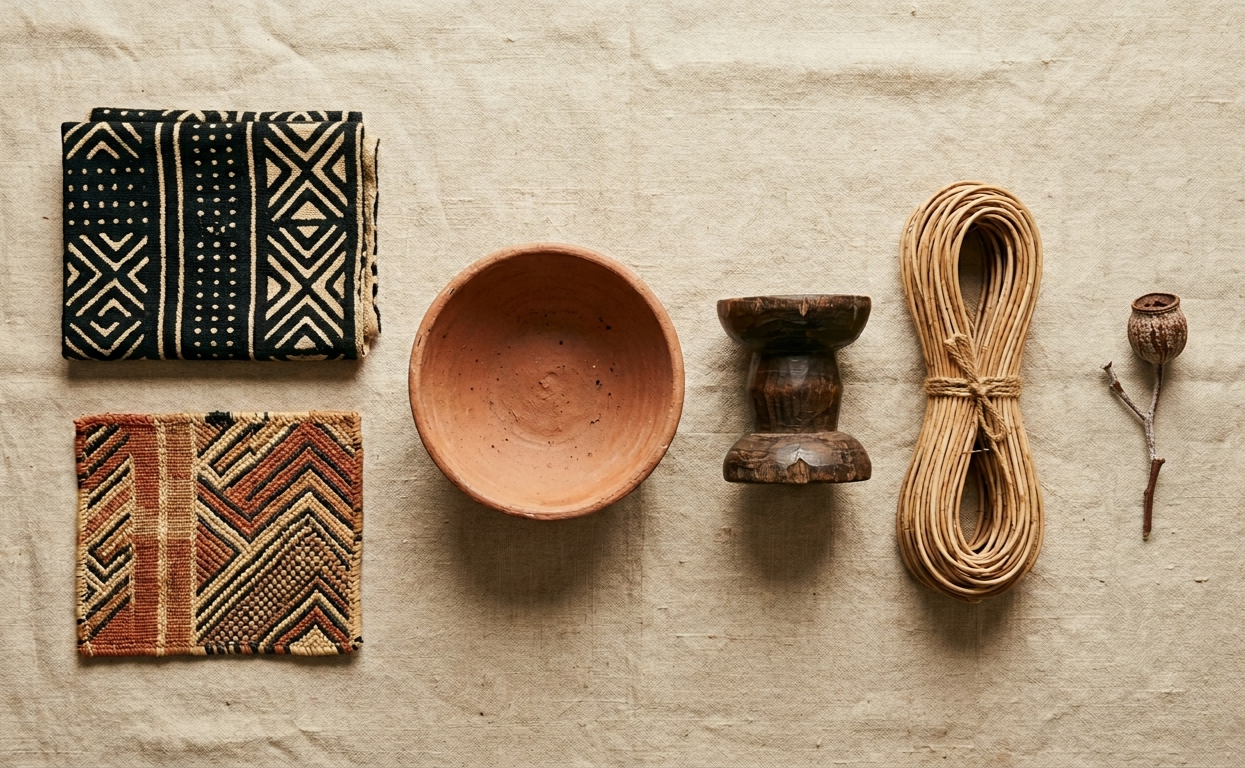
Afrohemian is a design language that draws from African and African diaspora traditions — weaving, pottery, carving, natural dyeing, pattern — and blends them with the layered, material-rich approach of bohemian style. It is currently one of the fastest growing home decor searches on Pinterest, with searches up over 200% year on year.
What drives the interest is not just aesthetics. It is the fact that afrohemian interiors feel like they belong to someone. They carry story. In a world of identical beige rooms, that matters.
The challenge is that the most visible examples of afrohemian are turned up to maximum. Kente cloth on the walls, Ankara print cushions, mudcloth throws, woven baskets floor to ceiling, terracotta everywhere. It is genuinely beautiful. It is also a lot.
Why the Quiet Version Works Better Than You Think
A calmer take on afrohemian is not a compromise. It is a different application of the same values.
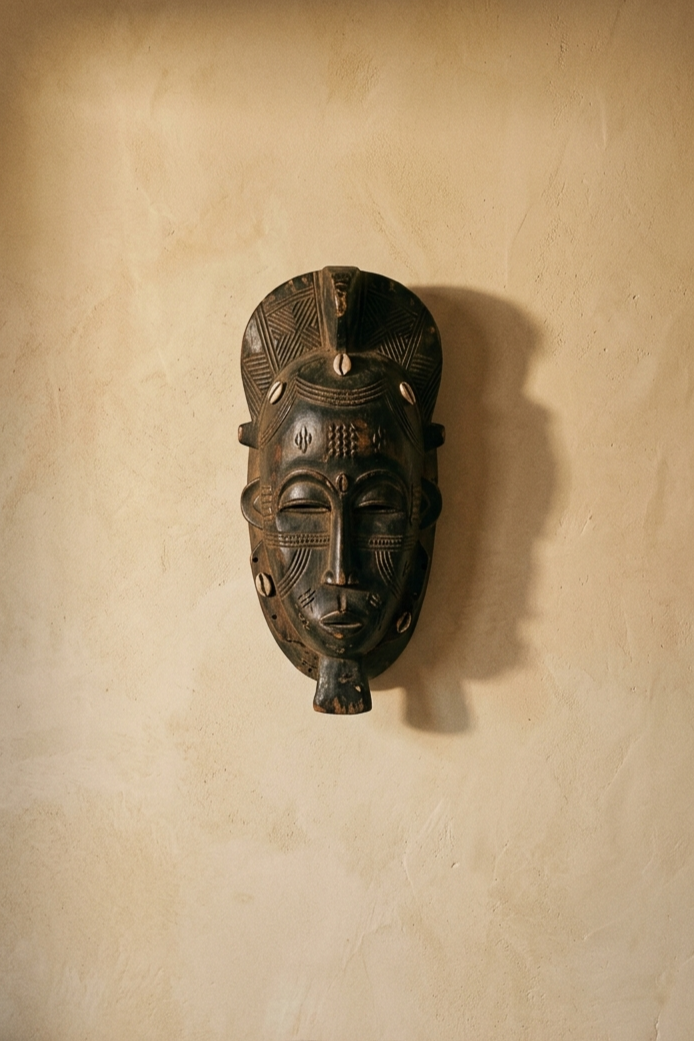
Think about it this way. The most meaningful objects in any afrohemian room are the handmade ones. The hand-carved stool. The woven basket. The single ceramic vessel made by a West African artisan. These pieces carry the cultural weight of the style entirely on their own. They do not need seventeen companions to be powerful.
When you edit down to fewer, better objects — and give them space — those pieces actually become more visible. More felt. A single piece of mudcloth as a wall hanging in an otherwise quiet room says more than a wall covered in pattern.
This is the same logic behind why some rooms always feel temporary — not the absence of things, but the absence of intention.
The Palette Shift That Makes It Work
Most afrohemian mood boards lean into deep jewel tones and bold earthy contrasts. That is one expression of the palette. There is another.
Warm sandy neutrals. Raw linen. Undyed cotton. Burnished wood. These are the tones you find in the natural materials themselves before any dye is applied. They are still deeply afrohemian — they just happen to be calm.
If you want to bring an afrohemian piece into a room that already has a settled palette, this is where to start. Look for the colours that already exist in the object, not what surrounds it in the product photography. A mudcloth cushion in natural black and cream will sit beautifully in a parchment and bark Japandi palette. A hand-carved wooden stool needs no colour justification at all.
For choosing a base palette that allows afrohemian pieces to land well, the free Japandi colour palette guide covers the foundational neutrals that work as a backdrop for almost anything.
Five Ways to Bring Afrohemian Into a Calm Room
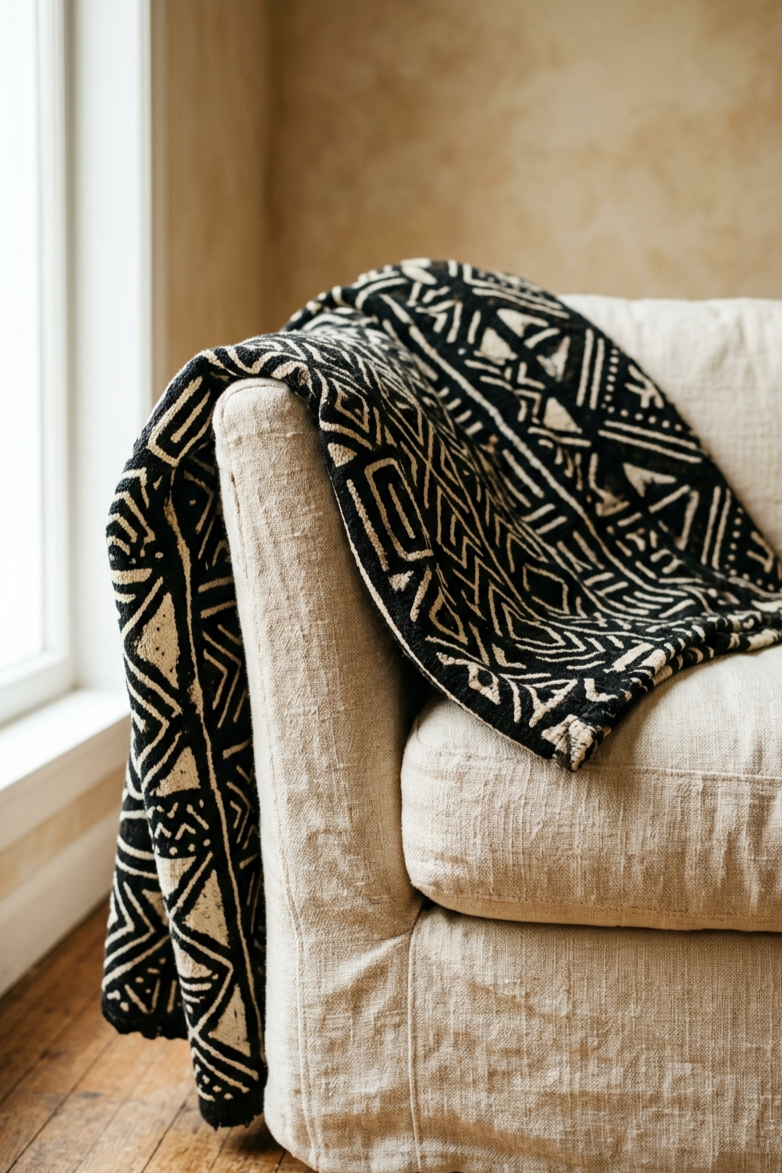
1. One handcrafted textile, used well
A single piece of mudcloth, kuba cloth or a hand-woven throw does everything the style needs. Drape it over a neutral sofa arm or use it as a wall hanging. Alone, with space around it, it becomes a focal point rather than part of a pattern. The quality of handmade textiles rewards this kind of attention.
A woven cotton throw in natural earth tones works particularly well in rooms that are otherwise quite spare.
2. Woven baskets as the structural texture
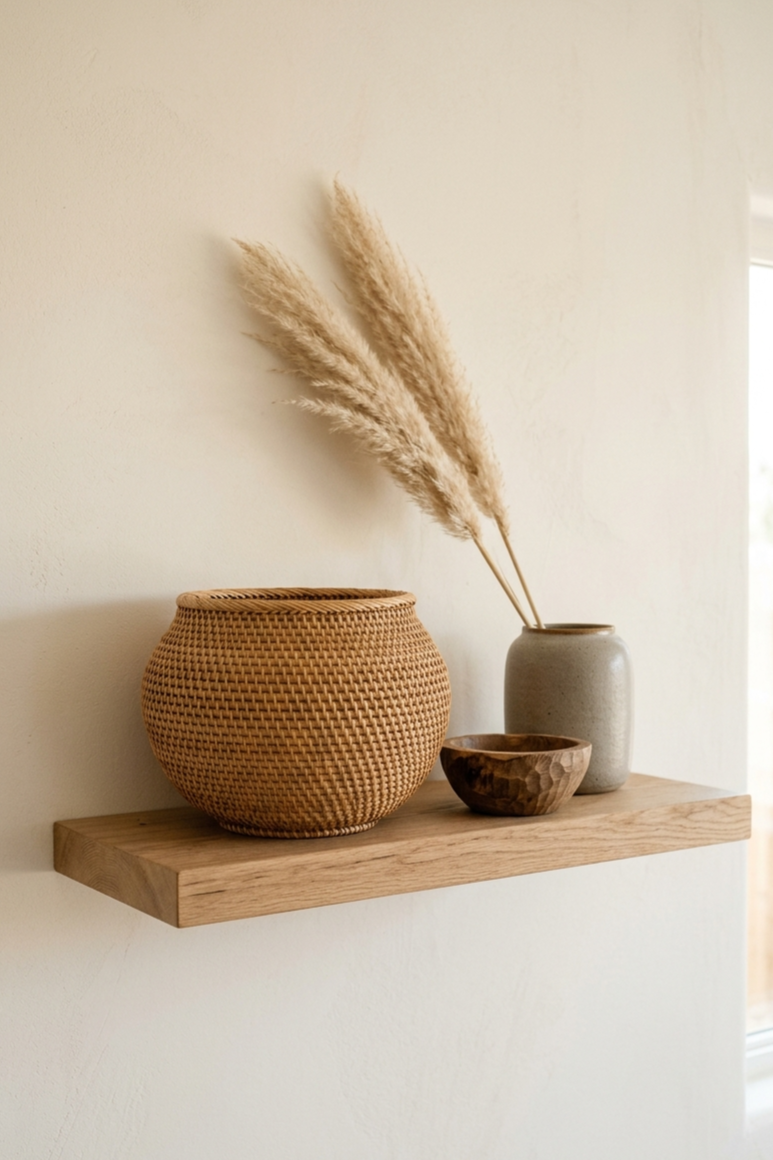
Rattan, jute and woven grass baskets are among the most versatile objects in afrohemian design. They add significant texture without adding visual noise — especially when kept in natural, undyed tones. Use them as storage, as plant holders, or simply as objects that earn their place on a shelf.
Lidded woven storage containers keep surfaces clear while still bringing the material richness the style is known for.
3. One hand-carved wooden object
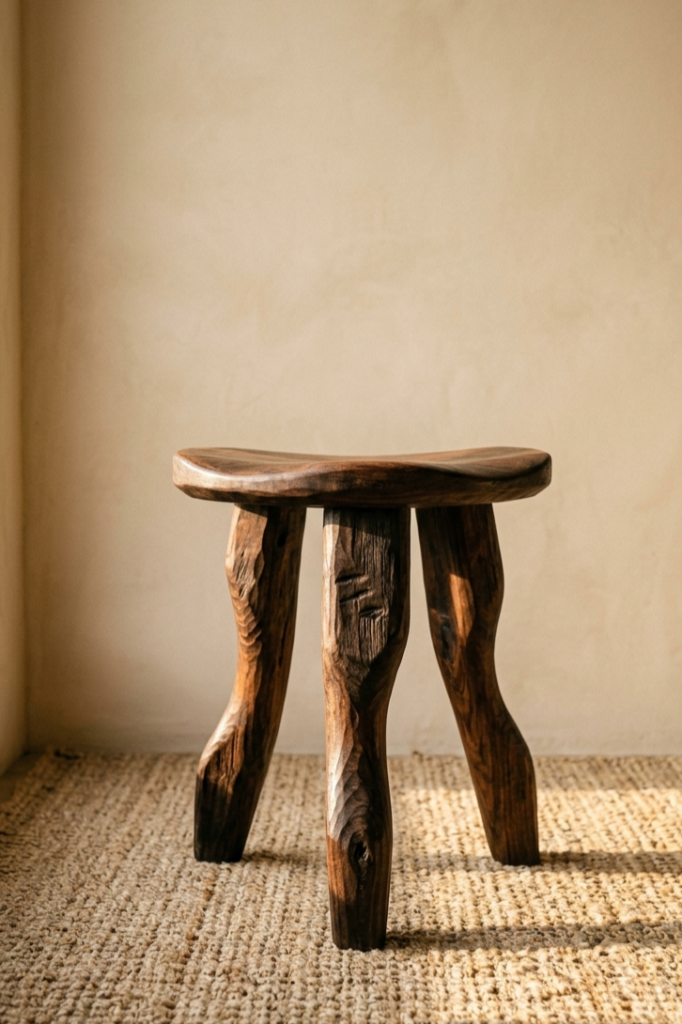
A carved wooden stool, a hand-turned bowl, an organic-shaped side table. One is enough. Wood that shows the hand of its maker adds something no factory-produced piece can match. It grounds a room without filling it.
Place it somewhere it can be seen clearly. Not tucked in a corner, not behind other things. A single piece of craftsmanship deserves clear sightlines.
4. Ceramics in earthy, low-saturation tones
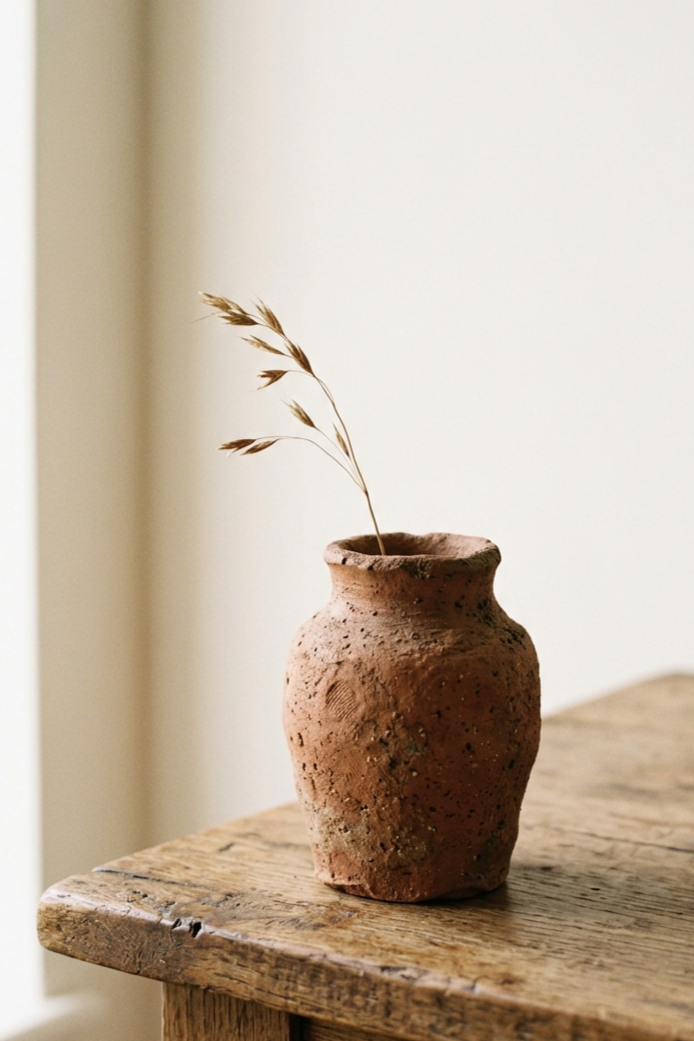
Handmade pottery in terracotta, clay, ash glaze or raw stoneware connects directly to African ceramic traditions while sitting comfortably in any calm neutral interior. A simple ceramic vessel on a wooden shelf, holding a dried stem, does the work quietly.
The key is to choose pieces where the material is visible. Not smooth, factory-glazed surfaces. Pieces where you can see the clay, the kiln marks, the fingerprints.
5. Plants that feel considered
Afrohemian spaces almost always include plants — not as afterthoughts but as integral parts of the room. A large-leafed plant in a terracotta pot. A small sculptural succulent on a shelf. One plant, chosen and placed with intention, connects the room to the natural world in the same way the handcrafted objects do.
The 7 interior design rules post covers how plant placement affects the visual weight of a room — worth reading before choosing where yours goes.
The Editing Rule That Keeps It Calm
Here is the practical distinction between a calm afrohemian room and an overwhelming one.
In a maximalist afrohemian room, every element of the style is present simultaneously. Pattern, colour, texture, cultural object, plant, basket, throw. All in the same room, at the same volume.
In a calm afrohemian room, each element is present — but only one or two at a time. The throw is there. The basket is there. The carved piece is there. But they are not all competing at the same moment. They have room.
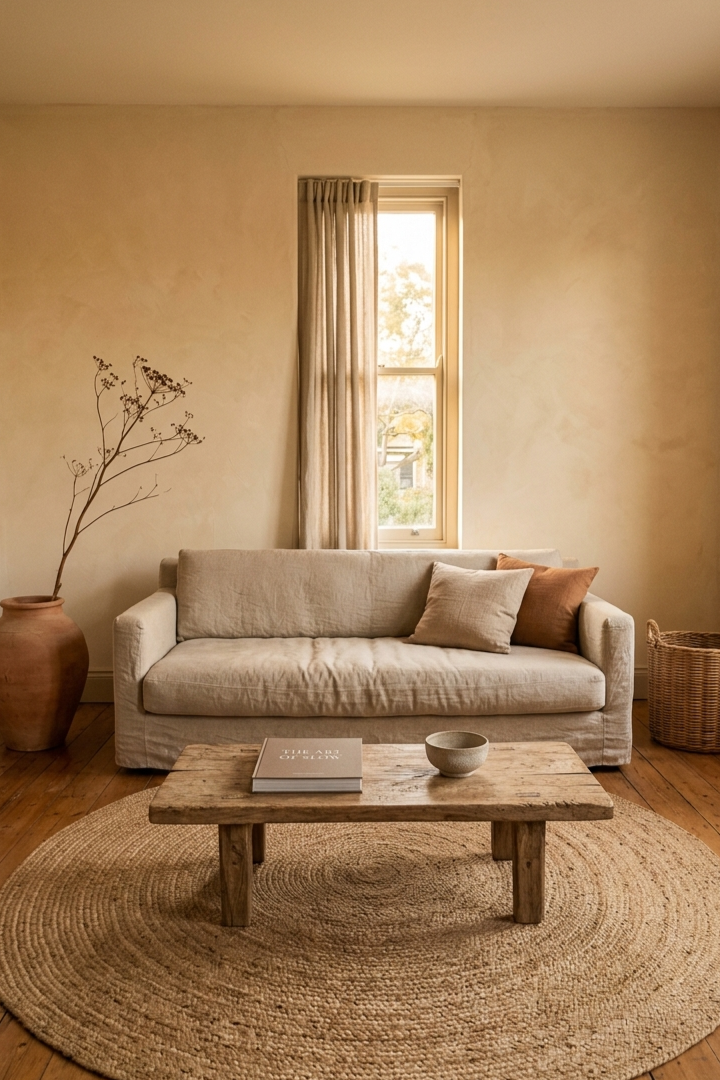
This is the same editing logic that works in Japandi, in Scandinavian design, in any interior approach that values space as much as objects. Remove one thing. Then consider removing another. What remains becomes more.
The Japandi Room Transformation Kit has a section on exactly this — the Shopping Priority Framework, which covers how to layer objects into a room in an order that keeps things from becoming crowded. The same principle applies directly here.
A Note on Cultural Respect
Afrohemian done well is not a shopping list. It is not buying a few ethnic-looking objects and calling it a day.
The style is rooted in specific craft traditions — West African weaving, Malian mudcloth, Congolese kuba work, Caribbean ceramic traditions. Engaging with those traditions thoughtfully means seeking out makers where possible, understanding where pieces come from, and giving individual objects the space and visibility they deserve rather than using them as background texture.
That is also, practically speaking, what makes a room feel considered rather than assembled. The difference between a home and a mood board.
Where to Start
If your room is currently quite neutral and you want to introduce afrohemian warmth without disrupting what you have built, start with one piece. Not a colour change. Not a new wall treatment. One object — handmade, natural material, earned through care in its making.
See how it sits. See what the room asks for next.
Usually it asks for less than you expect.
This post contains affiliate links. If you purchase through them, I may earn a small commission at no extra cost to you.