
How to design a space that actually calms your nervous system
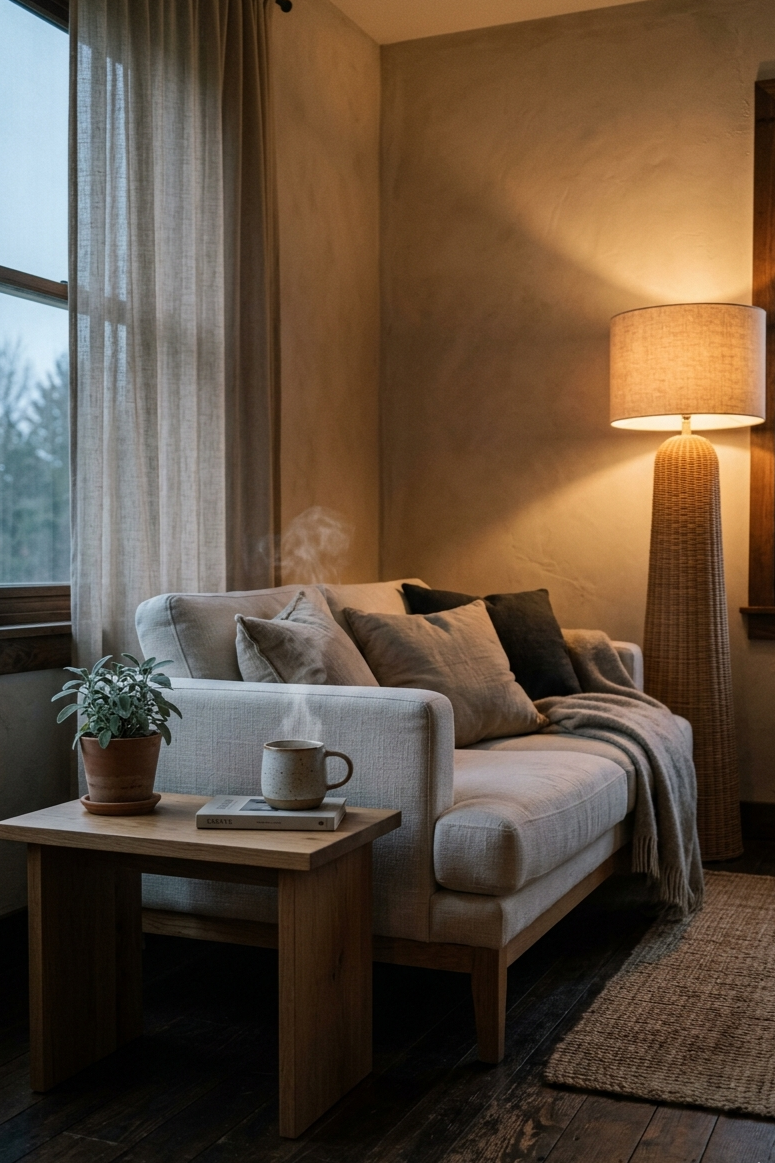
Most calm home advice is really just aesthetic advice.
Use muted tones. Choose natural materials. Clear the clutter. And while none of that is wrong, it misses something important.
Your home does not just look a certain way. It feels a certain way. To your body, not just your eyes.
In 2026, that distinction matters more than ever. We spend hours a day in front of screens. We carry digital noise — notifications, visual clutter, ambient sounds — with us through the front door. And many of us have designed our homes to look calm without realising they are still asking our nervous systems to work overtime.
This post is about changing that.
This post contains affiliate links. If you purchase through them, I may earn a small commission at no extra cost to you.
What Your Nervous System Actually Needs at Home

The nervous system is always scanning its environment. It reads light, sound, texture, spatial complexity, and visual contrast. It makes rapid, unconscious assessments: safe or not safe. Settled or on alert.
A space with harsh overhead lighting, cluttered surfaces, competing visual detail, and ambient digital noise keeps the body in a low-level state of vigilance. It does not feel threatening. But it does not feel restful either.
Research supports what most of us already sense intuitively. Environments with soft colours, natural materials, open layouts, and reduced visual complexity produce measurable calming responses. Lower heart rate. Slower breathing. Reduced cortisol.
The Japandi aesthetic — natural wood, linen, muted earth tones, deliberate negative space — was never just a design trend. It is, almost accidentally, one of the best nervous system environments you can create.
But aesthetics alone are not enough. You have to design intentionally.
The Five Things That Overstimulate a Home

Before changing anything, it helps to understand what is causing the problem.
Overhead lighting. Most homes rely on ceiling lights because they are convenient. But overhead light mimics midday sun. It signals alertness. In the evening especially, it keeps the body in daytime mode and makes genuine rest harder to reach.
Visual complexity. The brain has to process everything it sees, even peripherally. Busy shelves, mixed materials, too many small objects — these create a low-level cognitive load that accumulates quietly over time.
Screens in every room. A television in the bedroom. A tablet on the kitchen counter. A phone charging on the nightstand. Each one signals that the world is available and demanding, even when you are not looking at it.
Sound pollution. Noise from traffic, appliances, and devices creates a background hum that the nervous system cannot fully tune out. It keeps a small part of your attention on alert.
Hard, synthetic surfaces. Cold surfaces, synthetic fabrics, bright whites — these read as clinical rather than safe. The body responds differently to warm, soft, textured environments.
How to Redesign for Quiet
None of this requires a renovation. These are small, deliberate changes that shift how a space feels.
Start with the light
Replace overhead lighting in your living spaces with floor lamps and table lamps. Position them at eye level or below. Use warm-spectrum bulbs — 2700K or lower — that shift your room toward amber and away from blue light as the day moves into evening.
This single change does more for the feeling of a room than almost anything else. It is also one of the most underestimated shifts in Japandi-style interiors.
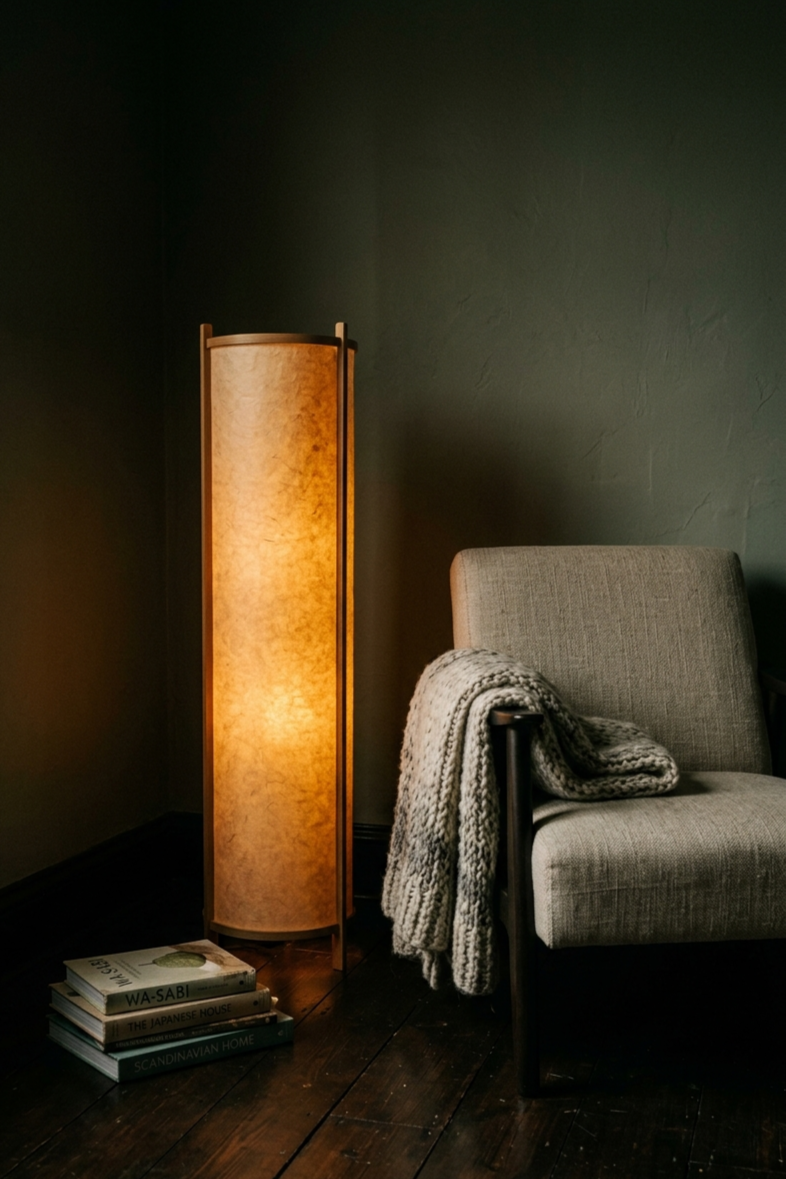
If you want to go further, look at circadian-aware bulbs that allow you to change the colour temperature throughout the day. Cooler in the morning for focus. Warmer by late afternoon. Your sleep quality will likely improve alongside your sense of calm at home.
Reduce what the eye has to process
This is not about minimalism for its own sake. It is about reducing the cognitive load of a room.
Choose one surface to start. A kitchen counter, a bathroom shelf, a bedside table. Remove everything that does not need to be there. Leave only what you use daily and one or two objects that feel genuinely restful to look at. A ceramic bowl. A small plant. One piece of considered wall art.
The goal is not emptiness. It is intentional stillness.
When a room has quiet corners — spaces where nothing is demanding your attention — your nervous system learns that not everything requires a response.
Bring in softness through material
Swap hard, synthetic surfaces for natural ones wherever you can. A chunky throw on the sofa. A wool or jute rug underfoot. Unglazed ceramic mugs in the kitchen. Wooden handles on everyday objects.
These materials do not just look warmer. They feel different. Natural textures provide gentle sensory input that the nervous system reads as organic and safe.
Japandi interiors do this instinctively, layering raw wood, stone, linen, and rattan in ways that feel grounded rather than decorative.
Create zones that are screen-free
You do not have to remove screens entirely. But designating certain spaces as device-free changes the felt quality of those spaces significantly.
The bedroom is the most important place to start. A bedroom without a television and without a phone on the nightstand becomes a genuinely different kind of room. The body begins to associate it with rest rather than availability.
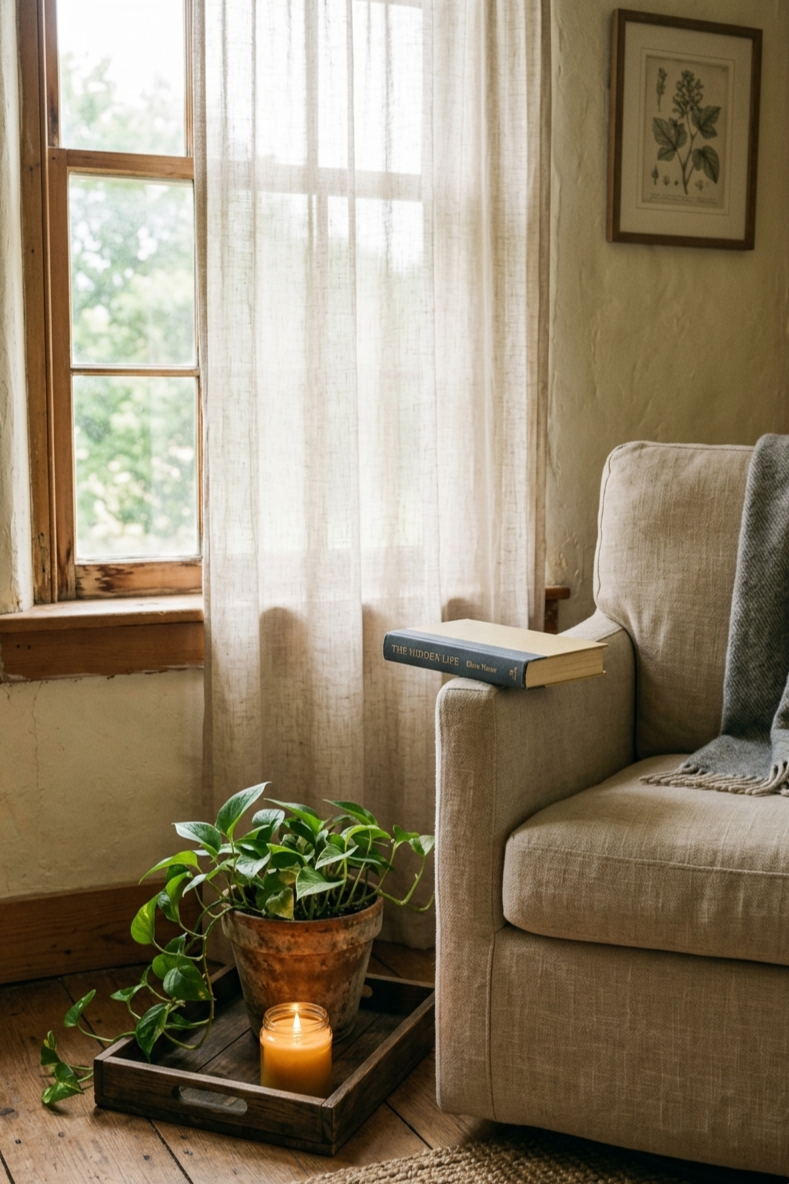
The dining table and one comfortable chair in the living room are other good candidates. These small zones of quiet become anchors. Places where your nervous system can stop monitoring and simply be.
Address the sound
This is the most overlooked part of calm home design.
Soft furnishings absorb sound. A thick rug, heavy curtains, upholstered furniture, and bookshelves lined with books all reduce echo and ambient noise in a room. In open-plan spaces especially, textile layers become important.
If you live somewhere with significant outside noise, consider heavy linen curtains or woven blinds. They work acoustically as well as visually.
For some people, low ambient sound — a small white noise machine, a water feature, or simply rain against the window — is more restful than complete silence. Experiment with what your nervous system actually prefers.
The Room That Needs This Most
If you only focus on one room, make it the one you return to at the end of the day.
For most people that is the living room or the bedroom. These are the spaces where the transition from the outside world to your inner world happens. If they are still asking something of you — still noisy, visually busy, screen-lit — the decompression never fully occurs.
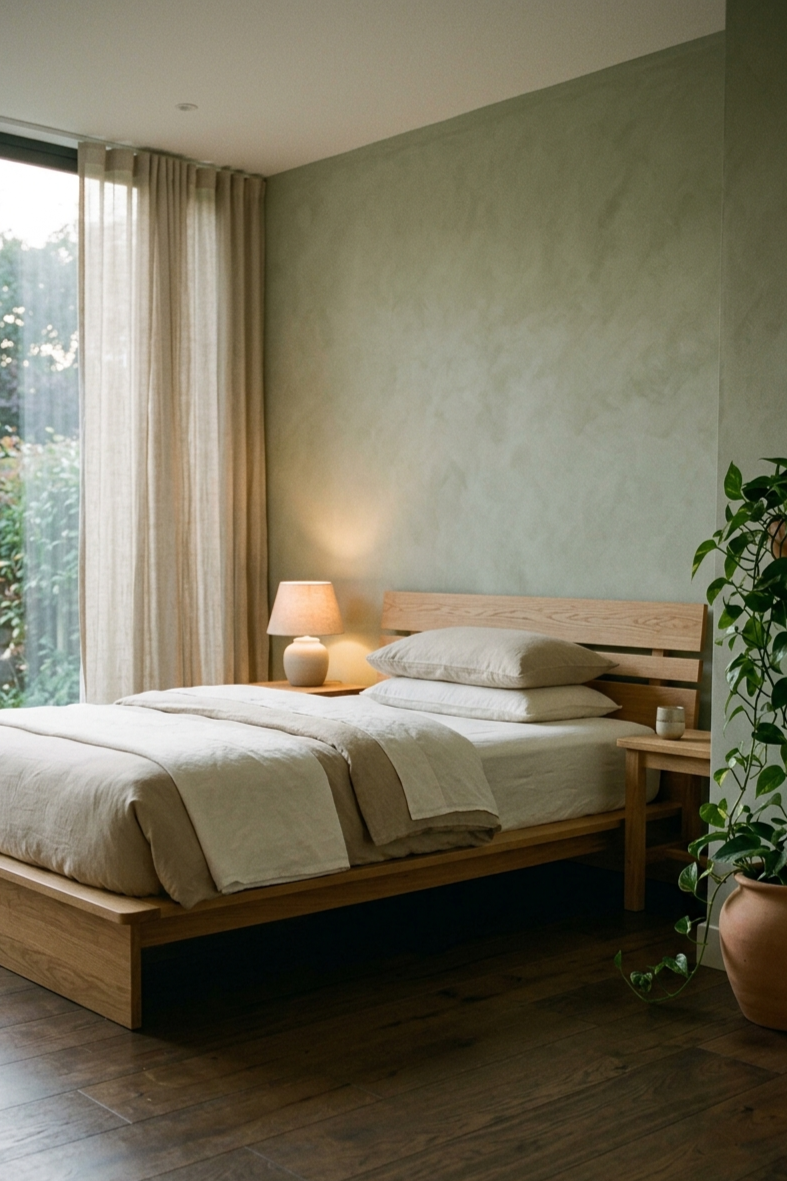
A warm lamp already on when you arrive home. A surface that is clear and unhurried. Soft textures within reach. These small environmental cues tell your body that something has changed. That you are somewhere different now.
That is what a calm home actually does. Not just look peaceful. Feel safe enough to exhale.
One Last Thought
The desire for a calmer home is not just an aesthetic preference. It is a genuine response to how most of us are living right now.
We are overstimulated. Our homes can either add to that or gently undo it.
The good news is that the changes that help the most are small. A lamp instead of a ceiling light. A cleared surface. A screen moved out of one room. Natural fabric instead of synthetic.
These are not expensive choices. They are intentional ones.
And intention, in the end, is what a peaceful home is actually built from.
If you want a simple system for managing your home without adding to the mental load, take a look at The Calm Home Dashboard — a Google Sheets planner designed around the same principles of quiet, clarity, and calm.