
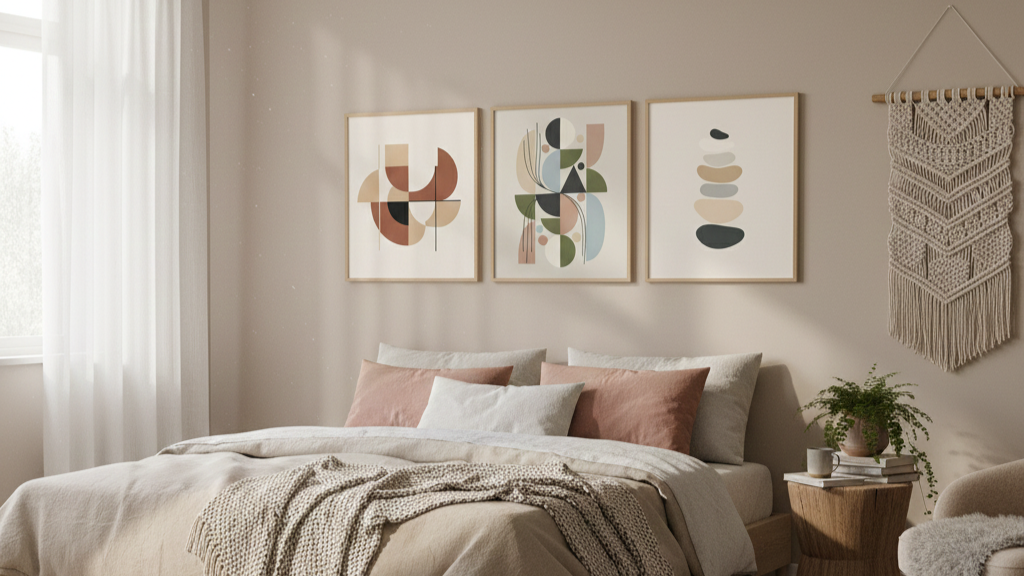
Wall art is one of those things people add last, almost as an afterthought. The furniture is in place, the shelves feel settled, the room works — and only then do the walls start to feel empty.
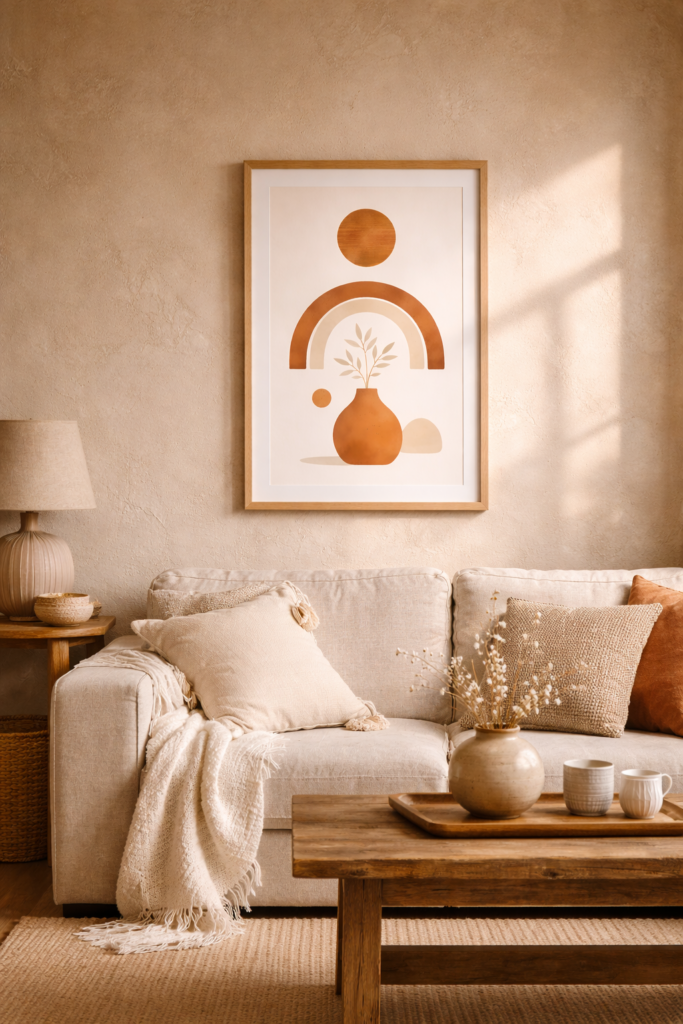
What’s interesting is that wall art can either complete a space quietly or make it feel slightly restless without us fully understanding why. It’s rarely about whether the art is “good” or “bad.” It’s about how much attention it asks for once it’s there.
When walls stay visually loud
Some rooms feel busy even when they’re tidy. Often it’s because the walls are doing too much work. High-contrast prints, sharp lines, or art that introduces a completely different rhythm than the rest of the room can keep the eye moving when it doesn’t need to.
In spaces meant for slowing down — living rooms, bedrooms, even kitchen corners — that constant visual pull can make the room feel unfinished, as if something still needs to be resolved.
Calm wall art doesn’t compete with the space. It supports it.
Art that sits with the room
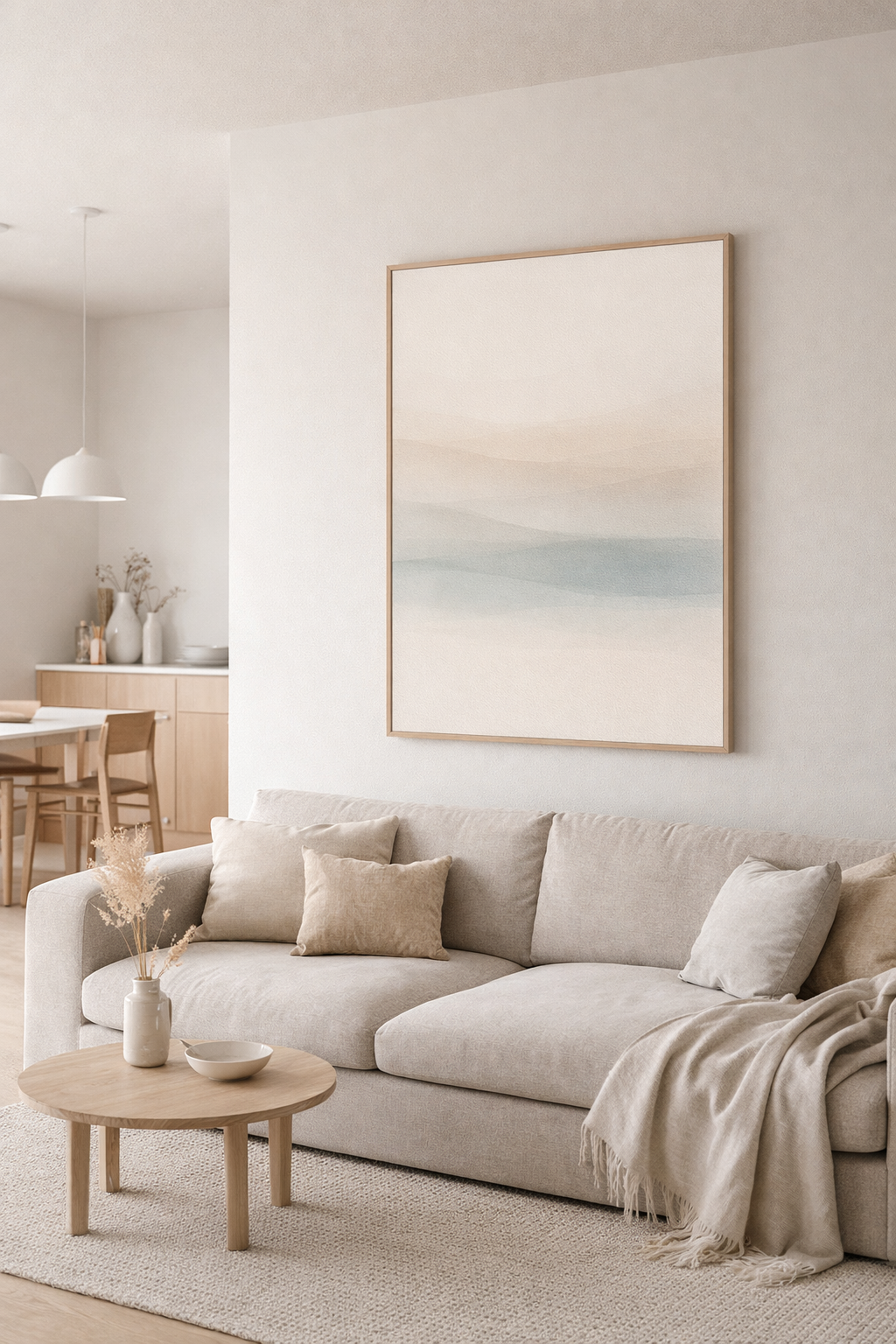
The wall art that tends to feel easiest to live with usually shares something with the space around it. Similar tones, soft edges, and a sense of openness make the art feel like part of the room rather than something placed on top of it.
Abstract art works especially well here, not because it’s trendy, but because it leaves room for the eye to rest. When there’s no obvious subject to decode, the artwork becomes atmospheric rather than demanding.
This is often where soft, minimalist abstract prints in warm neutrals make sense — they don’t tell a story, they hold a mood. This is the kind of art I’ve been drawn to creating myself lately, simply because it’s what I enjoy living with. If your interested, have look here
Size matters more than theme
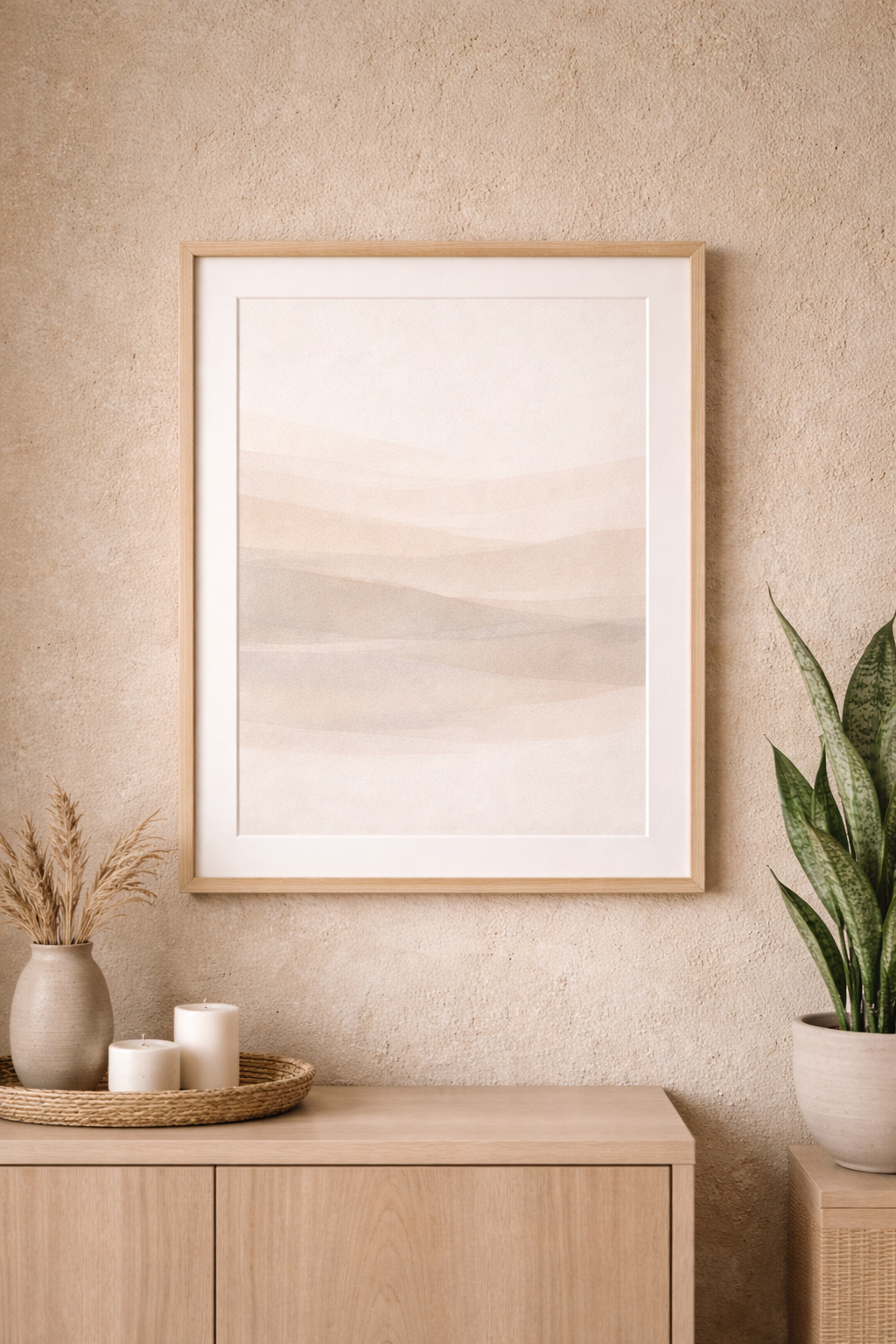
A common mistake with wall art is going too small. Small pieces tend to feel like visual punctuation marks — they stop the eye instead of guiding it. Larger pieces, even very simple ones, often feel calmer because they allow the eye to settle.
One larger artwork usually creates more peace than several small ones scattered across a wall. If multiple pieces are used, keeping them cohesive in tone and spacing helps the wall read as one quiet surface rather than many separate moments.
The quiet role of frames
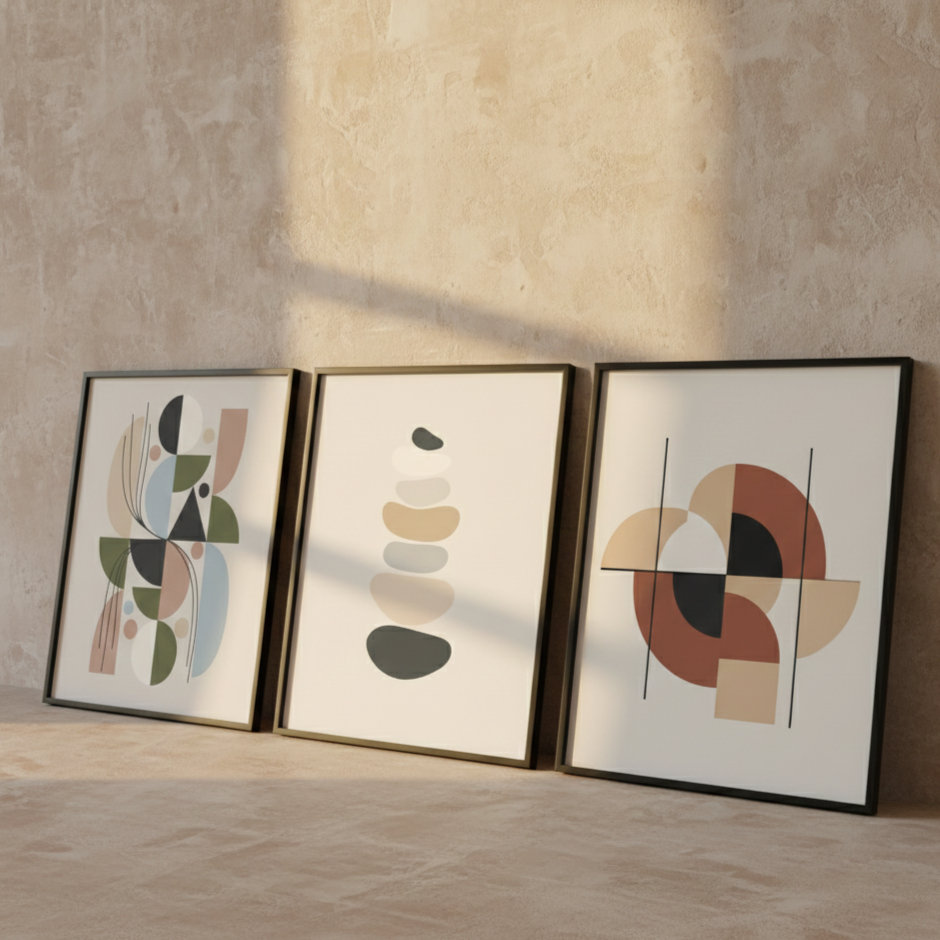
Frames are often overlooked, but they play a surprisingly big role in how art feels on the wall.
Thin frames in natural wood or soft black tend to disappear visually, which lets the artwork breathe. Thick, glossy, or highly decorative frames can pull attention away from the art itself and add visual weight the room might not need.
A simple wooden frame or a slim black metal frame usually works best in calm interiors. They hold the artwork without announcing themselves.
Glass choice matters too. Non-reflective or matte glass prevents glare and keeps the artwork from catching light in distracting ways — especially important in rooms with large windows or soft evening lighting.
Where art works best in a calm home
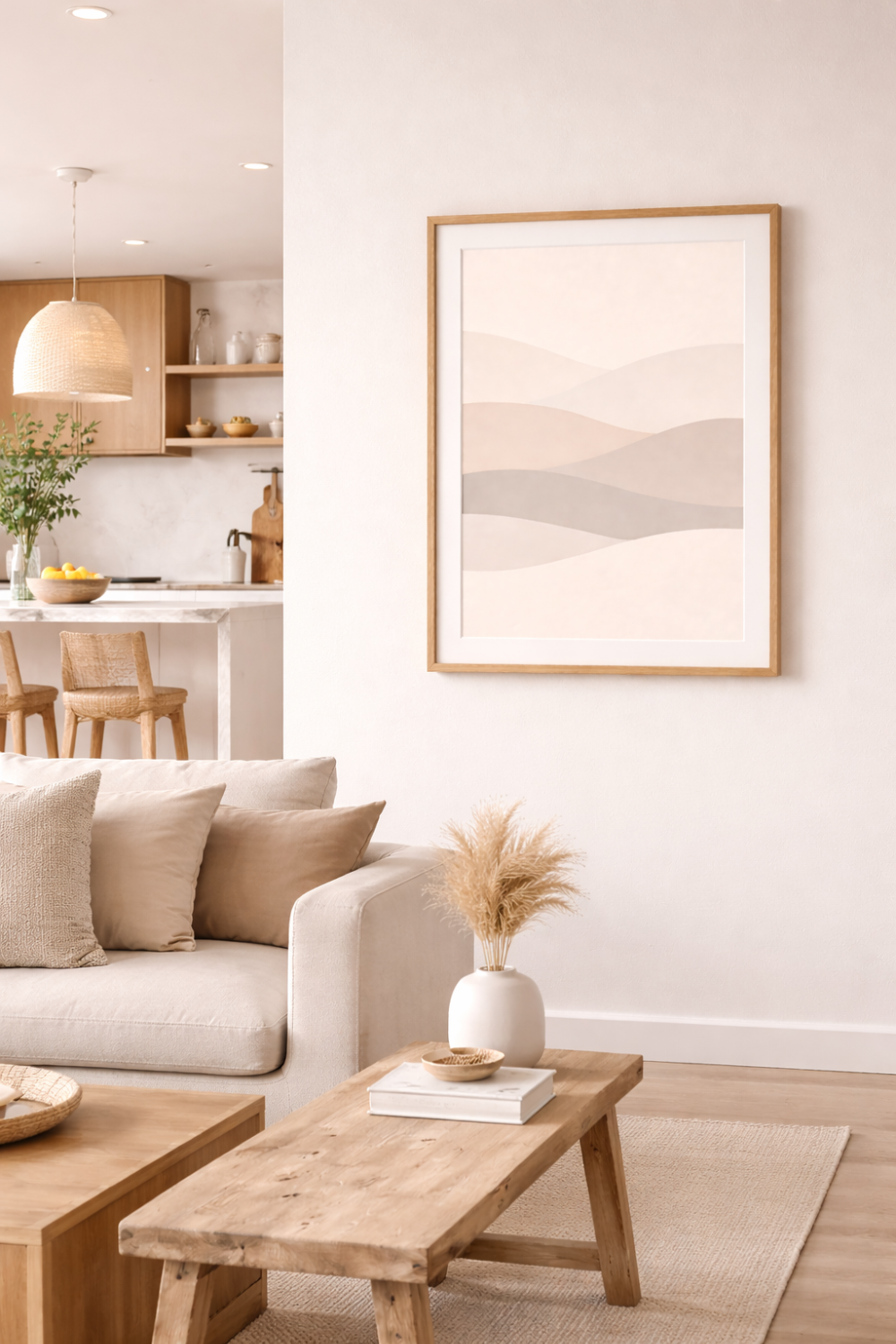
Wall art often feels most natural when it appears in places where the eye already pauses. Above a sideboard, over a bed, near a coffee corner, or at the end of a hallway. These are moments where the home slows down slightly — and the art can slow with it.
In very functional areas, like pantries or laundry rooms, art usually works best when it’s subtle or absent. In more reflective spaces, it can quietly anchor the room.
Letting art finish the room
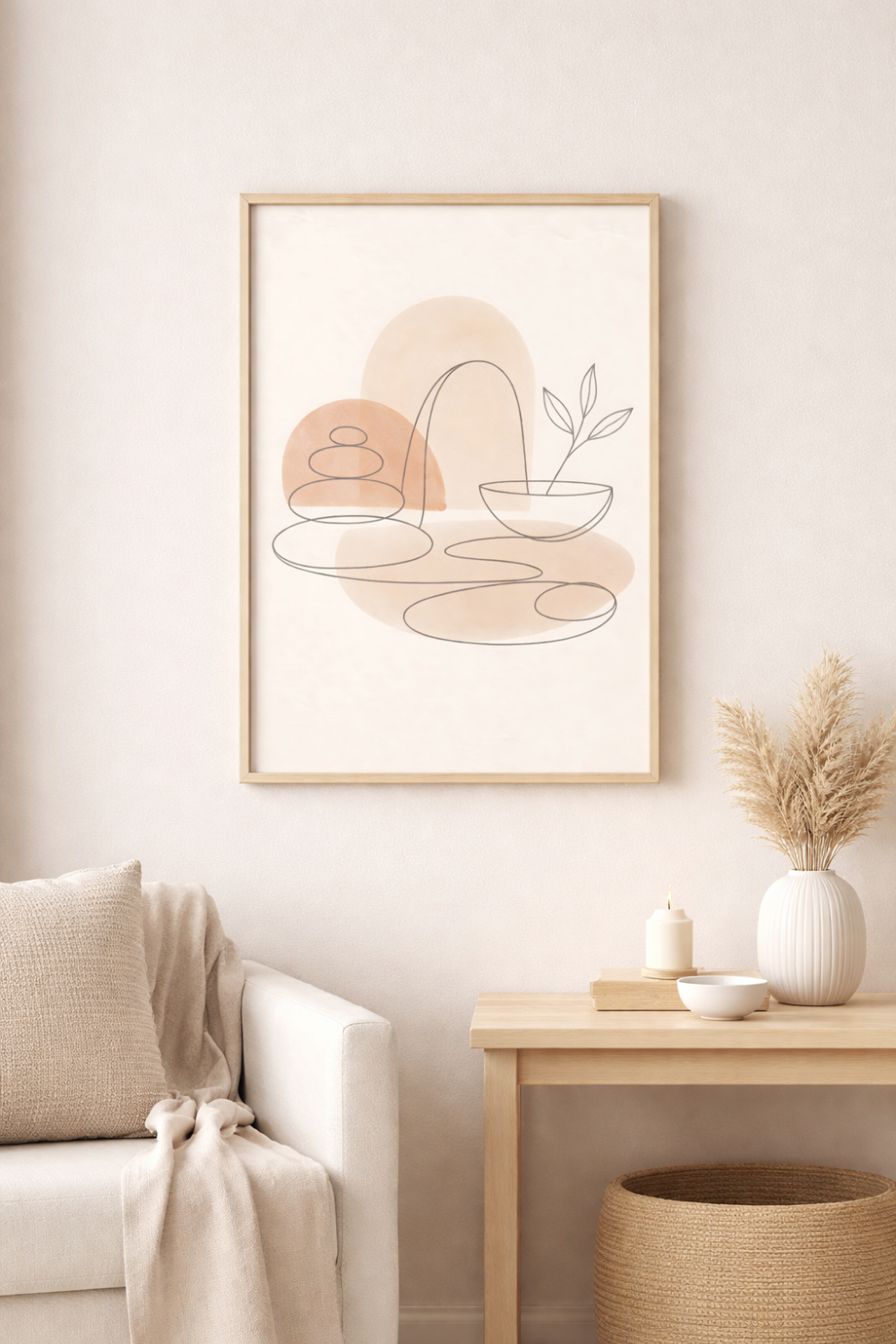
The calmest homes aren’t the ones filled with art. They’re the ones where the art that is there feels inevitable — as if it couldn’t have been anything else.
That often comes from choosing pieces that don’t try to impress, but instead echo the textures, colors, and pace of the space. Art that doesn’t ask to be noticed every time you walk past it, but still makes the room feel complete.
Sometimes, that’s all a wall really needs.
Some links in this post may be affiliate links. If you choose to purchase through them, I may earn a small commission at no extra cost to you.