
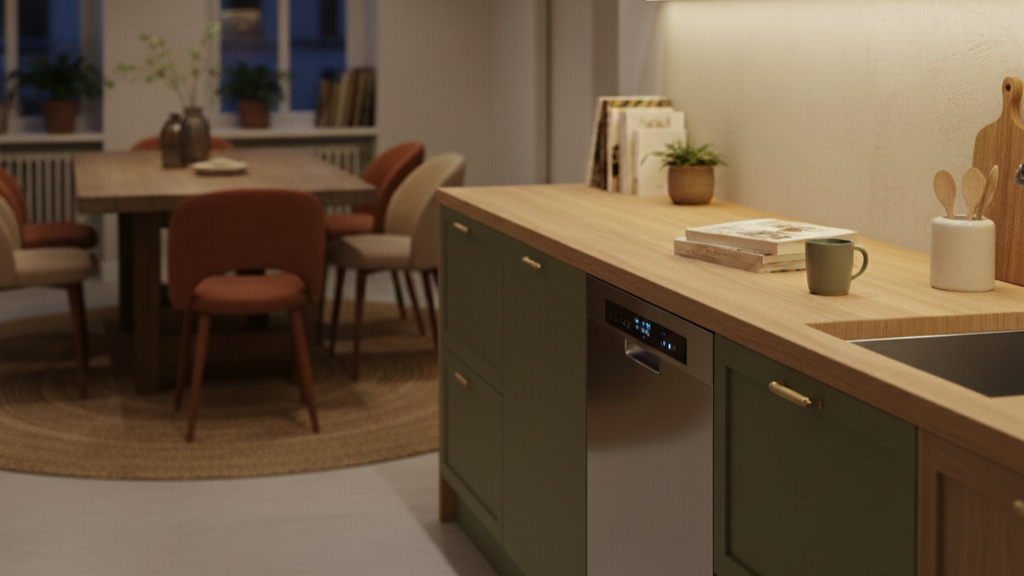
There’s a point in the evening when the day is basically over, but the kitchen still feels active.
Nothing is particularly wrong. The counters are mostly clear. Dinner is done, finished. And yet, the kitchen doesn’t quite settle. It feels like it’s waiting for something else to happen.
I started paying attention to this because some evenings felt calm almost immediately, while others stayed strangely alert — even when I did the same things.
Gathering the day back into one place
Most evenings, I walk through the house collecting dishes. A mug from the living room. A plate from a desk. A glass left by the bed. It’s not a big job, but it marks the moment when the day starts folding back in on itself.
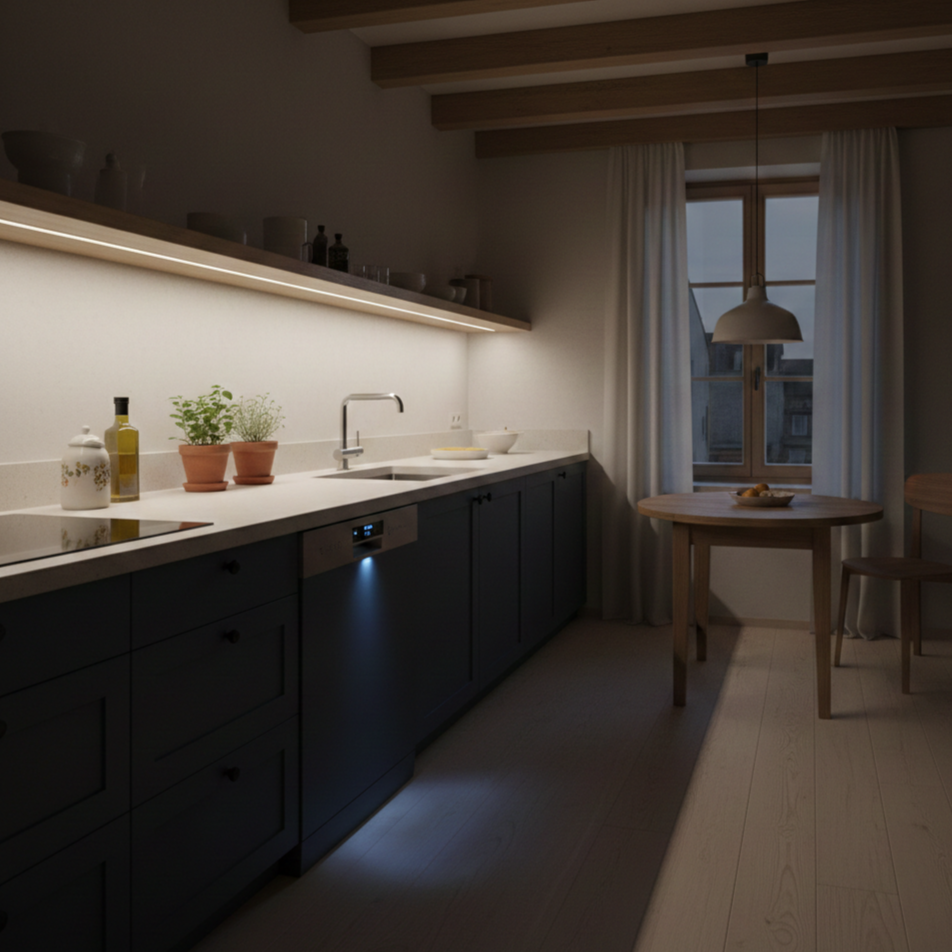
At the sink, everything goes into the dishwasher. Sometimes it fits easily. Other times, it takes a bit of rearranging — turning a plate, moving a bowl, deciding whether one last cup can squeeze in or needs to wait until morning. I’ve noticed this process feels calmer when the dishes themselves are uncomplicated, like durable stoneware plates and everyday glasses that don’t require much care when you’re tired.
That moment matters more than it probably should. When everything fits and the door closes, the kitchen feels contained. When something has to stay out, even one item, the room keeps a trace of the day with it.
Turning the dishwasher on finishes the sequence. Once it’s running, the work is no longer pending. It’s in progress without needing attention — especially when the machine itself stays relatively unobtrusive, like a quiet dishwasher with an eco or night cycle.
Why kitchens often stay mentally “open”
When a kitchen is hard to switch off, it’s rarely because it’s messy. More often, it’s because parts of the day are still visible. The difference isn’t really about the type of kitchen, but about whether the space signals continuation or closure at the end of the day.
A counter that’s clean but still holding breakfast items. A surface that looks ready for the next task rather than finished with the last one. Overhead lights that stay bright enough to suggest activity. Even small appliances can keep the room feeling alert if they’re still mid-task or visually prominent.
Kitchens are designed around what comes next — the next meal, the next use, the next task. In the evening, that forward-facing design can make it harder for the space to feel complete. Not chaotic, just unfinished.
I noticed a similar kind of friction in the mornings too, when the kitchen asks for precision before the day has really started, which I wrote about in Why Some Kitchens Feel Abrupt in the Morning.
Clean isn’t the same as finished
I’ve noticed there’s a difference between a kitchen being clean and a kitchen feeling done for the day.
Clean means nothing is dirty.
Finished means nothing is asking for follow-up.
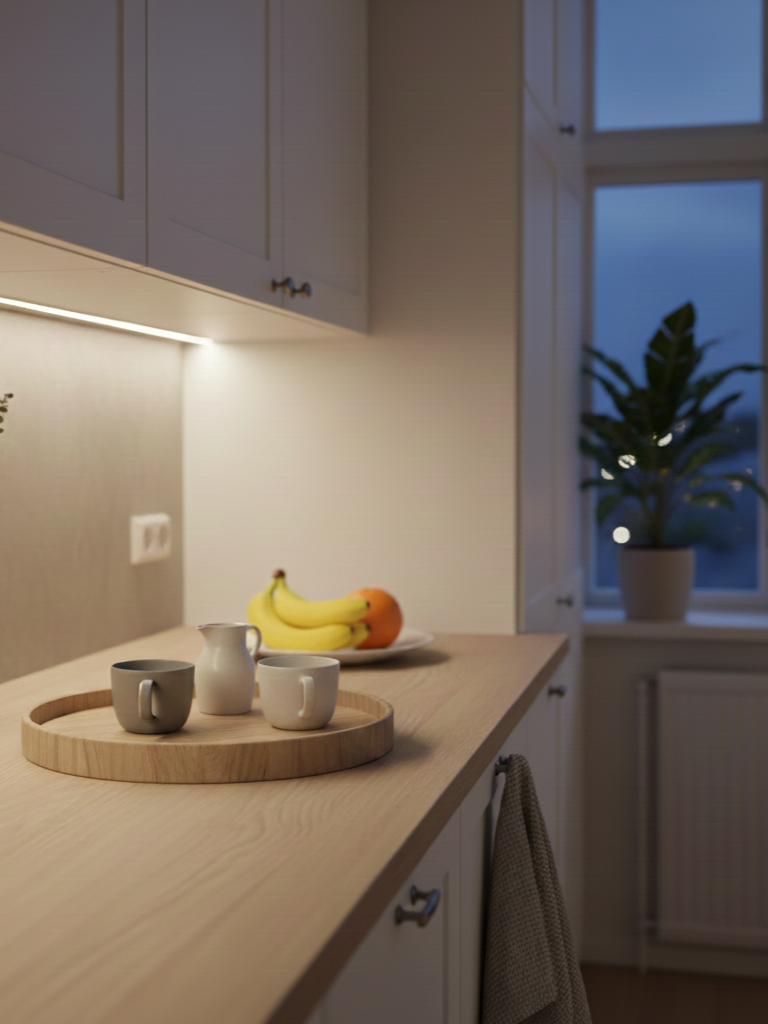
Sometimes that difference is created by containment rather than effort. Gathering remaining items onto a simple wooden tray before loading the dishwasher, for example, makes the counter feel intentionally paused instead of half-used.
When dishes are contained, surfaces are cleared with intention, and the remaining tasks are clearly “for tomorrow,” the kitchen stops participating in the evening. When those cues are missing, it stays mentally active, even if you’ve already left the room.
Small signals that the day is ending
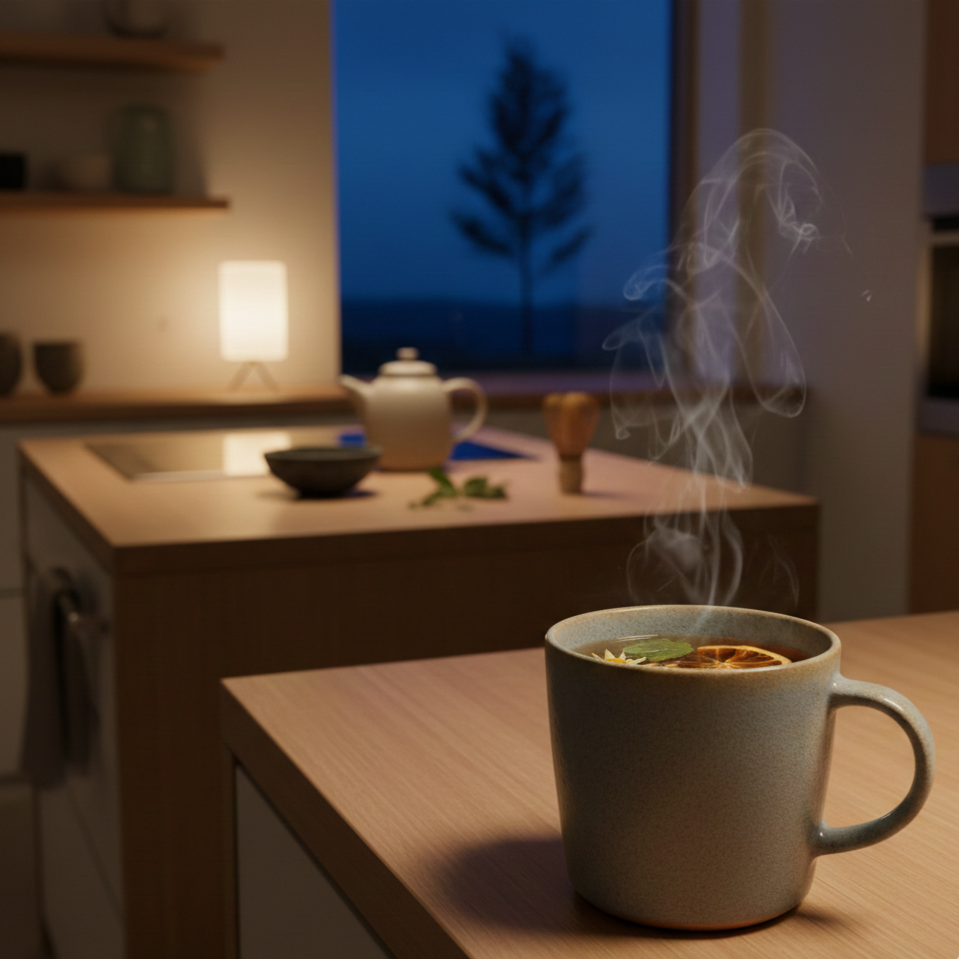
After the dishwasher is running, I usually make a cup of herbal tea — ginger chai, something warm but without caffeine. It’s not about the tea itself. It’s the shift. Using something familiar, like a favourite ceramic mug, seems to reinforce that the pace has changed.
The lighting changes too. Bright overhead lights feel out of place once the day winds down. Softer options, like warm under-cabinet lighting or a small lamp, make the kitchen feel present without feeling busy.
None of this requires perfection. Some nights, a few things stay out. But when most of the day has been gathered and contained, the space feels ready to rest.
Letting the kitchen rest, too
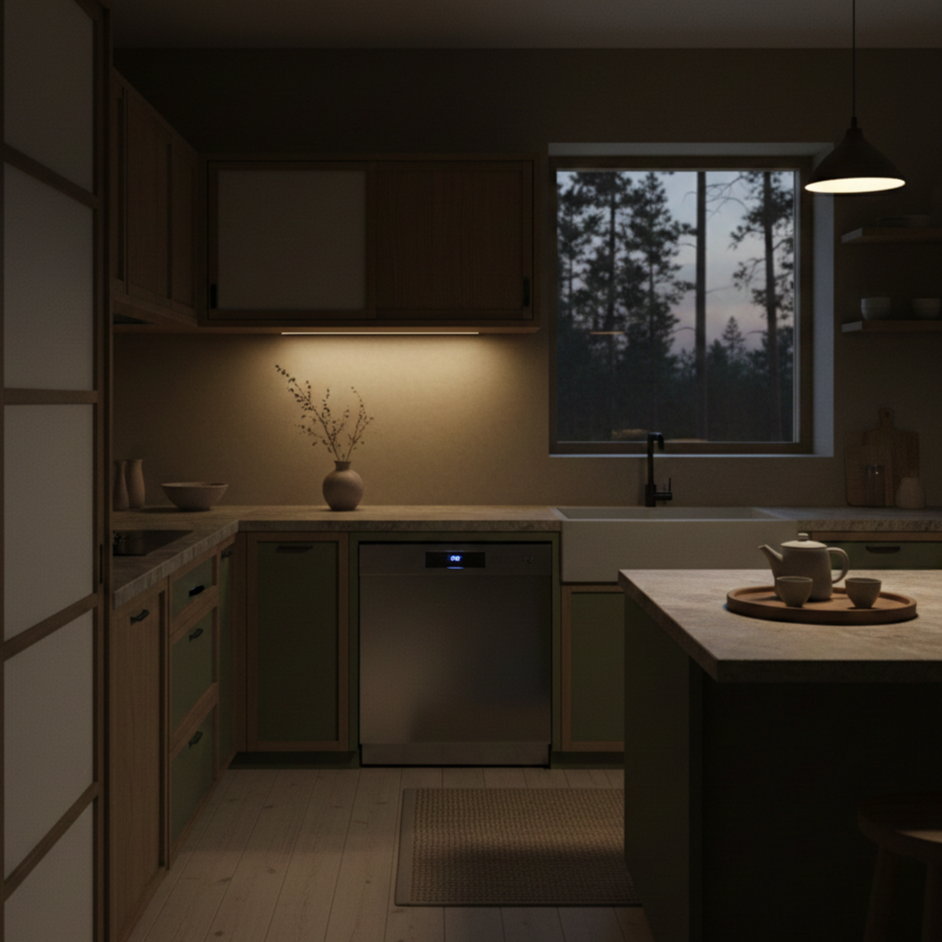
I don’t think kitchens need to be reset perfectly every evening. Life doesn’t work that way.
But there’s something grounding about reaching a point where the kitchen no longer asks for anything. Where tomorrow has been prepared just enough, and today has been dealt with fully enough.
When that happens, the kitchen doesn’t follow you into the rest of the evening. It stays where it is — and the house, and the night, feel quieter because of it.
Some items mentioned are linked for reference. If you choose to purchase through these links, I may earn a small commission at no extra cost to you.