
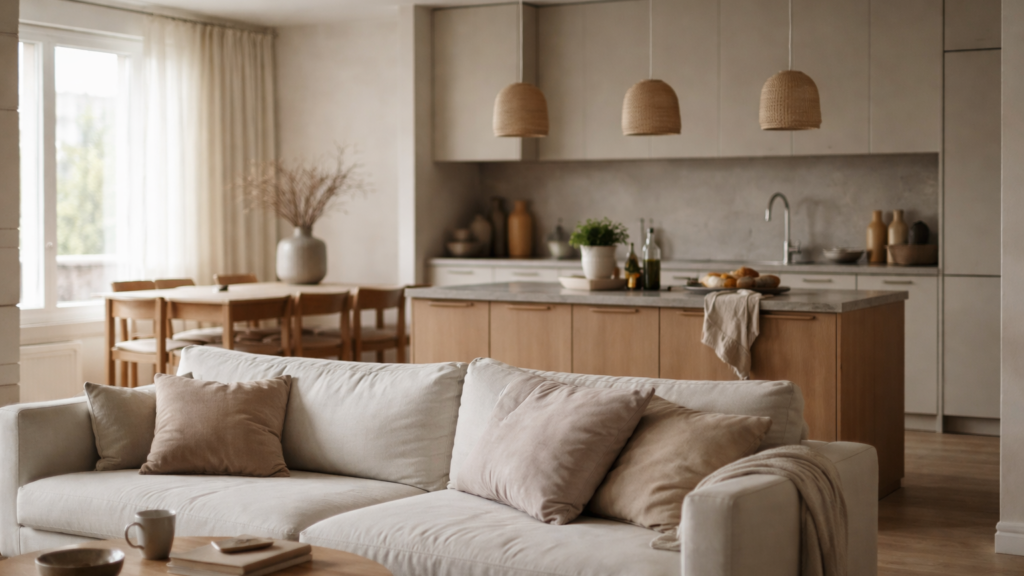
Open-plan homes are often described as easy, airy, and modern. Fewer walls, more light, better flow. And in many ways, that’s true.
But they also tend to carry a quiet tension that’s harder to name. Even when everything is clean, even when there’s nothing obviously wrong, the space can feel like it’s still waiting for something to happen — or to be decided.
It’s not chaos. It’s not clutter.
It’s a kind of visual openness that never quite settles.
The unfinished feeling of open space
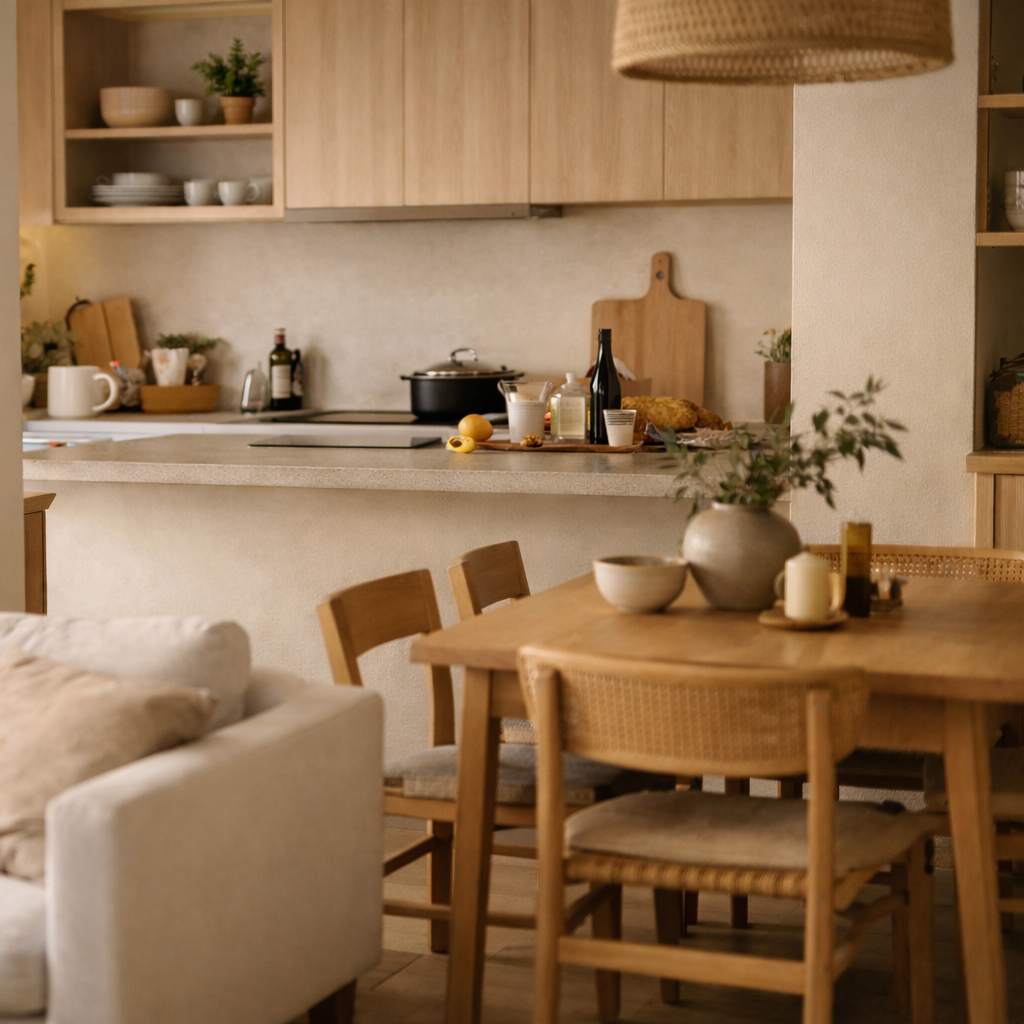
In open-plan homes, everything is visible from almost everywhere. A chair pushed slightly out of place. A counter used for three different things in one day. A corner that holds something “for now.”
Because there are fewer boundaries, small unresolved areas don’t stay local. One temporary surface quietly affects the whole room. One undecided corner echoes across the space.
This is why an open kitchen, living area, and dining space can feel oddly unfinished even when each zone is technically tidy. The eye keeps moving, looking for a place to rest — and doesn’t always find one.
When spaces don’t clearly end
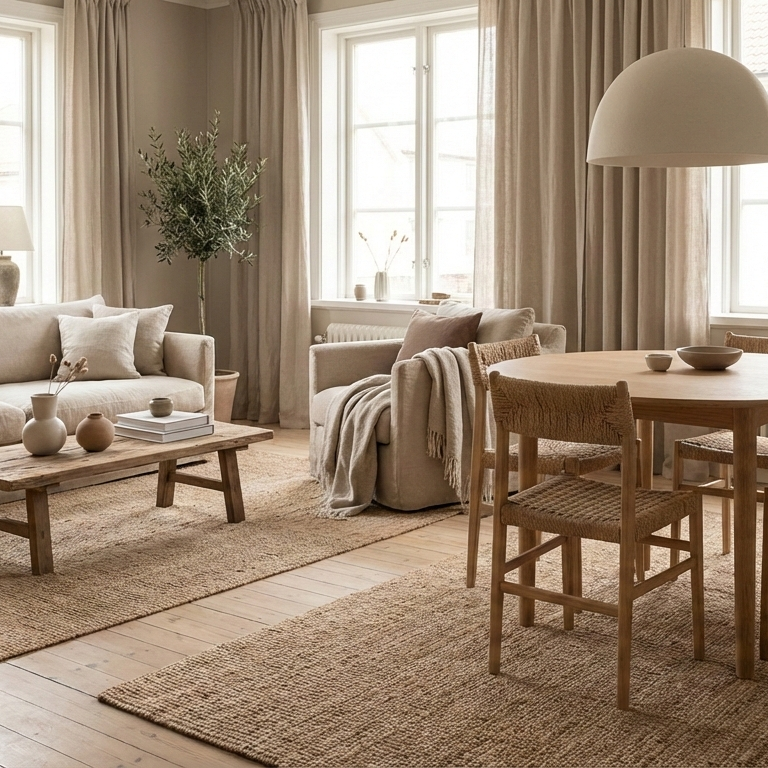
In more traditional layouts, rooms end naturally. A doorway closes the scene. In open plans, zones blend into each other, which means they need other ways to signal completion.
What often keeps a home feeling unfinished isn’t too much furniture, but too little definition.
A dining table without anything anchoring it visually.
A sofa floating without something grounding the wall behind it.
A walkway that also acts as storage, drop zone, and workspace.
Nothing here is wrong. It’s simply unresolved.
Visibility changes how we experience “clean”
In closed rooms, mess can be hidden. In open plans, even neat objects feel louder because they’re always present.
A few items left out in one area don’t stay contained. They become part of the entire visual field. This is why people often say open homes feel harder to “reset” — not because they get messier, but because they’re less forgiving.
When everything stays visible, the brain never gets a clear signal that the space is done for the day.
Visual anchors — quietly doing their job
The homes that feel finished tend to do a few quiet things well.
They give certain areas a clear visual role.
They allow some things to disappear completely.
They use a few intentional visual anchors instead of many small ones.
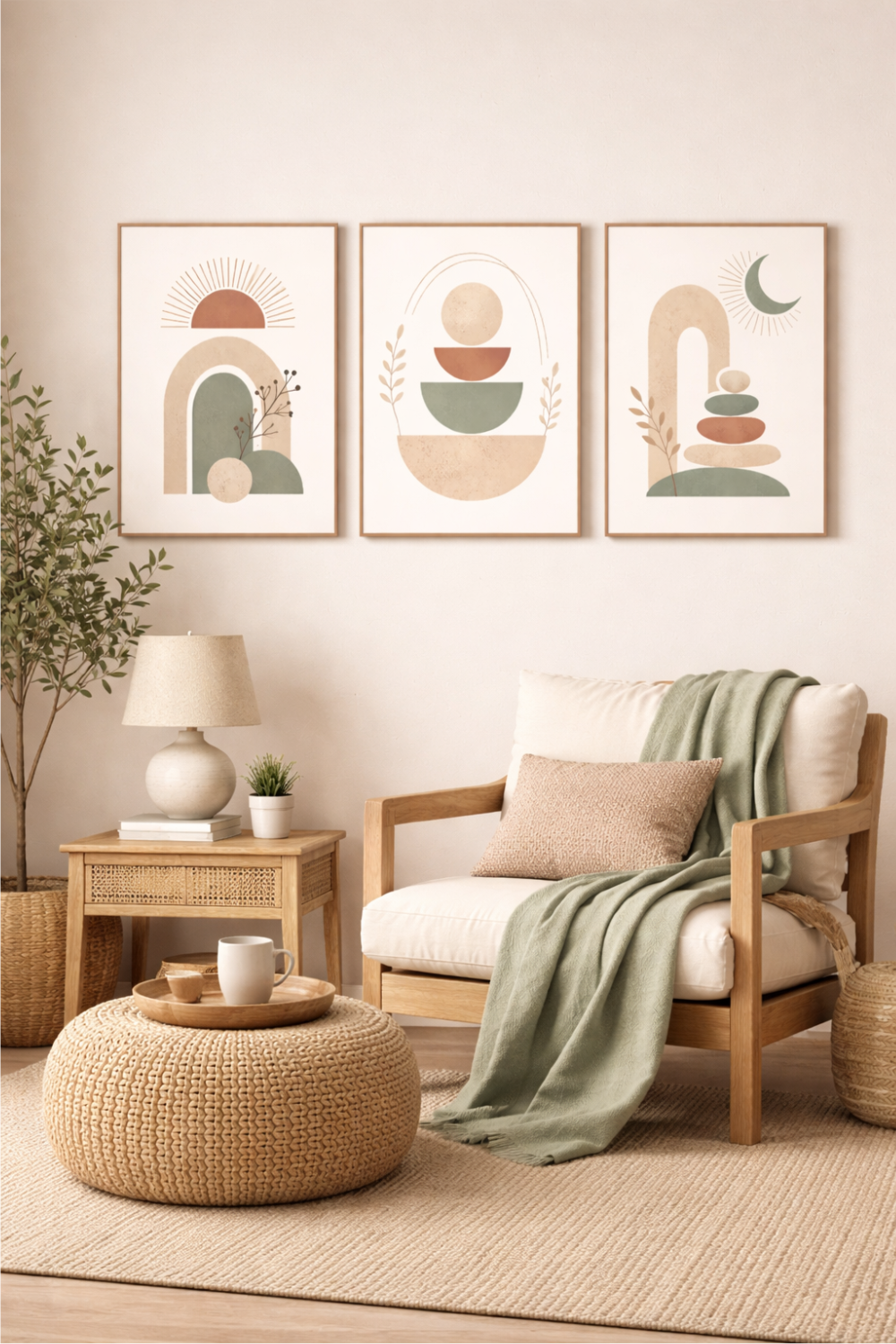
A wall that’s visually claimed — often with a large framed artwork or a simple gallery of calm prints — stops feeling like a leftover surface. It becomes a destination instead of a gap.
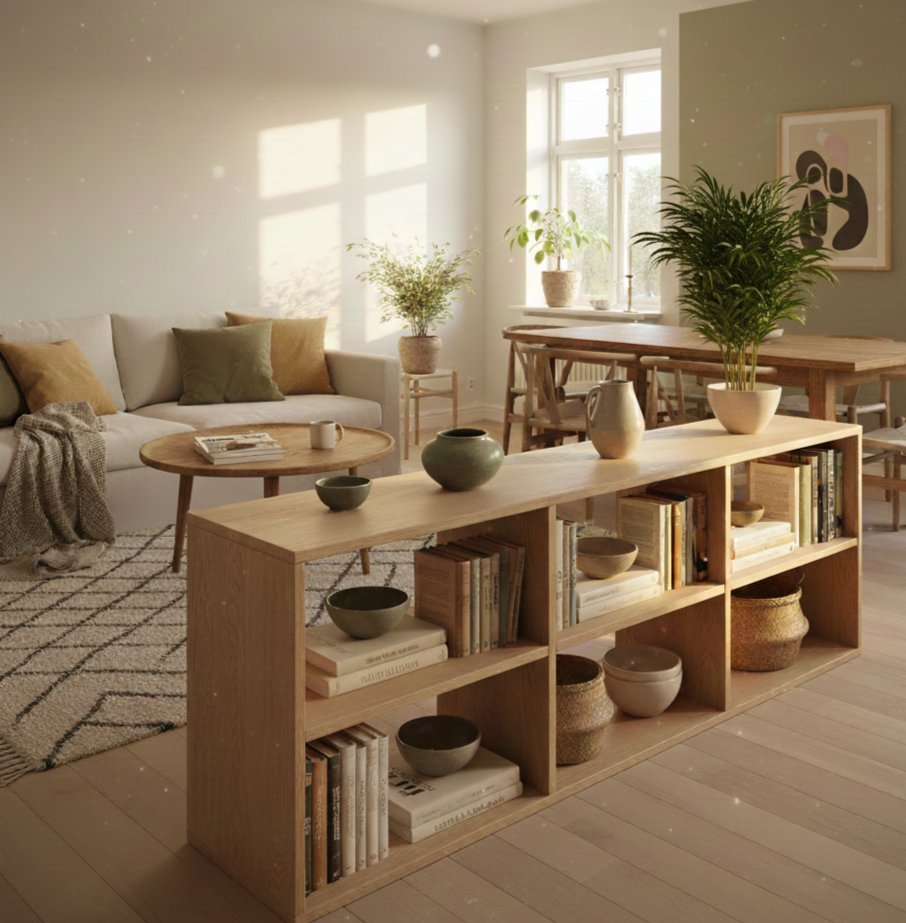
A low divider, shelving unit, or screen — something like a slim open shelf ora woven room divider — doesn’t block light, but it gently signals where one space ends and another begins.
Even small boundaries help the eye relax.
Finished doesn’t mean full
Interestingly, the most settled open-plan homes are rarely filled with decor. They’re selective.
A single defined wall instead of many decorated corners.
One surface that’s intentionally styled, while others stay clear.
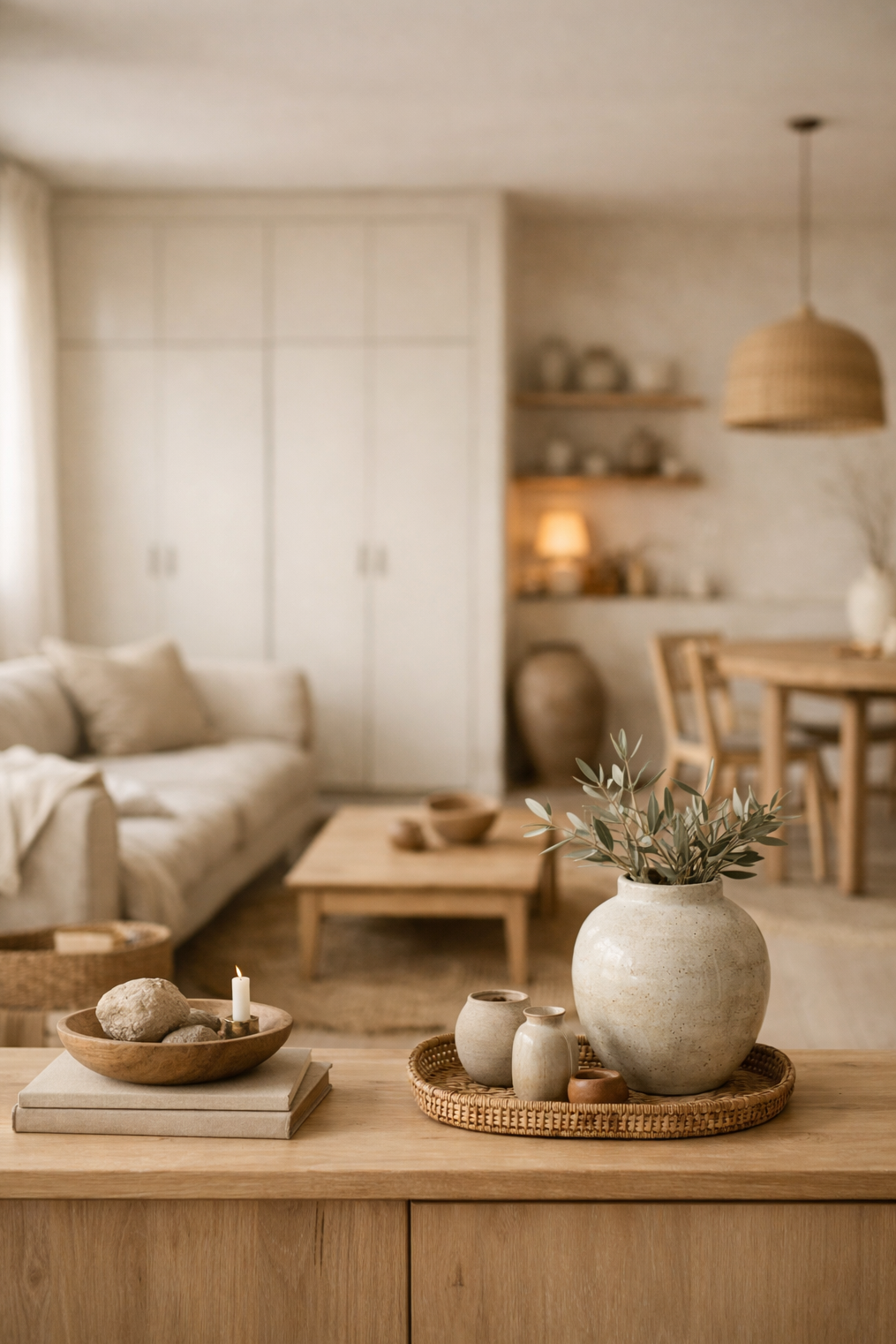
A few containers that give wandering objects a place to land — a shallow tray, a storage basket, a closed cabinet nearby — rather than letting them drift.
The space feels finished not because everything is decorated, but because fewer things are undecided.
A quieter way to think about “done”
A finished home isn’t one where nothing moves. It’s one where movement has somewhere to return to.
In open-plan spaces especially, calm comes from knowing what belongs where — visually as much as practically. When zones are gently defined and walls feel intentional, the whole space stops asking questions.
Nothing dramatic changes.
The home just feels more settled.
If you’re interested in how similar ideas apply to kitchens specifically, you might enjoy The Kind of Kitchen That Feels Easier to Be In, where I explore visual clarity in shared spaces in more detail.
Affiliate disclosure
Some links in this post may be affiliate links. This means I may earn a small commission if you choose to make a purchase through them, at no extra cost to you. I only link to items that fit the calm, practical approach I write about here.