
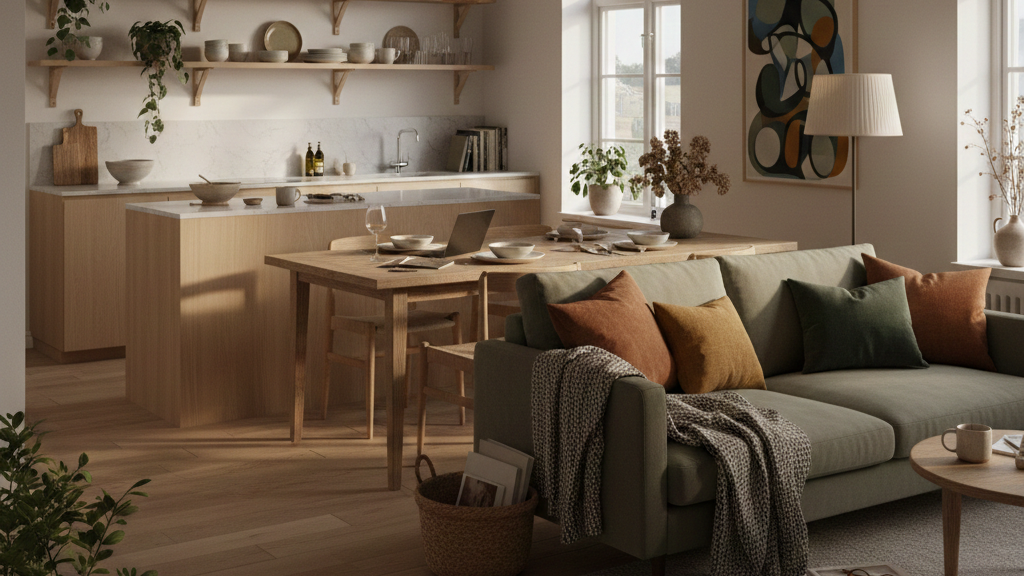
Open-plan living is often sold as the easy option. More light, more space, fewer walls — a home that flows.
And in many ways, it does. But living in one can quietly feel more demanding than expected. Not because it’s chaotic or poorly designed, and not even because it’s particularly messy. In open spaces, even a small amount of mess in one area tends to spill visually into everything else. A single cluttered surface can make the whole space feel unsettled.
What makes this tiring isn’t disorder itself, but visibility. When you can see almost everything at once, the brain never fully gets to disengage. Even tidy areas stay connected to the unfinished ones, and the day remains mentally open longer than it needs to.
When nothing ever leaves your field of view
In an open-plan home, it’s hard for anything to truly disappear. The kitchen counter is visible from the sofa. The dining table doubles as a workspace. Laundry might be folded but not yet put away, still sitting in plain sight. Even when everything is technically “in order,” there’s often a sense that the day hasn’t fully ended.
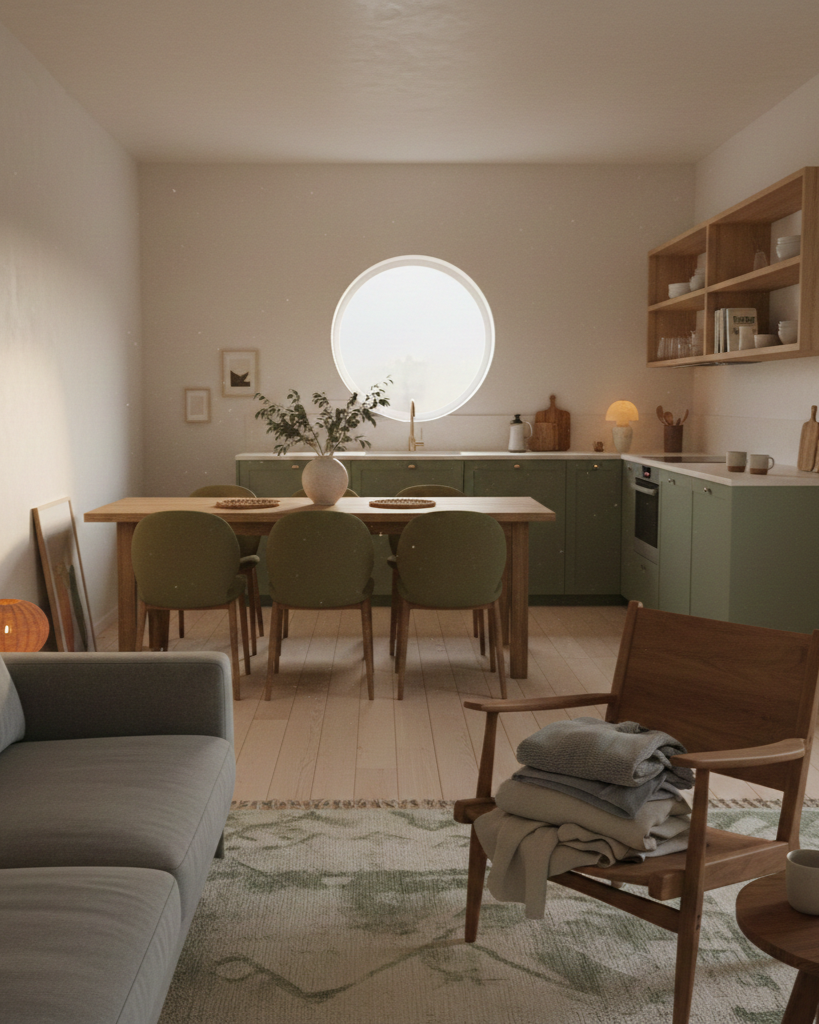
You sit down, but part of your attention remains attached to what you can still see — a surface that’s half-cleared, a task that’s paused rather than finished, a space that looks ready for whatever comes next. It’s not chaos, exactly. It’s the feeling that nothing has quite closed.
That constant visibility keeps the mind lightly alert, scanning and registering details that don’t ask for action yet still refuse to fade into the background.
Why this isn’t about adding walls
Most of us aren’t about to rebuild our homes. And honestly, many people like open-plan living. The light, the sense of connection, the way rooms talk to each other.
The issue isn’t openness itself. It’s the lack of visual boundaries. The brain seems to relax when it knows where one zone ends and another begins — even if that boundary is soft, temporary, or partial.
What actually helps: soft separation
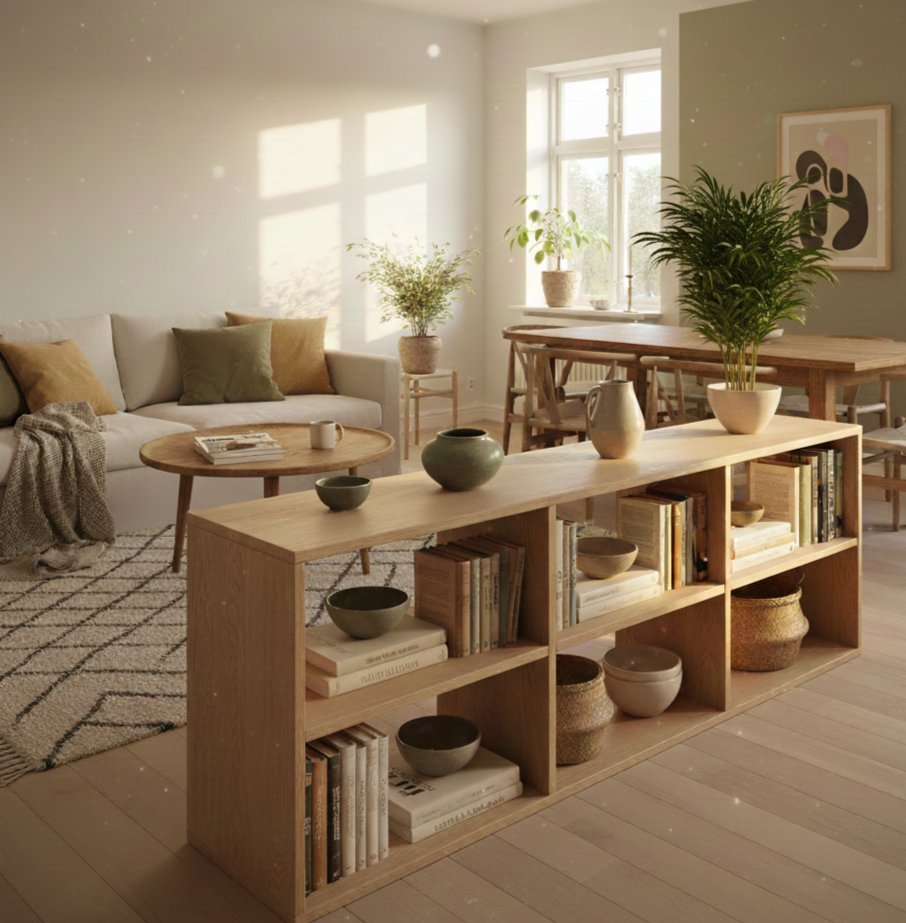
What seems to make the biggest difference isn’t hiding the whole room, but allowing parts of it to step slightly out of focus. The brain relaxes when it can tell where one area ends and another begins, even if that boundary is temporary or incomplete.
Low, open dividers tend to work especially well for this. Something like a low open shelving unit between two areas doesn’t block light or connection, but it interrupts the sense that the entire home is one continuous task. You still see through it, but you no longer see everything at once.
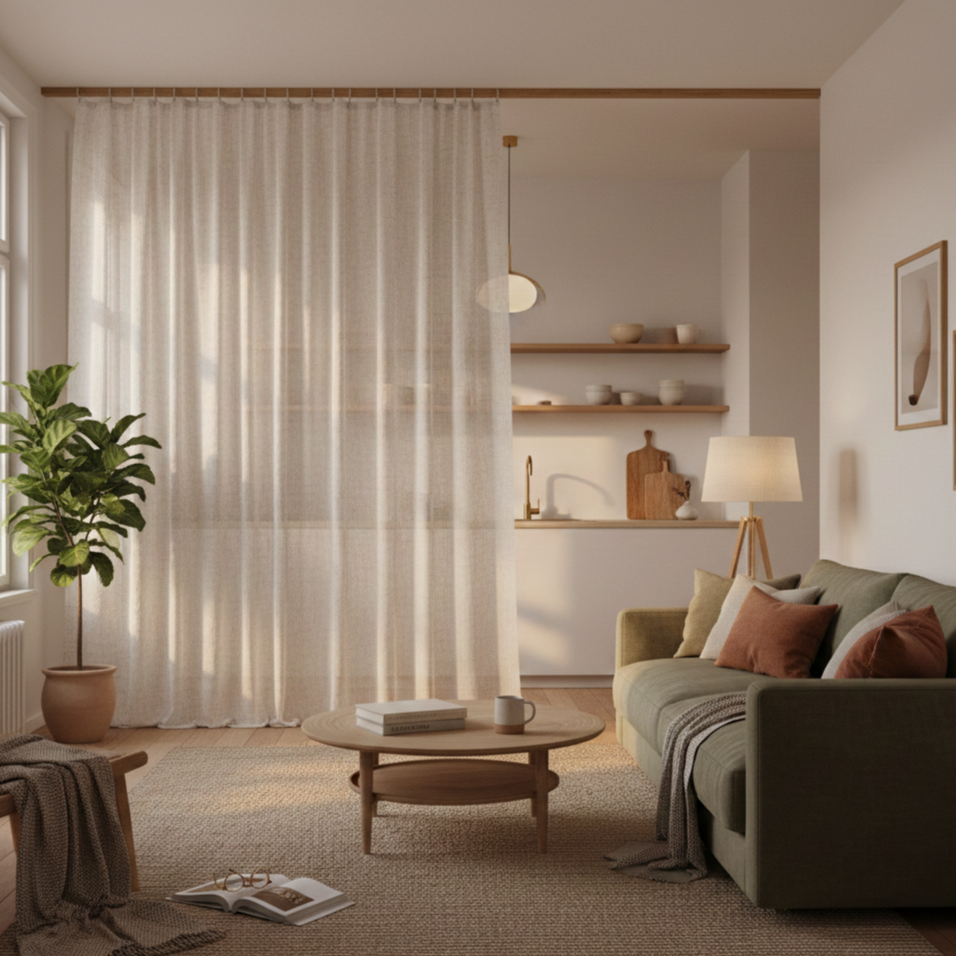
Fabric can do something similar. A light curtain, used away from windows, can close off a workspace or dining area in the evening without turning it into a separate room. Drawn at night and opened again in the morning, a simple linen curtain becomes less of a design feature and more of a signal that part of the day has ended.
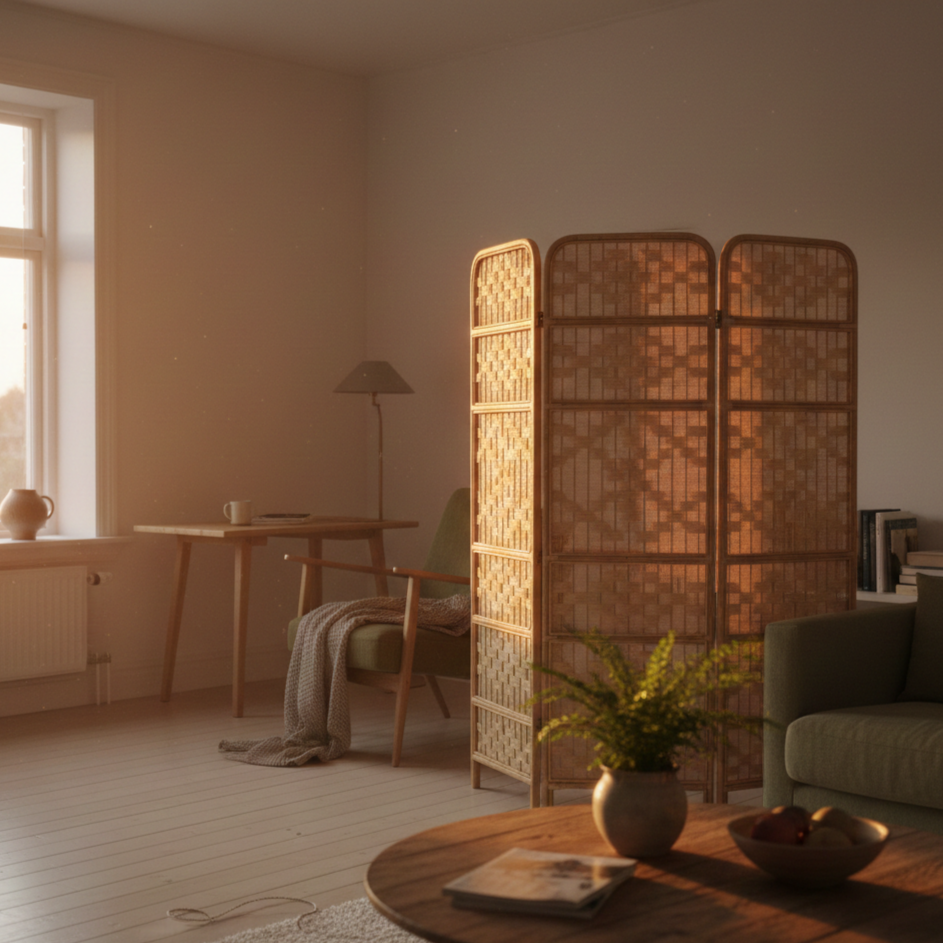
There are also moments when flexibility matters more than permanence. In those cases, a folding room screen can be useful precisely because it isn’t fixed. It appears when needed, disappears when it’s not, and doesn’t ask the space to commit to one layout all the time. The once made of bamboo especially also looks great!
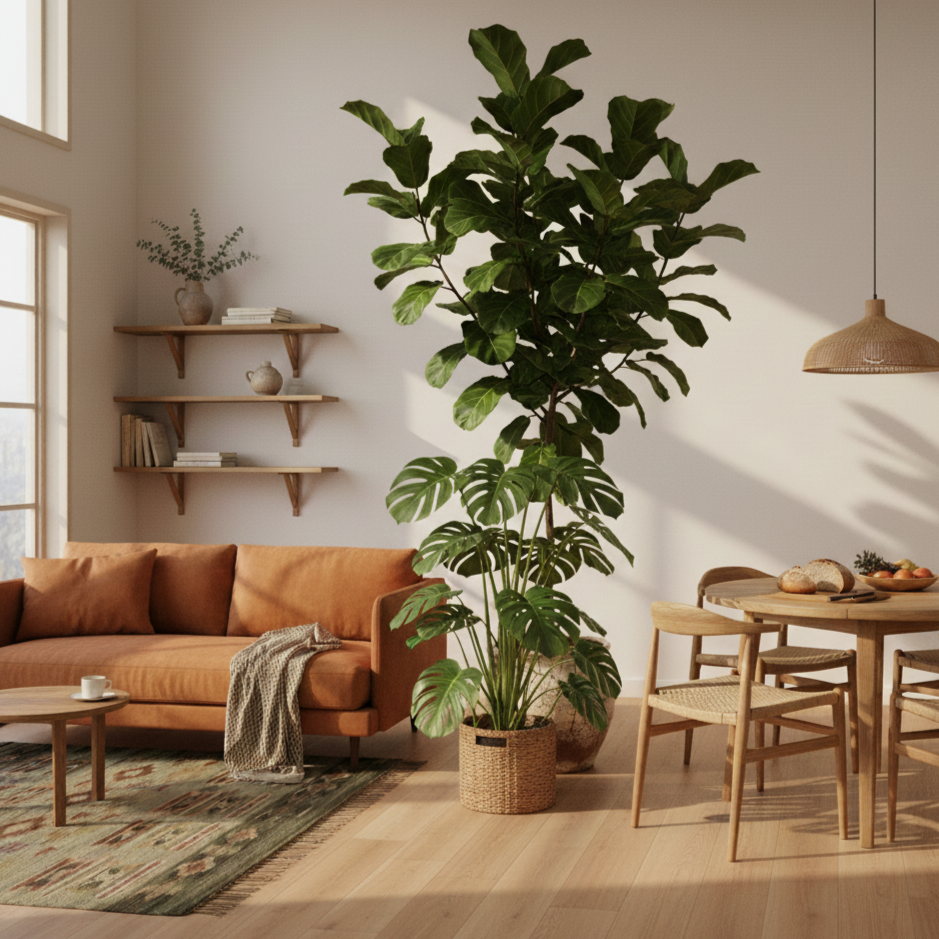
Even plants can function this way when they’re placed deliberately. A tall plant between two zones doesn’t just add greenery — it breaks a sightline. It gives the eye somewhere to stop, which is often all that’s needed for a room to feel quieter.
None of these changes make an open-plan home smaller. They make it feel more legible. Instead of one large, active space, the room starts to behave like a few calmer ones that happen to share light.
A personal note
I started noticing this most in the evenings. Sitting down, feeling physically tired, but mentally not quite finished.
Once we added a few clearer boundaries — nothing dramatic, just a little open shelf with plants to divide the living room and the dining room — evenings felt quieter somehow.
When open-plan living works better
Open layouts tend to feel easier when each area has a clear role, even if the boundaries between them are subtle. When a workspace doesn’t bleed into the living area, and the kitchen isn’t visible from every resting spot, the space feels calmer without becoming closed off. It helps when some parts of the room are allowed to “switch off” while others remain usable, so the entire home isn’t always participating in the same activity.
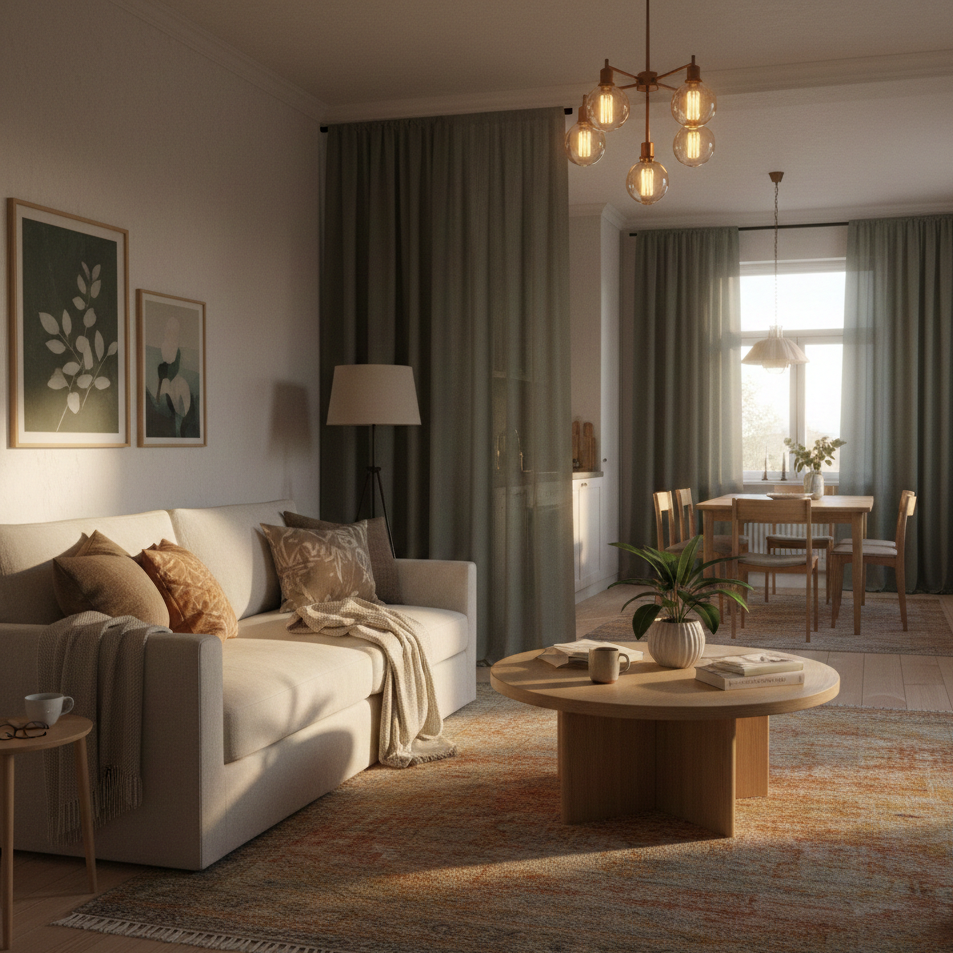
This doesn’t require strict divisions or permanent walls. Often it’s enough that the eye has somewhere to pause, and that unfinished tasks aren’t constantly sharing the same visual field as places meant for rest. When that balance is there, open-plan living keeps its sense of openness without carrying the mental noise that can come with seeing everything at once.
If you’ve noticed a similar kind of visual friction in other parts of your home, you might also relate to how small changes can shift the feeling of a space in The Kind of Kitchen That Feels Easier to Be In.
And if kitchens are where this tension shows up most, the Calm Kitchen Reset Checklist fits naturally here as a gentle next step — not to organize everything, but to reduce what stays visually open:
A quieter way to live with open space
Open-plan homes don’t need fixing.
They need pauses.
A curtain drawn.
A shelf that says “this belongs here.”
A screen that lets part of the room rest.
Sometimes the calm comes from seeing a little less.
–
Some items mentioned in this post are linked for reference. If you choose to purchase through these links, I may earn a small commission at no extra cost to you.