

How Calm Nursery Wall Art Creates a Peaceful Space
If you pause for a moment, you can probably remember a room from childhood that felt safe. Not in a dramatic way, but quietly. A room where the light fell softly across the floor, where sounds from the rest of the house arrived gently, slightly muffled, and where time seemed to move a little slower.
Maybe it was a bedroom in the early morning, when the curtains filtered the sunlight just enough to keep everything calm. Maybe it was the corner of a living room in the afternoon, when the air felt warm and still, and the only movement came from dust drifting through the light. Or maybe it was the place you went when you needed to be alone, where nothing demanded your attention and your body could finally relax.
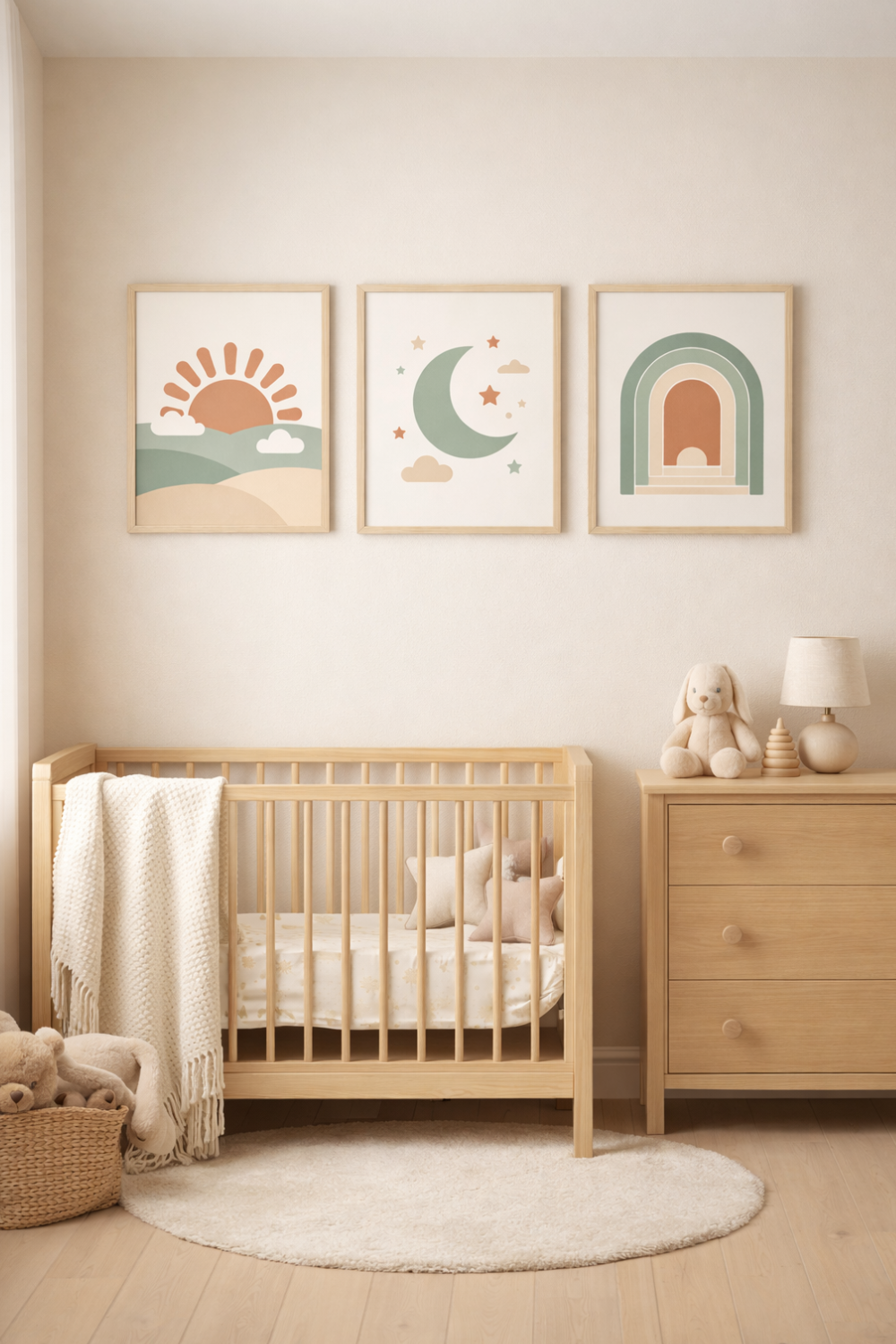
You probably don’t remember exactly what hung on the walls. You might not remember the furniture at all. What stays with you is the feeling of being held by the space. A sense of safety that lived quietly in the room itself.
That feeling is what many of us try to recreate when we design a nursery.
A Nursery Becomes an Atmosphere
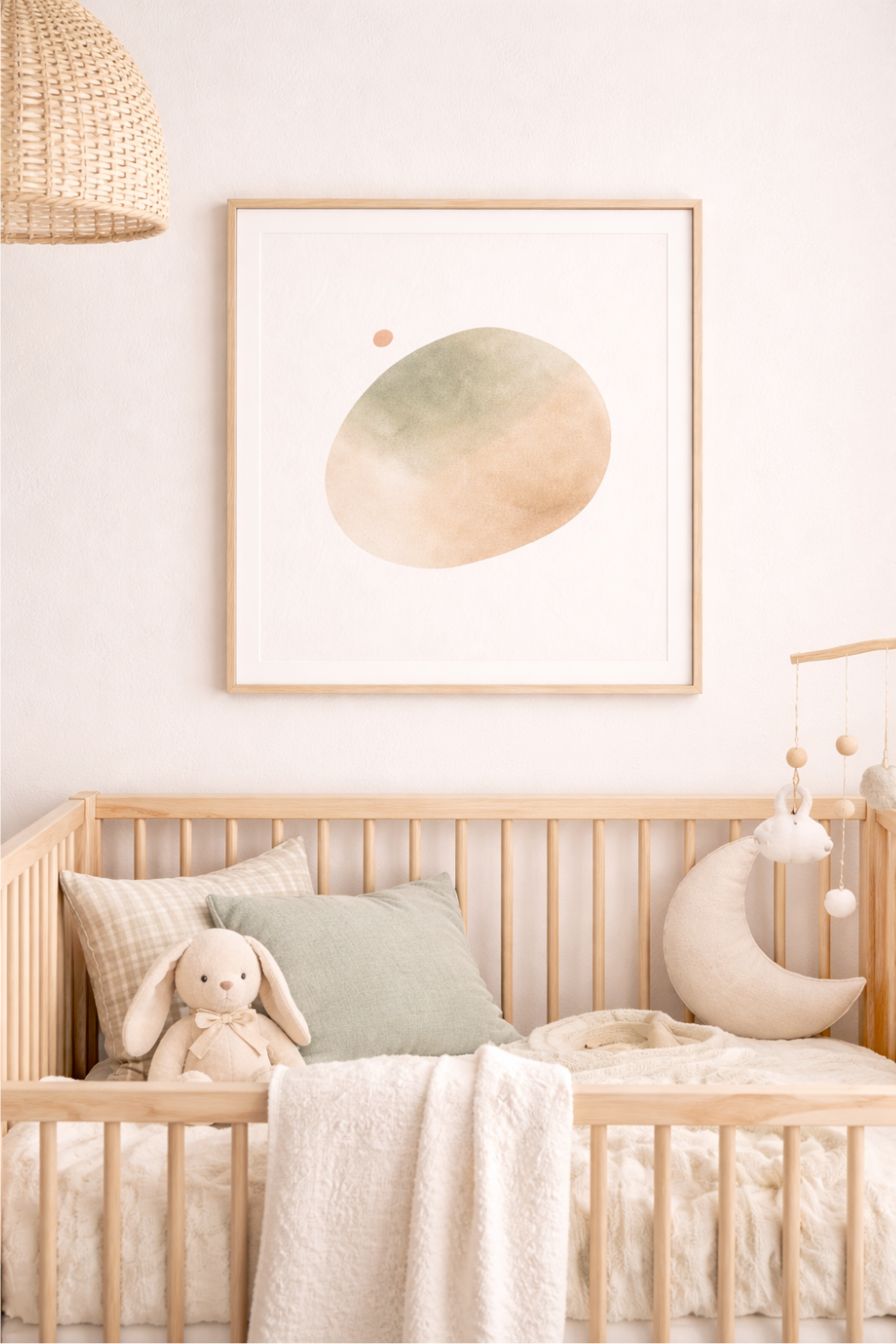
A nursery becomes more than a functional room surprisingly fast. It turns into a backdrop for some of the most repetitive and intimate moments of early parenthood. The soft pacing of a morning feed. The long hush of a midday nap. The way you move through the room at night without fully waking up. In those moments, you don’t experience the nursery as a collection of objects. You experience it as an atmosphere.
And atmosphere is a real thing. You can feel it instantly, even if you can’t explain it. Some rooms settle your body the second you step into them. Others feel busy, even when they’re clean. Some feel soft and held. Others feel like they are always asking for your attention.
Long before babies understand words or even recognize what they’re looking at, they sense rhythm, contrast, light, and shadow. They respond to the pace of a space. They feel when something is loud visually, when shapes are sharp, when colors compete, when patterns keep the eyes moving without rest. None of this is conscious. It’s simply how the nervous system reads a room.
This is why calm matters. Not as an aesthetic trend, but as a kind of care.
How Rooms Become Busy Without Intending To
Often, nurseries drift away from softness by accident. It’s understandable. There is so much inspiration everywhere, and it can be hard to resist the urge to fill every corner with something sweet. A print here, a garland there, a patterned wall, a cluster of tiny details that all seem harmless on their own.
Slowly the room becomes full. Not necessarily messy, but full in a way that makes the air feel heavier. The eye never quite rests. The space begins to hold a subtle tension, even if everything looks beautiful on the surface.
Calm usually returns the moment you start removing rather than adding. When you let the room breathe again. When you choose fewer elements and allow each one to matter. When you give empty space permission to exist without feeling like you need to fix it.
The Quiet Power of Soft Walls
Walls have a larger role in this process than most people expect. They are the biggest uninterrupted surfaces in a room, and they quietly shape its emotional temperature. What we place on them influences not only how the space looks, but how it feels to spend time there.
Soft colors lower visual tension. Simple shapes slow the eye. Gentle compositions create rhythm and balance. When the walls feel calm, the room follows.
This is where wall art becomes more than decoration. In a nursery, it becomes part of the atmosphere itself. A piece of art is something your eyes return to again and again without realizing it. Over days and weeks, it becomes part of the room’s emotional background.
What Calm Nursery Wall Art Has in Common
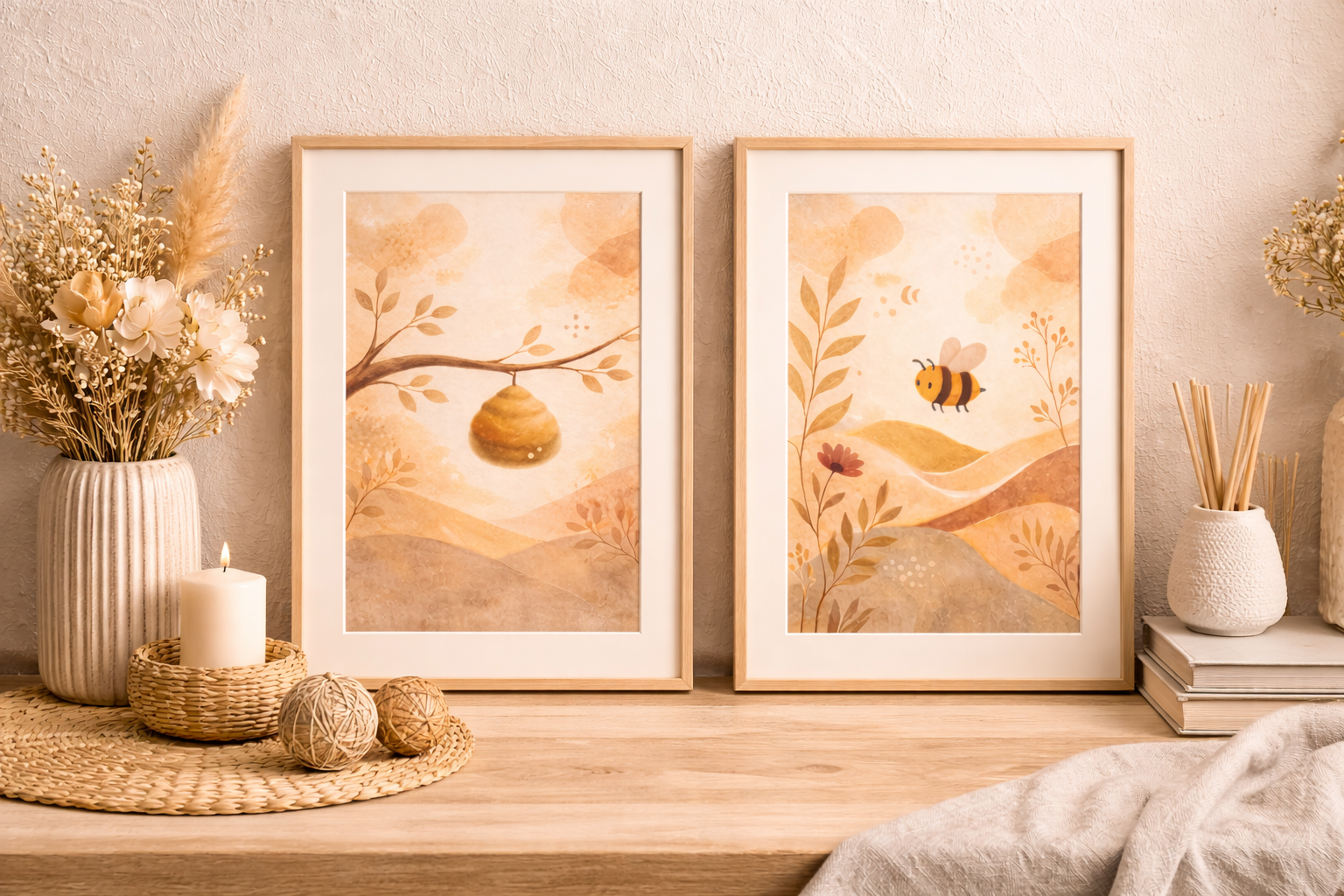
Calm wall art tends to share a few gentle qualities, even when the style varies. The colors are low contrast and natural. Warm beige, soft sage, muted terracotta, and creamy off-whites appear again and again. The shapes are rounded rather than sharp. The compositions are simple, with space around the subject that allows the eye to rest.
There is no urgency in these images. Nothing pulls attention too strongly. They exist quietly, supporting the room rather than competing with it.
A small, coordinated set often works better than a random collection. When three pieces share the same visual language, the wall stops feeling like a collage and starts feeling like a calm anchor. The eye understands the rhythm quickly, and then it can relax.
Letting the Room Settle
If you want to create a calm nursery, it helps to think first about when you most need the room to feel gentle. Often, it is the evening. The dim light. The tired tenderness of those long hours. The moments when everything slows and the world feels very small.
Ask yourself what you want to see when you look up from a rocking chair. What kind of wall would make your shoulders drop. What colors would feel softest in low light. Let those answers guide your choices.
You don’t need to redesign everything. Often, one thoughtful change is enough. A softer palette. A quieter wall. A simple focal point that brings the room back into balance.
A Gentle Starting Point
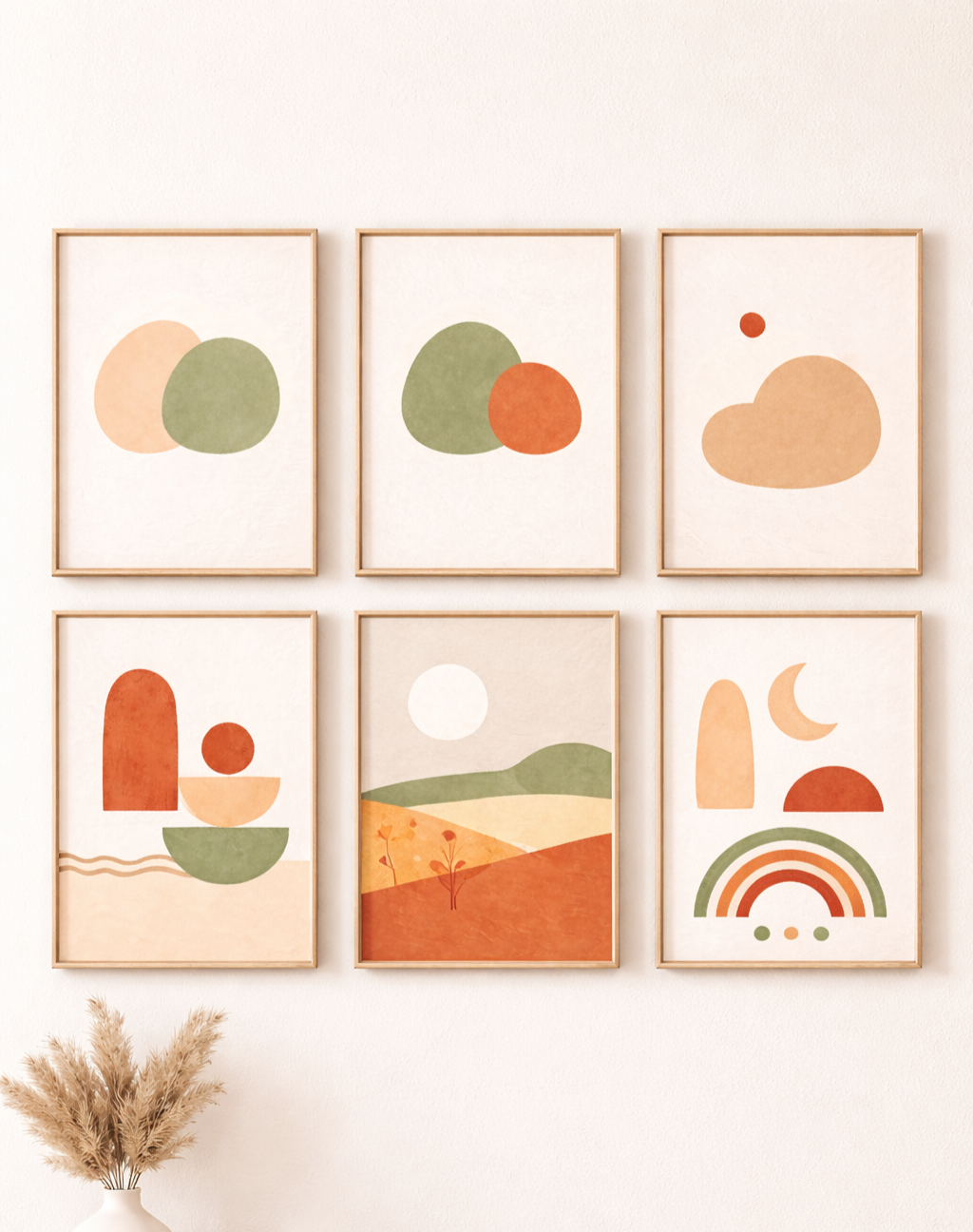
If you’re drawn to soft neutrals, minimalist forms, and a calm Japandi-inspired aesthetic, a small set of coordinated nursery prints can be a gentle way to anchor the room. Three simple pieces, designed in warm beige, sage, and muted terracotta, can create a peaceful focal point without overwhelming the space.
If you’d like, you can explore a carefully curated set of three neutral nursery prints here, created specifically to support a calm, balanced atmosphere.
The Memory We Leave Behind
In the end, what we are really creating is not just a nursery, but a series of moments. Soft mornings with filtered light. Quiet afternoons on the floor. Evenings that slowly dissolve into sleep. These moments deserve a space that supports them rather than rushes them.
And perhaps, years from now, your child will carry one of these rooms with them in the same quiet way you carry your own. Not remembering every detail, but remembering how it felt to be there.
Peaceful Mind Living — art created to bring calm into everyday spaces.