
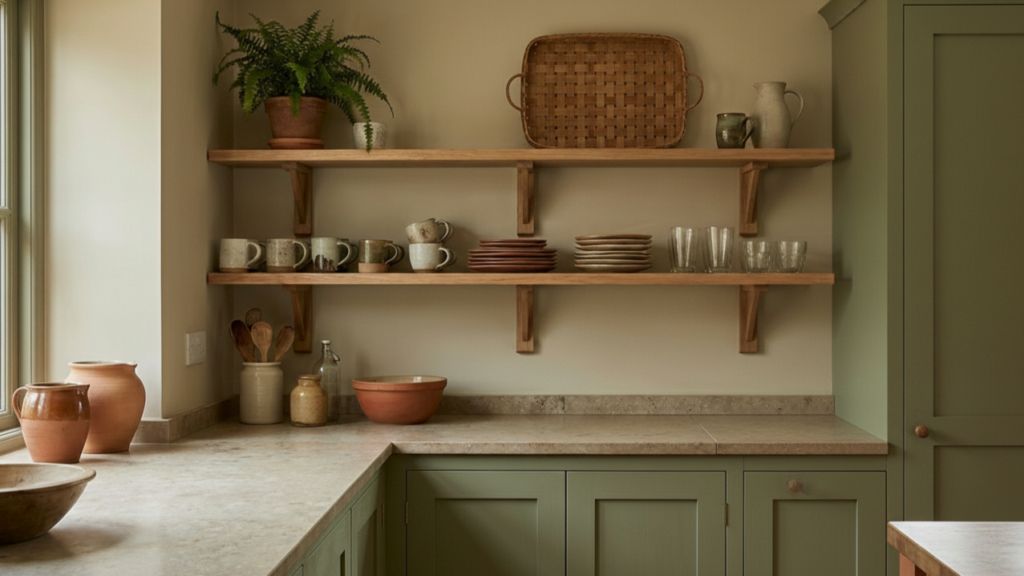
I didn’t start thinking about “calm kitchens” on purpose. It happened slowly, after looking at a lot of kitchens — real ones, not showroom-perfect spaces. Some of them were beautifully designed, full of expensive materials and clever storage systems, and yet I noticed I didn’t want to linger in them. Others were much simpler, but they felt easier to be in. Quieter somehow. Like nothing was asking for attention. At some point I started wondering what the difference actually was.
What calm kitchens don’t do
The first thing I noticed was that calm kitchens rarely try to do everything at once. They don’t display every object. They don’t hide everything either. There’s usually a balance between what’s visible and what isn’t.
When everything is on display, the room feels busy, even if it’s technically tidy. And when everything is hidden away, the space can feel oddly rigid, almost sterile. The kitchens that felt best sat somewhere in the middle.
Why we chose both open shelves and closed cabinets
When we designed our own kitchen, we spent an unreasonable amount of time thinking about storage. Not how much we could fit — but how we actually move through the space.
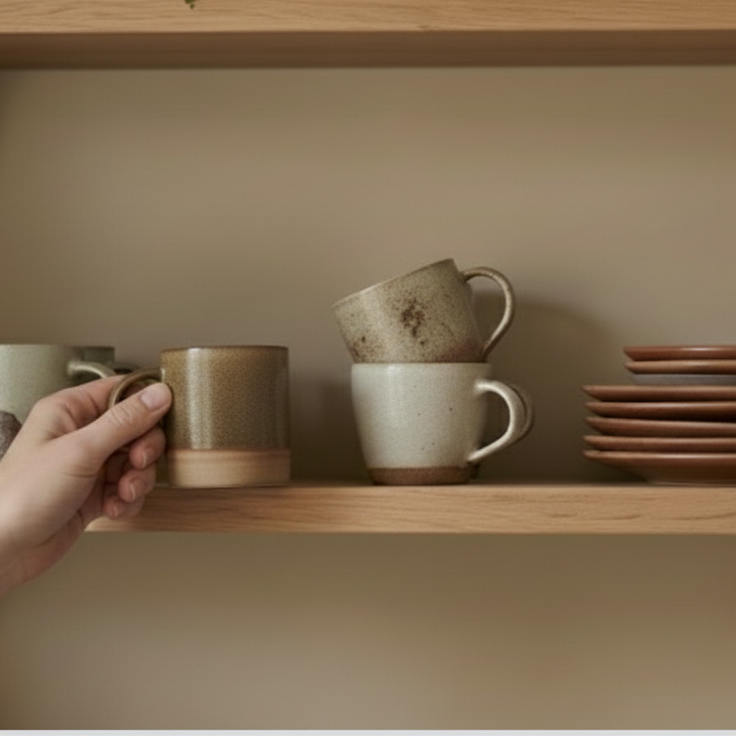
We ended up choosing a mix of open shelves and closed cabinets, and in practice, this one decision has probably made the biggest difference in how the kitchen feels day to day.
The things we use constantly — drinking glasses, cups, plates, trays — live on the open shelves. They’re fairly simple pieces: neutral ceramic mugs, drinking glasses, everyday plates, a wooden tray. Not because they’re meant to be displayed, but because they’re easy to grab, easy to wash, and easy to put back in the same spot every time. When shelves work like this, they stay tidy almost without effort. And best of all, they don’t have time to gather dust.
Everything else — the things we use occasionally, or not at all some weeks — lives behind closed doors. They’re still there when we need them, but they’re not part of the visual landscape of the room. They don’t compete for attention when we’re just making coffee or clearing the table.
That combination reduces visual noise without making the kitchen feel sparse.
The “bistro” feeling
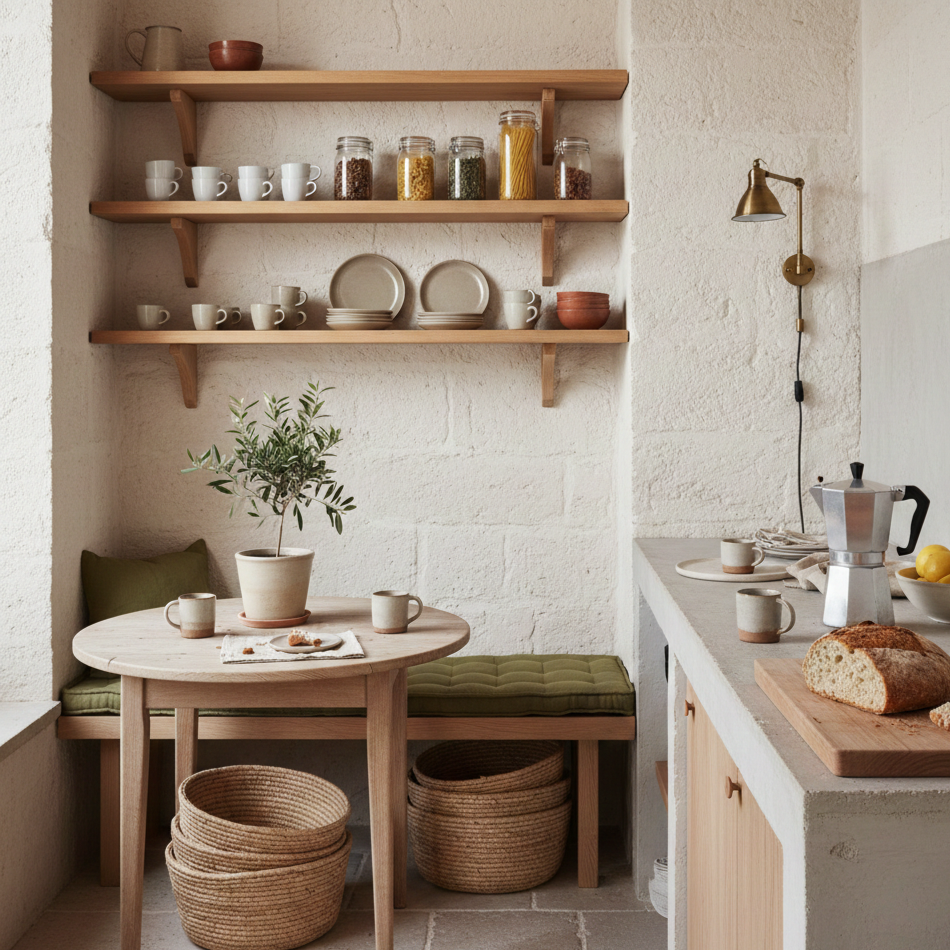
I’ve noticed that kitchens with just a couple of open shelves often get described as having a “bistro” feel. Not in a themed way — more in the sense that things are visible because they’re meant to be used.
You see cups because people drink from them and you see plates because meals actually happen there. It’s not styled for an audience. It’s arranged for repetition. And repetition, I think, is one of the quiet foundations of calm.
Open shelves only work when they’re limited
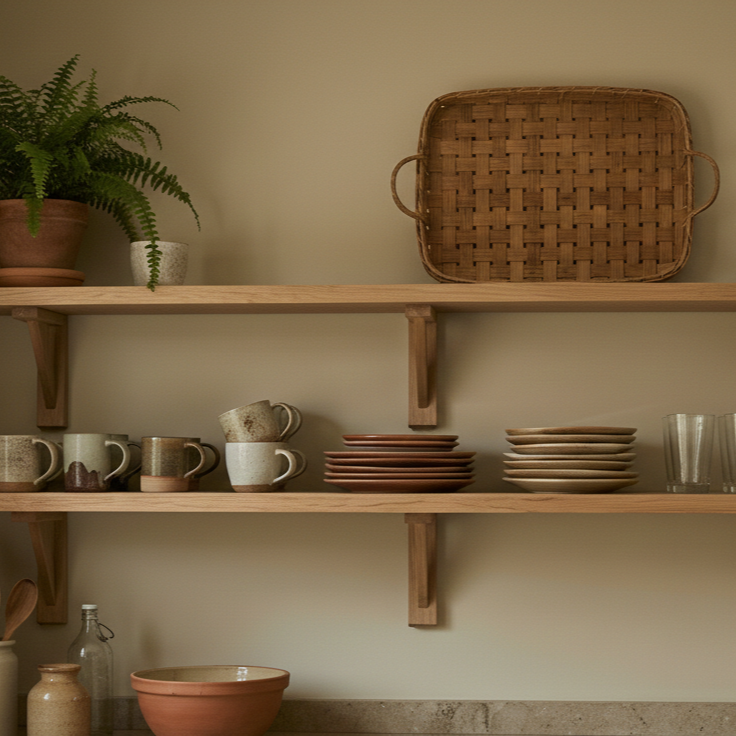
Open shelving works best when it’s not everywhere. A few shelves give the eye somewhere to land. Too many, and the room starts to feel unfinished or demanding. Calm kitchens seem to understand this instinctively — they offer just enough openness to feel alive, and just enough closure to feel restful.
Where this connects to everything else
Once I started noticing this balance, I saw it repeated in other calm kitchens — not just in shelving, but everywhere. In coffee stations that feel inviting instead of crowded. In kitchens where appliances don’t dominate the room. In spaces where storage choices quietly guide behavior instead of enforcing rules.
I wrote more about this idea of quiet functionality in Small Apartment Kitchen Fixes That Help Create a Calm Space, where I explore how small layout decisions can reduce daily friction. And in A Calmer Kitchen: Quiet Appliances for Small, Busy Spaces, I looked at how sound — or the lack of it — changes how we experience the room altogether.
They’re different topics, but they circle the same idea. Calm comes from deciding what doesn’t need to be visible and grouping together objects.
A small observation that stuck with me
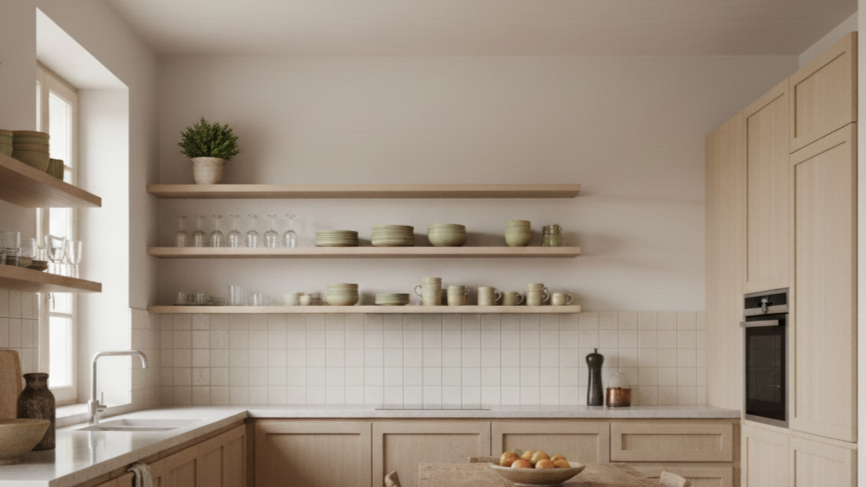
The kitchens I keep thinking about aren’t the most minimal or the most styled ones. They’re the ones where you can easily imagine someone moving through the space without having to think about it too much.
Cups go back where they belong because there’s an obvious place for them. Shelves don’t feel like they need constant rearranging. Cabinets quietly hold the rest without demanding attention.
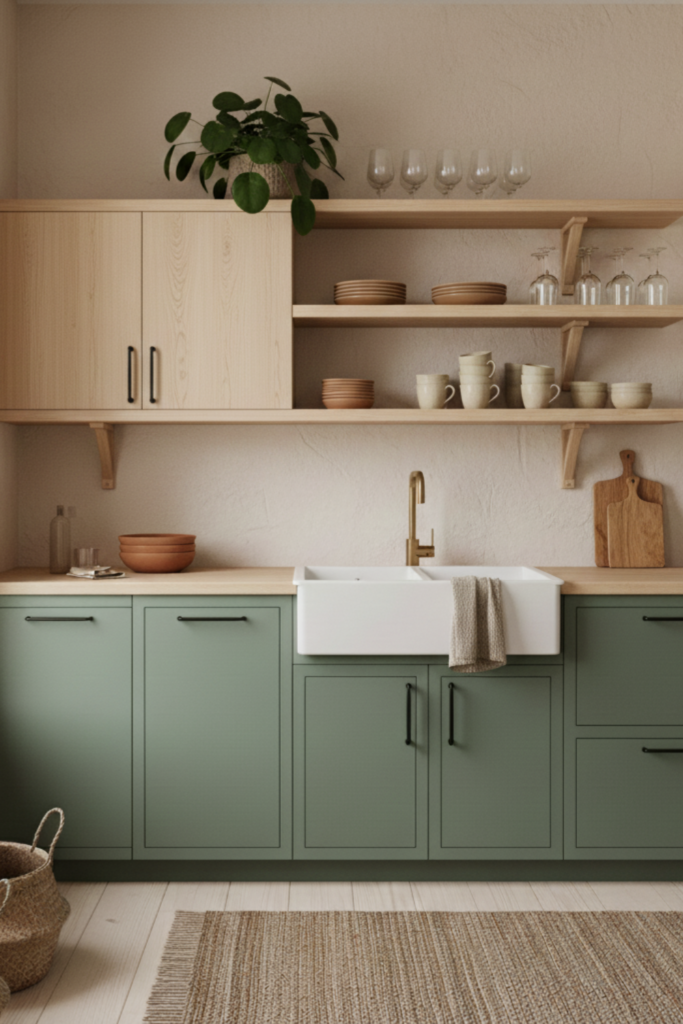
Nothing in these kitchens seems to be trying to impress anyone, and maybe that’s exactly why they feel so generous and easy to be in.
I didn’t sit down with the goal of designing a “calm kitchen.” But looking back, this balance — between what’s visible and what’s hidden — is probably what creates that feeling. It’s not really about how the kitchen looks. It’s about how little it asks of you when you’re using it.
Some of the items mentioned in this post are linked for reference. If you choose to purchase, I may earn a small commission at no extra cost to you.