There is a quiet shift happening in the way people think about their homes. Not long ago, the goal was often a perfectly styled space. White walls, sharp lines, very little clutter, and everything in its place. It looked good in photos, but it didn’t always feel good to live in.
Now the mood is different. People want warmth. They want softness. They want their homes to feel like somewhere they can breathe.
That is where the idea of the calm corner comes in.
It is not a full renovation or a dramatic makeover. It is just one small area of your home that feels peaceful the moment you look at it. A place with soft light, gentle textures, and a few objects that make you feel at ease. Many homes in 2026 are being shaped around this idea. Instead of trying to make every room perfect, people are creating one small corner that sets the tone for the whole space.
And the surprising thing is that this little corner often changes the feeling of the entire home.
What a calm corner really is
A calm corner is not about expensive furniture or trendy decor. It is more about atmosphere than objects. When you look at it, nothing feels sharp or demanding. The colors are soft. The materials feel natural. The shapes are gentle. It is a space that does not ask anything from you.
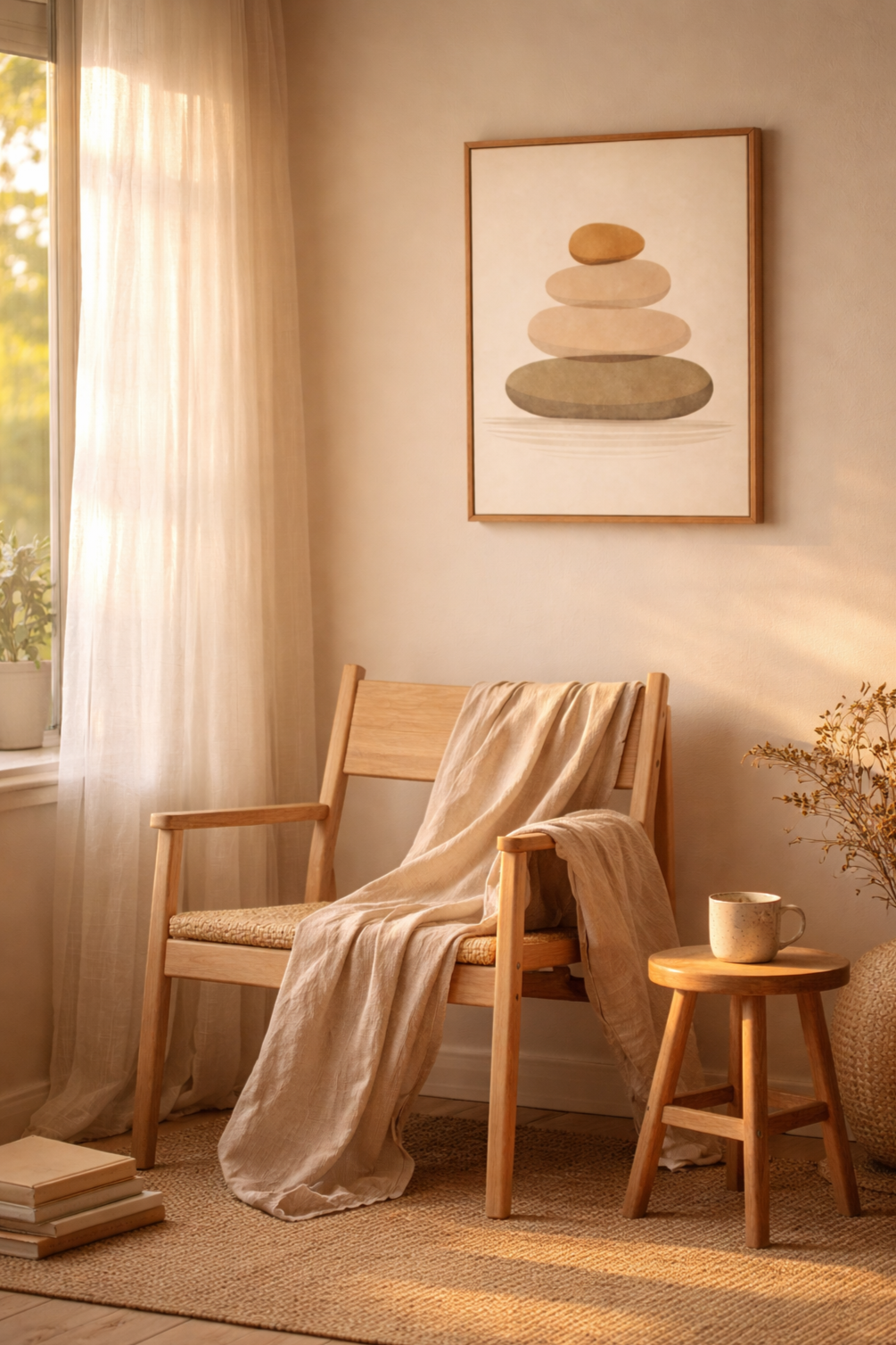
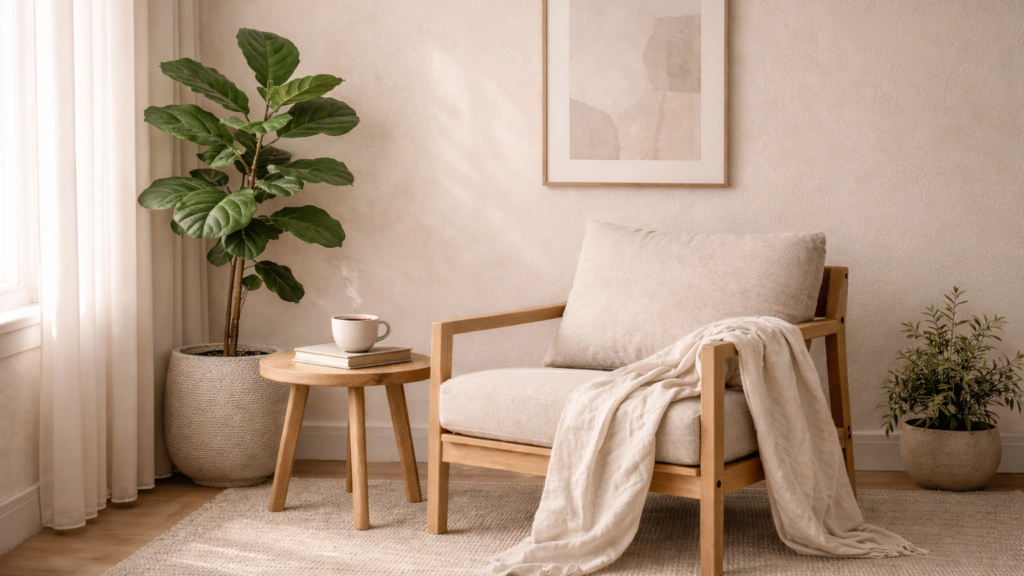
You might see a wooden chair with a linen throw. A small table with a ceramic cup. A soft rug under your feet. On the wall, a quiet piece of art that holds the composition together without shouting for attention.
It is a simple arrangement, but it has a certain weight to it. It feels grounded. It feels settled. And in a busy home, that kind of visual calm becomes surprisingly important.
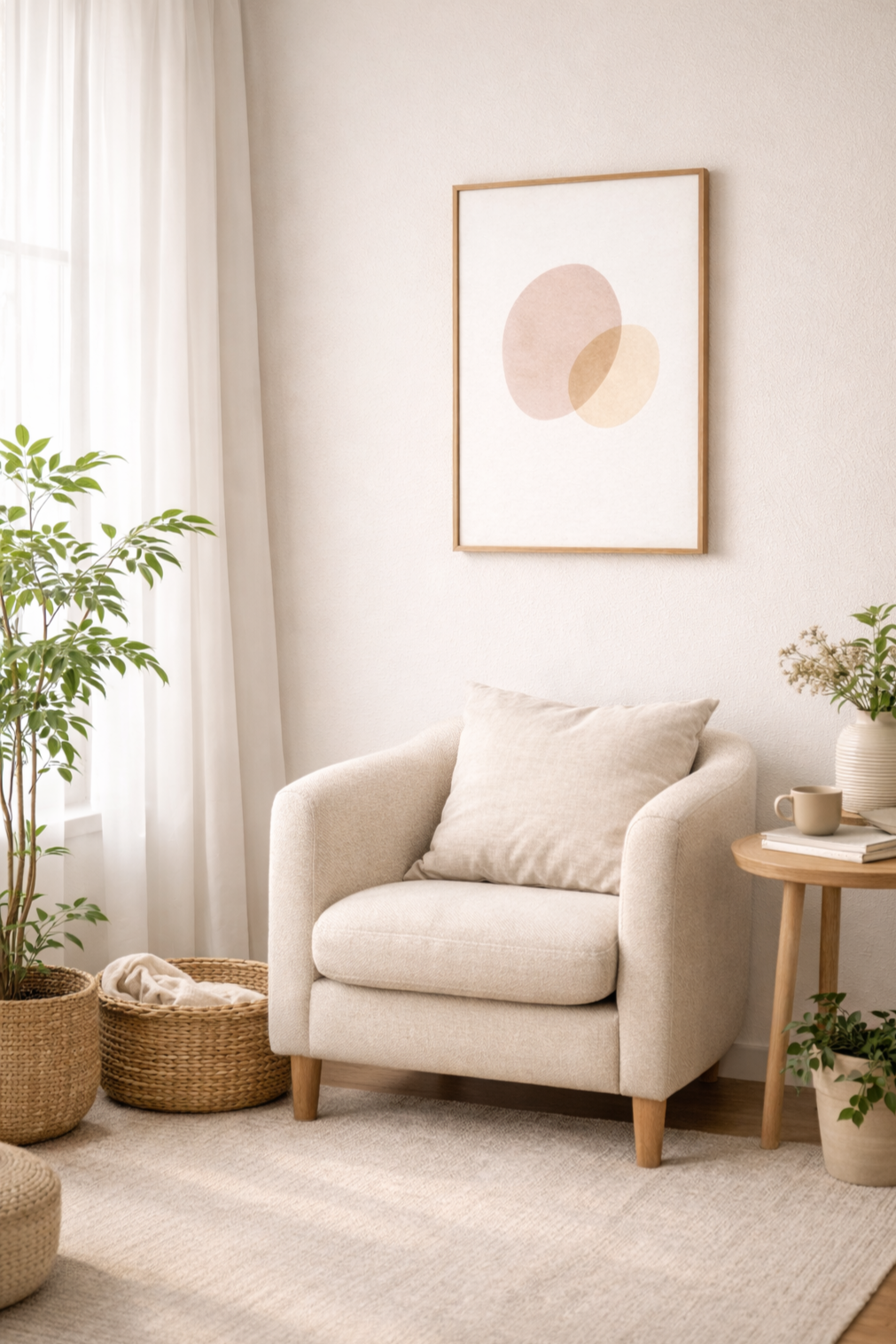
You can create a calm corner in almost any room. A nursery, a living room, a bedroom, even a small area in the kitchen can become a place where the eye naturally rests.
The three things every calm corner needs
Most calm corners share a few quiet principles. They are not rules in the strict sense, but more like gentle guidelines.
The first is soft light. Natural light works best, especially when it comes in from the side and creates subtle shadows. If the space is darker, a warm lamp with a fabric shade can create the same effect. The light should feel warm and slightly diffused, never harsh.
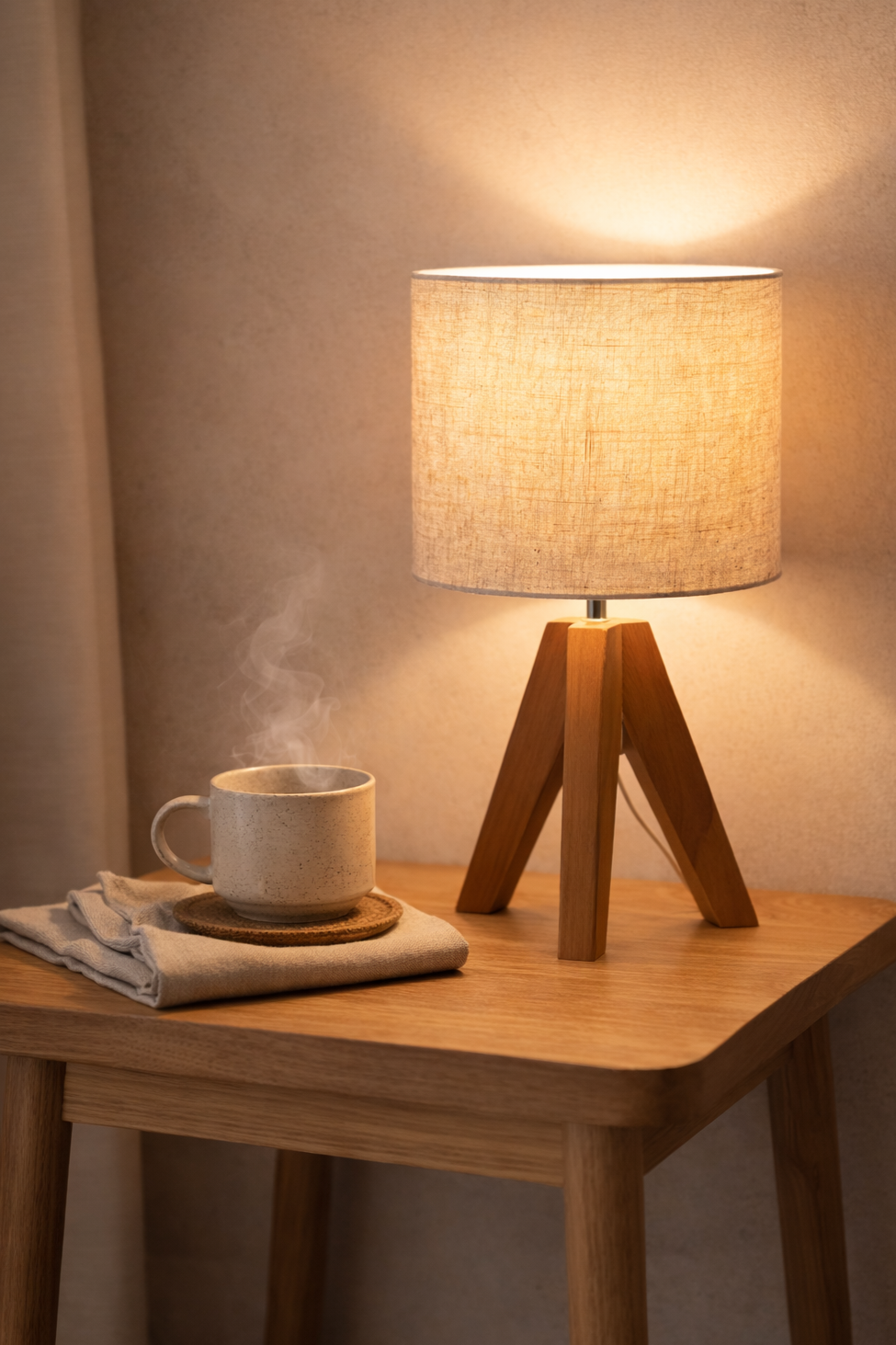
The second is natural texture. Wood, linen, cotton, wool, or clay all bring a sense of warmth. These materials age well and feel honest. A woven basket, a wooden tray, or a linen cushion can change the mood of a space more than a bright decorative object ever could.
The third is a gentle visual anchor. This is often where wall art comes in. A calm, neutral artwork above a chair, crib, or small table gives the corner a sense of balance. It helps the eye settle. Without that anchor, the space can feel unfinished, even if everything else is styled nicely.
If you are unsure what size art works best, you can use this simple wall art size guide to see what proportions feel right in your space.
And if you want to experiment without committing to anything, you can start with a free printable neutral nursery wall art set and see how it changes the mood of the corner.
A calm nursery corner
In a nursery, the calm corner often forms around the crib or a small reading chair. The palette tends to be soft, with warm beiges, dusty sage, or muted terracotta tones. A small wooden shelf, a soft rug, and one quiet artwork above the crib can be enough.
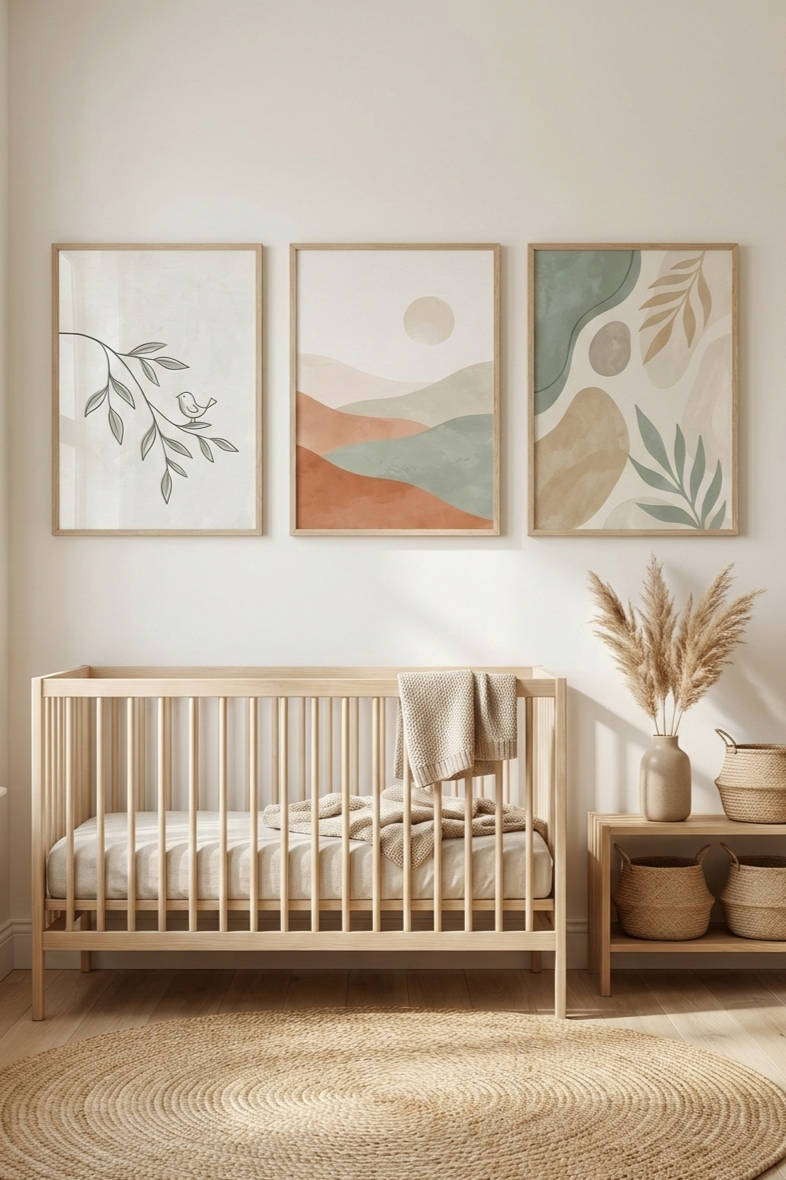
The goal is not to decorate every inch of the room. It is to create a space that feels gentle, especially during quiet moments like feeding, rocking, or reading.
A simple set of neutral nursery prints can work well here because they add warmth without overstimulating the room.
A calm living room corner
In the living room, the calm corner is often built around a chair or a small side table. Imagine a soft armchair near a window, a light linen throw draped over the side, and a small wooden table with a ceramic cup or a book.
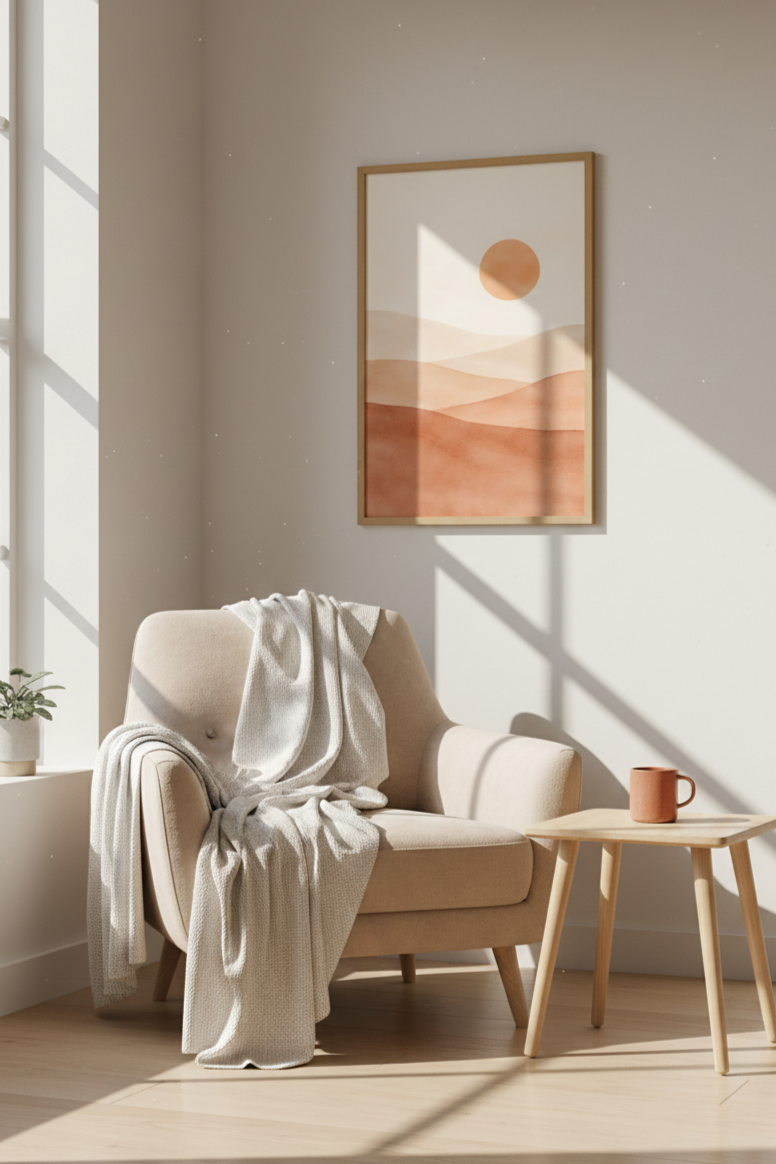
Above it, a single piece of abstract or landscape art in muted tones gives the area a sense of completeness. It does not need to match anything perfectly. It just needs to feel right in the space.
A quiet coffee or tea corner
Some of the most calming corners are not in the living room or bedroom at all. They are in the kitchen. A small tray with a teapot, a couple of cups (these particular cups alone gives you that japanese zen), and a folded linen cloth can become a daily ritual space.
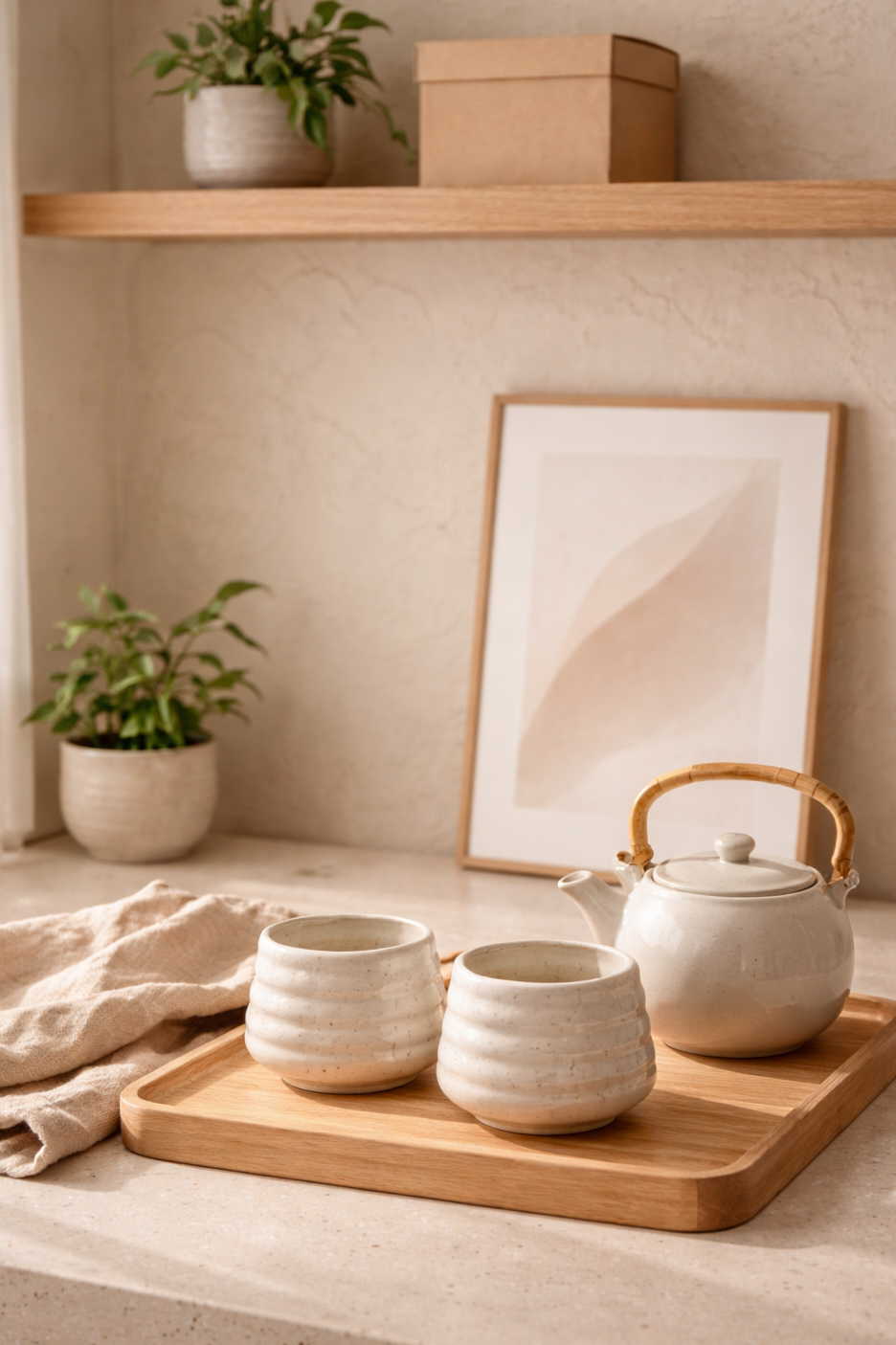
Add a small artwork on the wall or a simple print leaning against the backsplash, and the whole corner starts to feel intentional instead of purely functional.
These little setups photograph beautifully, which is one of the reasons they perform so well on platforms like Pinterest. They feel real and lived in, not staged or commercial.
Why one corner matters more than a whole room
It might seem strange to focus so much on a single corner when there are entire rooms to decorate. But people rarely experience their homes as wide, perfect shots. They experience them in fragments. A chair by the window. A shelf in the kitchen. The crib in the nursery. The table where they drink their morning coffee.
If just one of those places feels calm, it slowly changes how the whole home feels. You start gravitating toward that corner. You spend more time there. It becomes a small daily reset point.
And once you have one calm corner, you naturally begin shaping others.
A simple way to start
If you want to try this idea, pick one small area of your home. Do not overthink it. Start with three elements.
A soft source of light.
One or two natural textures.
And a gentle piece of art that ties it all together.
You might be surprised how much that tiny space affects the mood of the entire room.
And once it feels right, you will probably find yourself wanting another calm corner somewhere else in the house.