
Designing a nursery often starts with excitement — soft colors, tiny clothes, gentle light. But somewhere along the way, many spaces become visually busy. Too many patterns. Too many characters. Too much stimulation.
And instead of feeling calm, the room begins to feel restless.
What we place on the walls plays a surprisingly large role in shaping the emotional atmosphere of a nursery. Wall art isn’t just decoration — it becomes part of what a child absorbs quietly, day after day. The shapes, colors, and visual rhythm all contribute to how grounded or overstimulated a space feels.
Over time, I’ve noticed that the nurseries that truly feel calm tend to follow a few simple visual principles. They don’t chase trends. They don’t rely on loud colors or busy illustrations. Instead, they build atmosphere slowly, through softness, restraint, and intention.
Here are seven calm nursery wall art ideas that consistently work — emotionally, visually, and practically.
1. Soft abstract forms that leave space for imagination
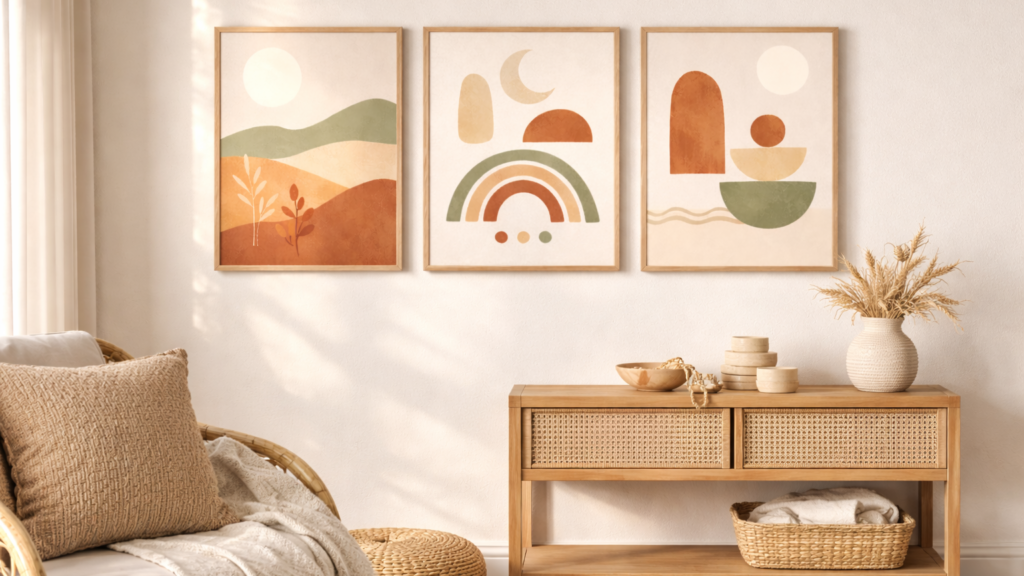
Abstract shapes might seem unusual for nurseries at first, but they are one of the most powerful tools for creating visual calm.
Soft, organic forms allow the eye to rest. They don’t demand interpretation. They don’t overwhelm. Instead, they quietly support imagination and emotional safety.
Abstract art also grows beautifully with the child. What feels soothing to a baby can later become curious shapes, gentle movement, and open-ended interpretation.
This philosophy is at the core of the nursery artwork I create in my Etsy shop — minimalist abstract forms designed specifically for emotional softness rather than visual excitement.
When choosing abstract wall art for a nursery, look for:
- soft edges
- low contrast
- gentle color transitions
- plenty of breathing space
The goal isn’t visual stimulation — it’s emotional grounding.
2. Minimal animal silhouettes instead of detailed illustrations
Animals are a natural choice for children’s spaces, but the style matters more than the subject.
Highly detailed animal illustrations often create visual noise. Bright colors, strong outlines, and expressive faces can overstimulate rather than soothe.
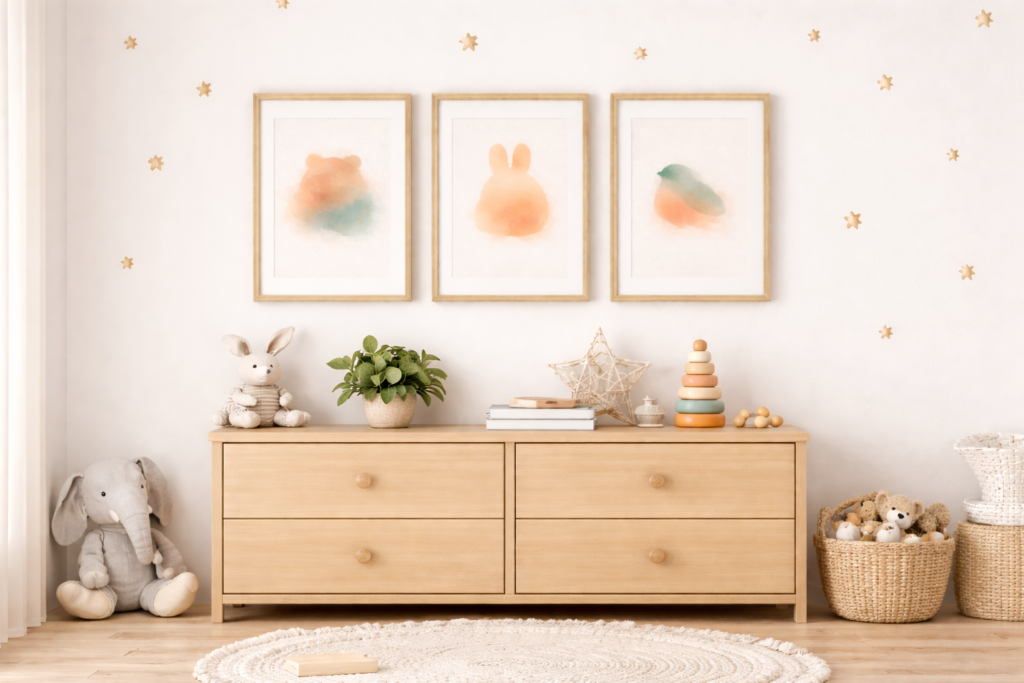
Minimal animal silhouettes, on the other hand, feel gentle and comforting. When simplified into soft shapes and muted tones, animals become quiet companions rather than visual distractions.
Think subtle forms, barely-there facial features, soft watercolor edges, and calm posture. These types of artworks feel friendly without being loud, playful without being chaotic.
This is also why minimalist nursery wall art has become so popular among parents seeking calmer spaces — it supports emotional regulation rather than visual overload.
3. Earthy, muted color palettes that calm the nervous system
Color has a direct effect on how we feel.
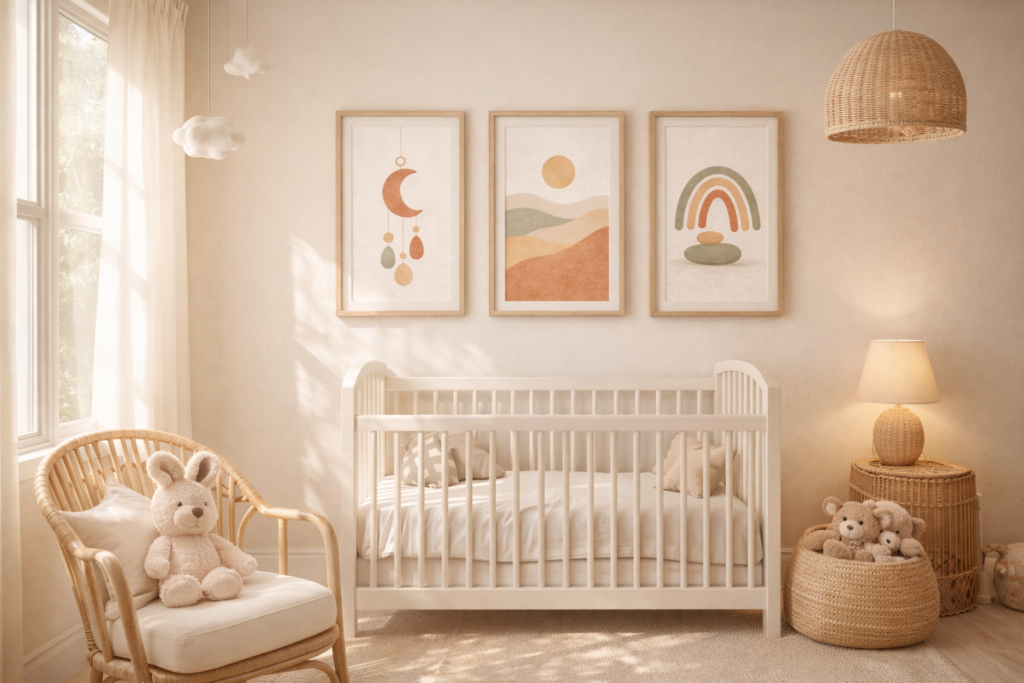
In nurseries, muted, earthy tones consistently create the most soothing environments. Soft sage greens, warm sand, gentle terracotta, pale eucalyptus, and creamy off-whites help regulate the nervous system and reduce sensory stress.
Highly saturated colors may look playful, but they often increase restlessness and agitation, especially in visually sensitive children.
If you want a nursery that feels restful both during the day and at night, aim for:
- warm neutrals
- soft greens
- gentle clay tones
- low contrast combinations
These palettes blend naturally with Scandinavian and Japandi interiors and allow wall art to become part of the space rather than something that dominates it.
4. One larger calming piece instead of many small ones
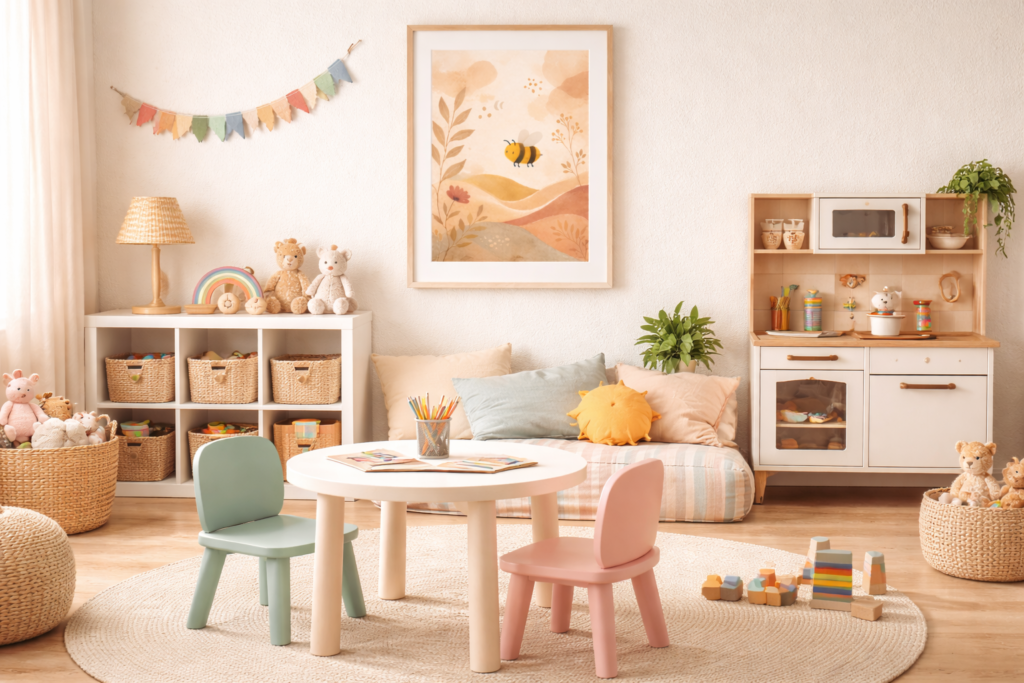
Sometimes less truly is more.
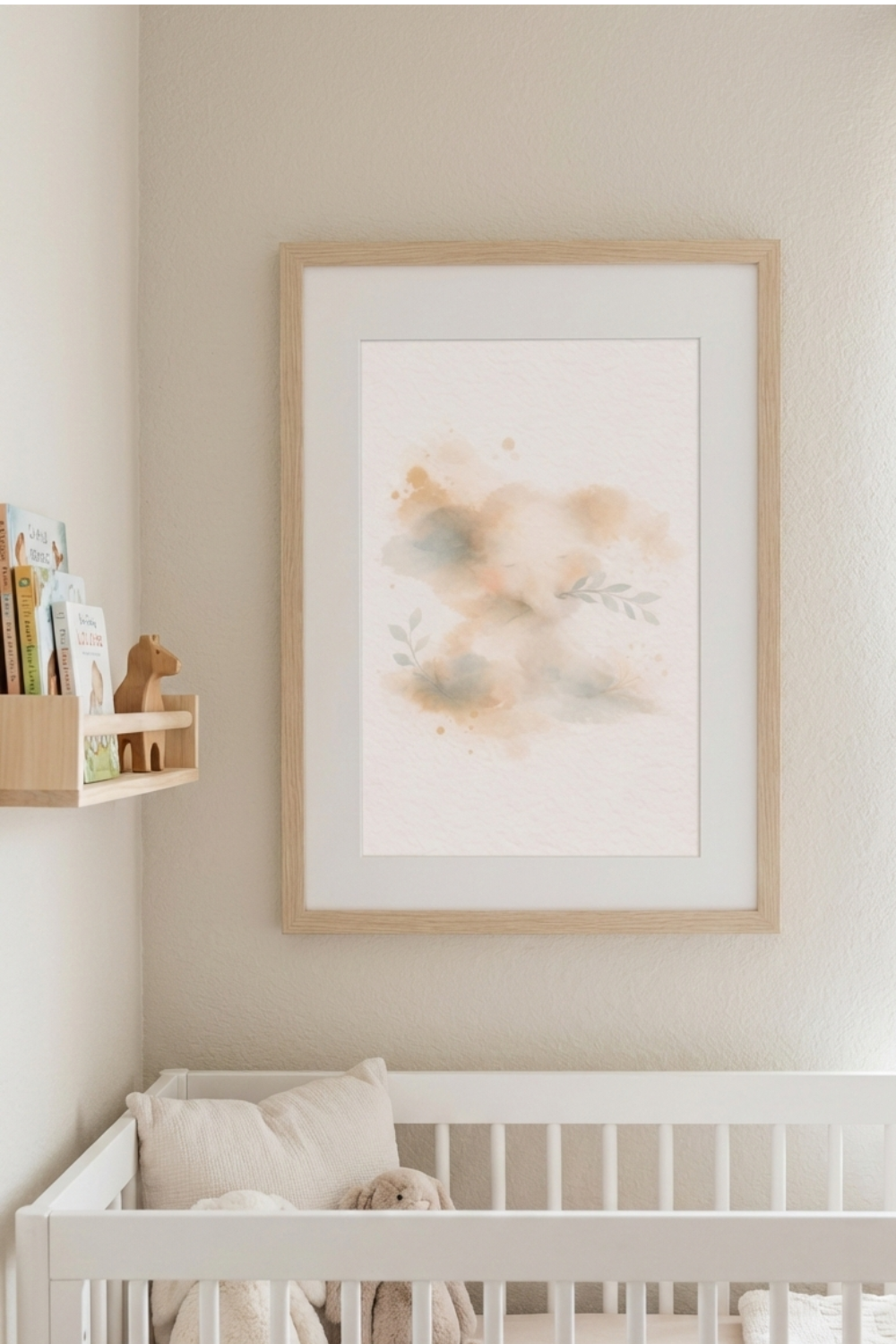
Instead of filling a wall with multiple small frames, one larger, calming artwork often creates a stronger emotional anchor. It gives the eye a place to rest and creates a sense of visual stability.
Large-scale calm art also makes a space feel more intentional and less cluttered, even in smaller nurseries.
Paired with soft lighting and natural materials, a single larger artwork can quietly define the emotional tone of the entire room.
A warm-toned wooden frame helps soften the composition even further, adding natural texture without visual weight.
5. Sets of two or three artworks that create gentle rhythm
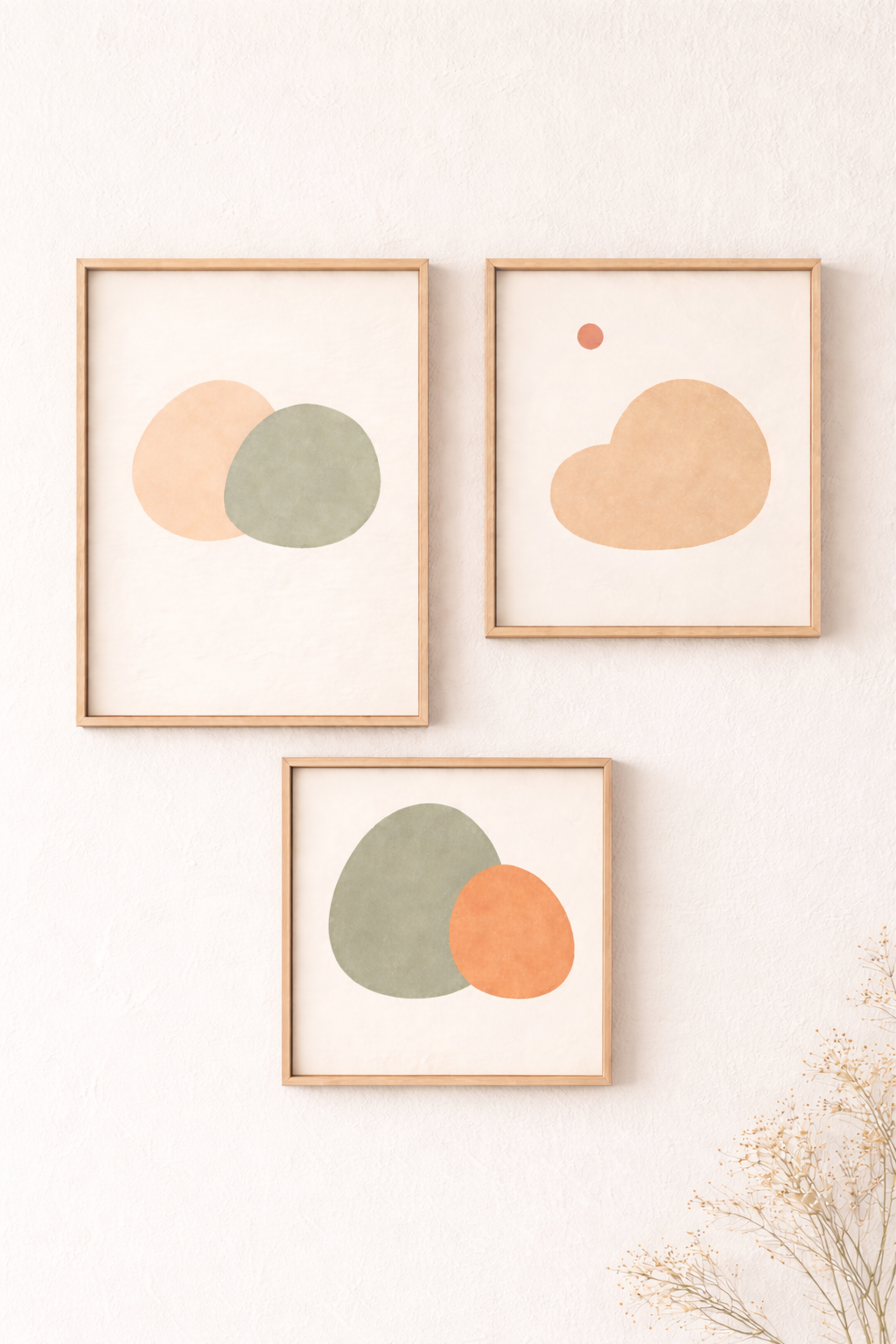
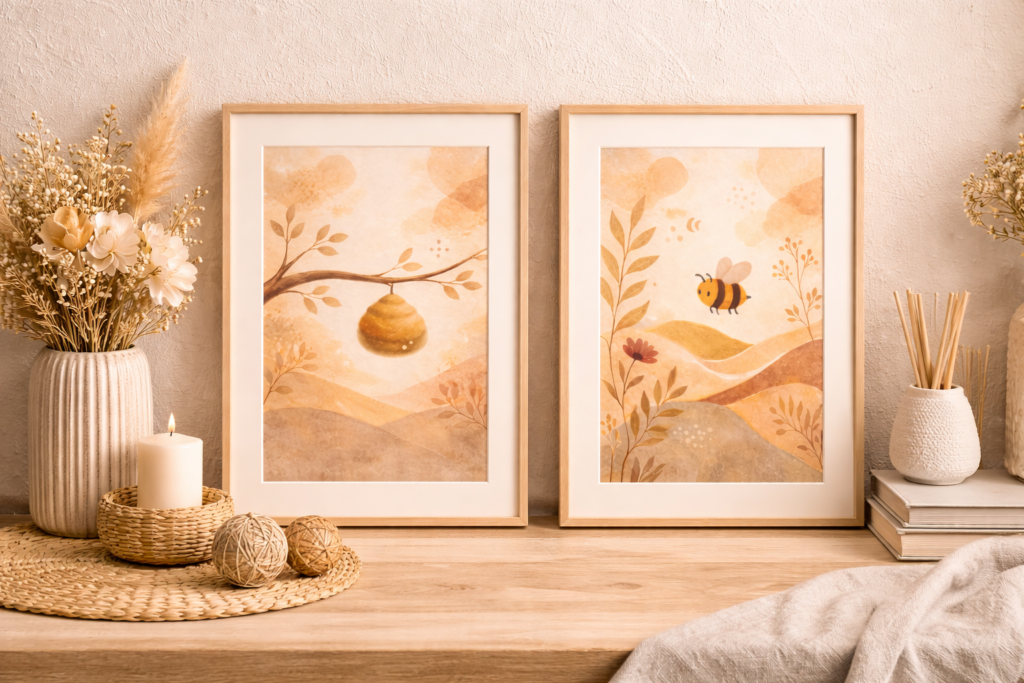
When using multiple pieces, small sets work best. Pairs or trios allow the wall to breathe while still creating balance and rhythm. The repetition of soft shapes and muted tones builds visual harmony rather than chaos.
Look for collections that are designed together — not random combinations. When artworks share the same color language, paper texture, and emotional tone, the result feels cohesive and calming.
This is why I design most nursery pieces as intentional sets in my Etsy shop, rather than isolated single prints. Visual harmony is built through relationships, not individual elements.
I also give away one of my nursery wall art printables for free. It’s a set of 3 that fits perfectly in any modern nursery. You’ll find the download is HERE.
6. Watercolor textures and natural paper grain
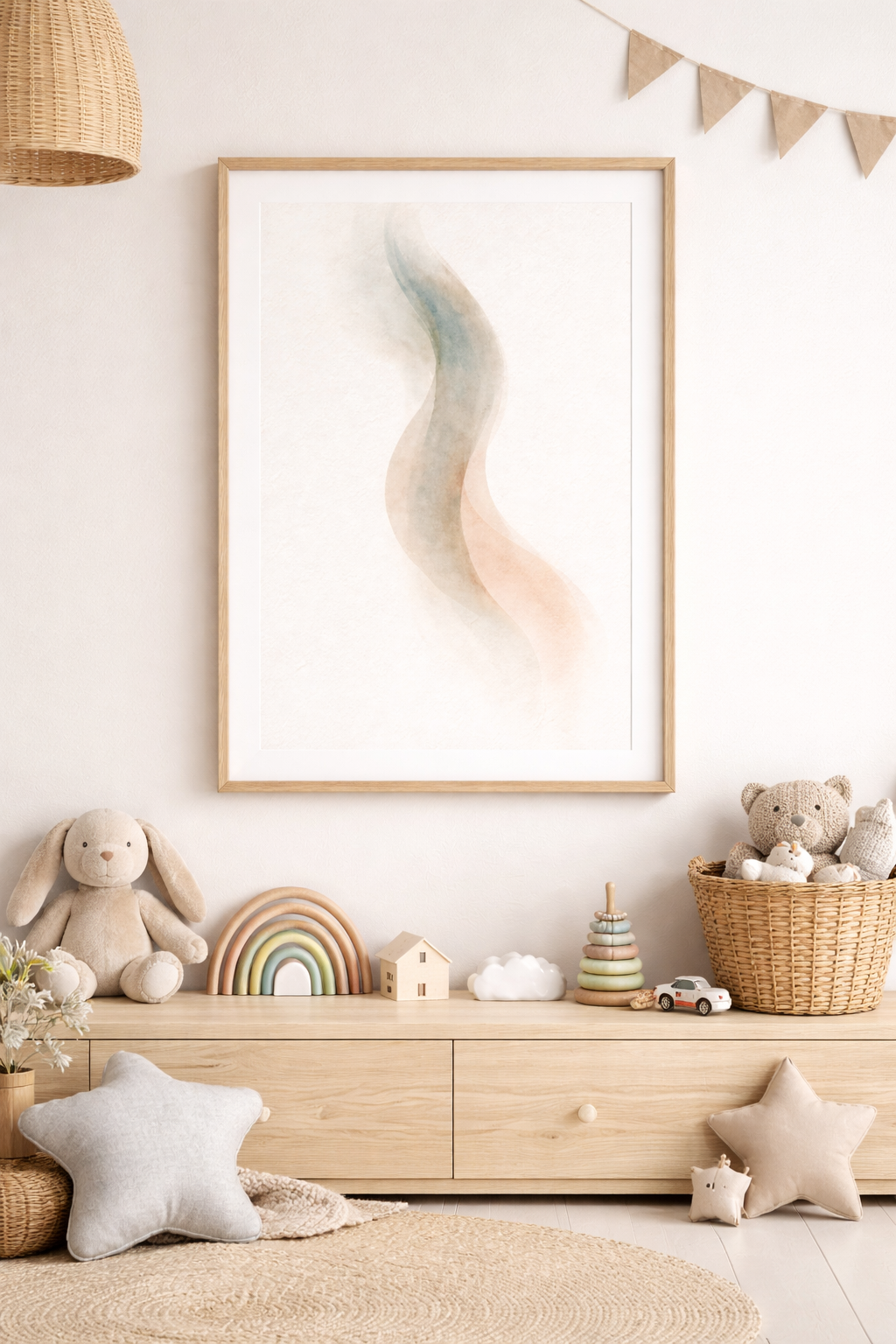
Texture matters more than we often realize.
Soft watercolor textures, subtle pigment bleeding, and visible paper grain introduce organic imperfection. These details add warmth and depth without visual complexity.
Unlike flat digital illustrations, watercolor-based art feels alive and breathable. It brings a tactile softness that complements natural materials like wood, linen, and cotton.
When combined with calm palettes, watercolor textures help create a nursery environment that feels human, gentle, and emotionally safe.
7. Leaving enough empty space around the art
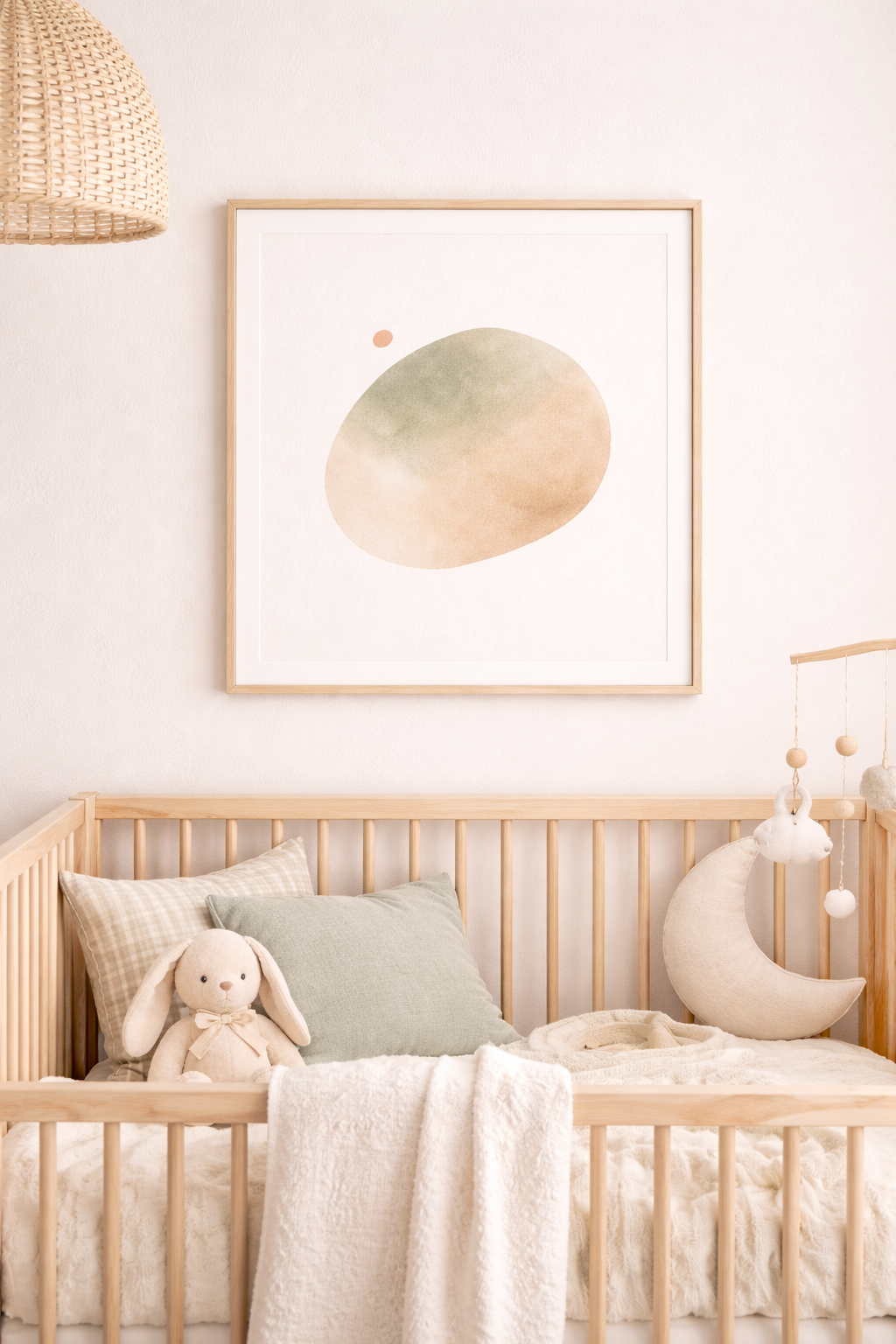
One of the most overlooked elements of calm design is negative space.
Empty wall space allows the eyes to rest. It prevents overstimulation and helps each piece of art retain its emotional presence.
When hanging nursery wall art, resist the urge to fill every blank area. Let the room breathe. Allow silence between visual elements. Calm lives in those spaces.
This idea connects closely to something I explored in Why Some Homes Never Feel Finished (Even When They’re Clean) — how emotional calm comes not from adding more, but from intentional restraint.
How calm nursery art changes the feeling of a space
When wall art is chosen thoughtfully, something subtle but powerful happens. The nursery stops feeling like a themed room and starts feeling like a place of safety. The atmosphere softens and the light feels warmer. The space becomes emotionally quieter. And this calm doesn’t only affect the child. It affects parents too.
A nursery designed around emotional grounding becomes a place where you naturally slow down. Feeding moments feel gentler. Bedtime routines feel less rushed. The room itself begins to support rest. That is the true purpose of nursery wall art. Not decoration. Presence.
A gentle note on choosing intentionally
If you’re building your nursery slowly and intentionally, choose pieces that you can imagine living with for years, not months.
Art that grows with your child.
Colors that age gracefully.
Forms that remain calming long after infancy.
This philosophy is what guides everything I create in my Etsy shop — soft, minimalist nursery wall art designed to support calm homes, emotional safety, and timeless spaces.
And when you combine thoughtful art with gentle lighting and natural textures, the emotional atmosphere of the nursery transforms almost effortlessly.
Affiliate disclosure: Some links in this article may be affiliate links, which means I may earn a small commission if you choose to make a purchase, at no extra cost to you. I only recommend products and artwork that genuinely align with my values and the calm, intentional home philosophy of Peaceful Mind Living.