
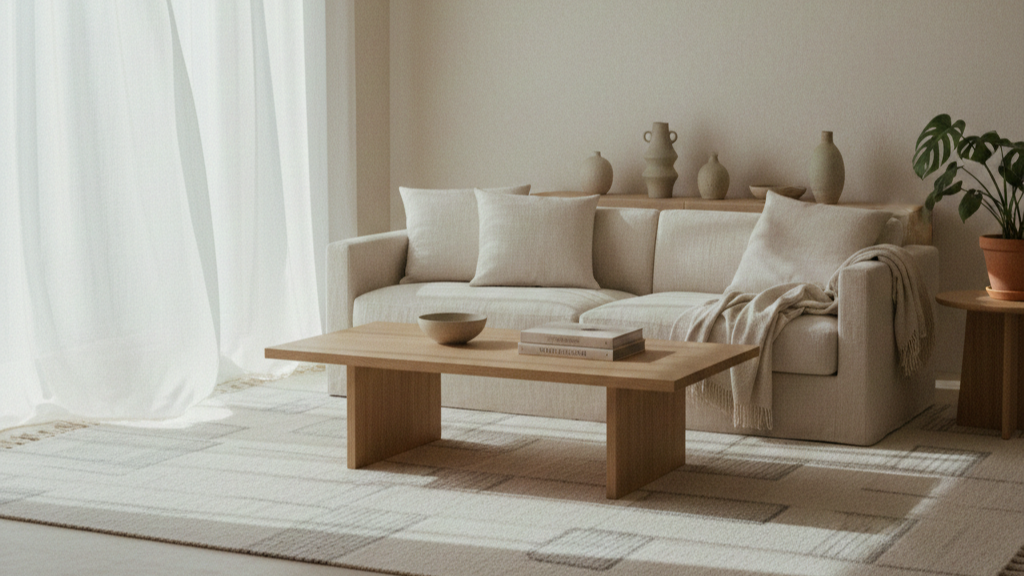
Some homes never quite settle — no matter how much effort we put into decorating them. This article explores why certain spaces always feel temporary and how intentional design choices can transform your house into a calm, grounding home.
Some homes never quite settle.
You can clean them, decorate them, rearrange the furniture, buy new pillows, paint the walls, even hang art — and still, something feels unfinished. Like you’re just passing through. Like the space hasn’t fully become yours yet.
This feeling isn’t about money, size, or interior design trends. Some of the most beautiful homes can still feel temporary, while tiny apartments can feel deeply rooted and calm. The difference is subtle, but once you notice it, it changes how you see every room you step into.
A home becomes permanent through intention
A space begins to settle when it holds intention.
Not perfection. Not trends. Not expensive furniture. Intention.
When a home is built slowly and thoughtfully, it starts to anchor you emotionally. It stops feeling like a waiting room for the next phase of life and becomes a place where life is already happening.
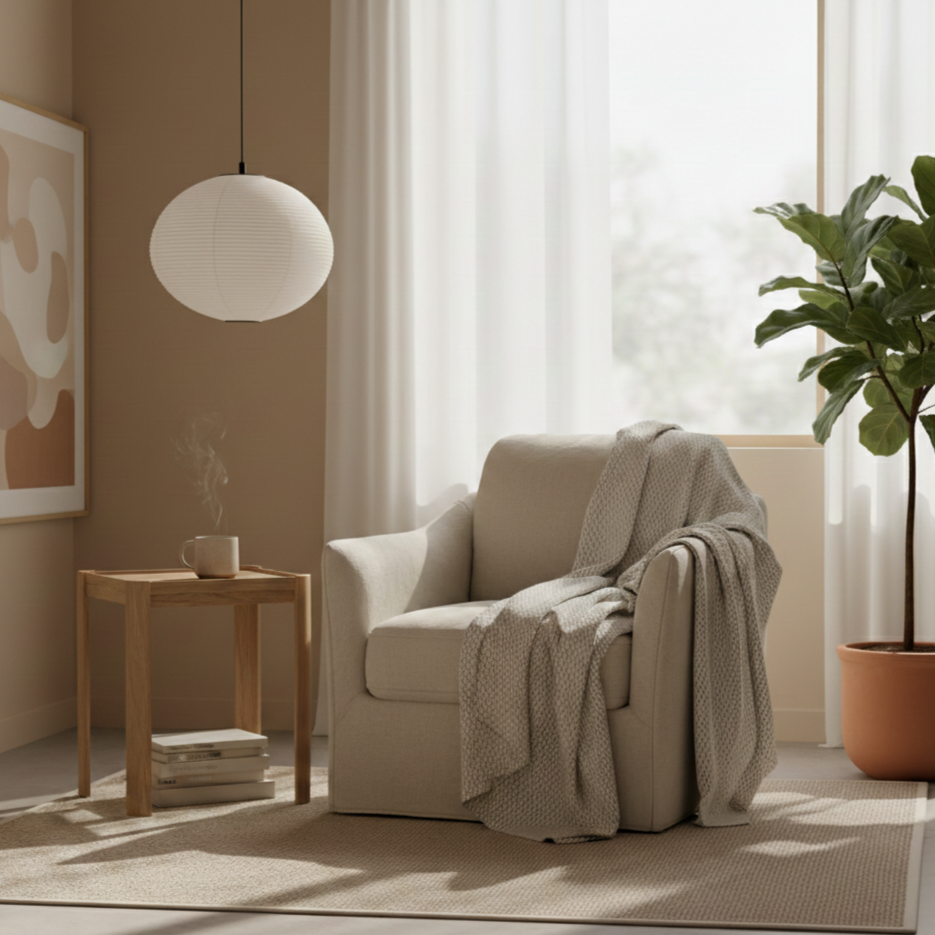
Temporary homes are often shaped by urgency. Furniture is bought to solve immediate problems. Decor is added to fill empty walls. Storage appears wherever there’s space. Over time, the home becomes a collection of reactions rather than conscious design choices.
This is closely connected to something I explored more deeply in Why Some Homes Never Feel Finished (Even When They’re Clean) — how visual order alone doesn’t create emotional calm, and why some spaces still feel unsettled even when everything looks perfect.
There’s nothing wrong with that. Life is busy, budgets are real, and sometimes we simply need things to function. But homes built only from urgency rarely feel grounded or emotionally secure.
You don’t bond with survival choices.
You bond with intention.
Emotional distance keeps a home feeling unsettled
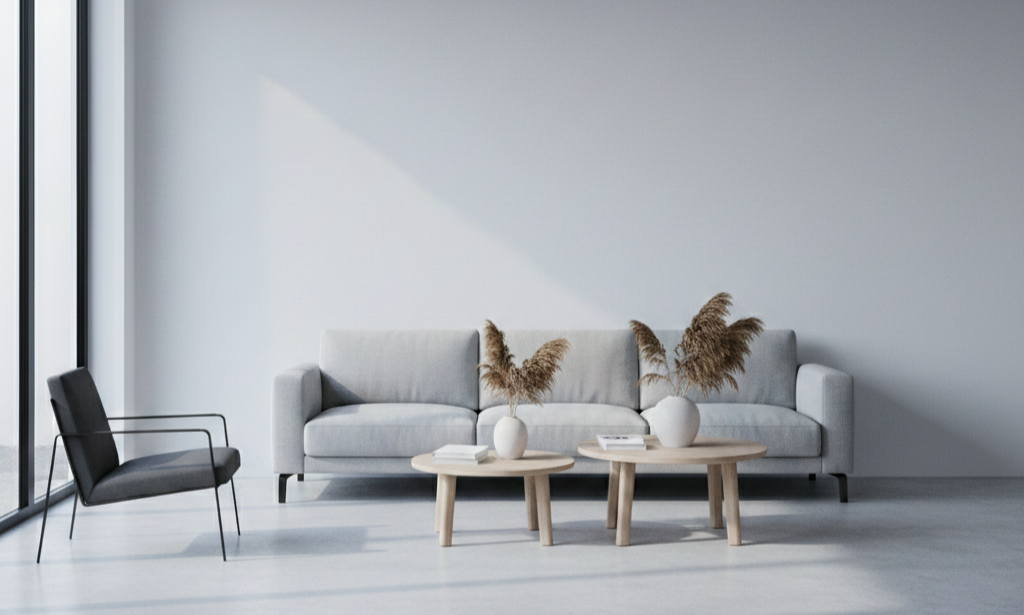
Another reason many homes feel temporary is emotional distance.
When we don’t fully unpack ourselves into a space, it stays neutral. Safe. Polite. But also distant. The home works, but it doesn’t hold us.
Permanent-feeling homes carry traces of real life. They show slow mornings, quiet evenings, everyday rituals, and gentle pauses. They contain imperfect choices that were made because they felt right, not because they were trending. They allow rooms to evolve gradually instead of demanding instant completion.
When a space reflects your rhythms, your softness, and your daily moments, it becomes something more than just a place to live. It becomes a place to belong.
When the present is treated as temporary
Sometimes a home feels temporary simply because we see it that way.
We treat our current space as a stepping stone. A short chapter before something bigger, brighter, or better. So we hold back. We delay emotional commitment. We wait.
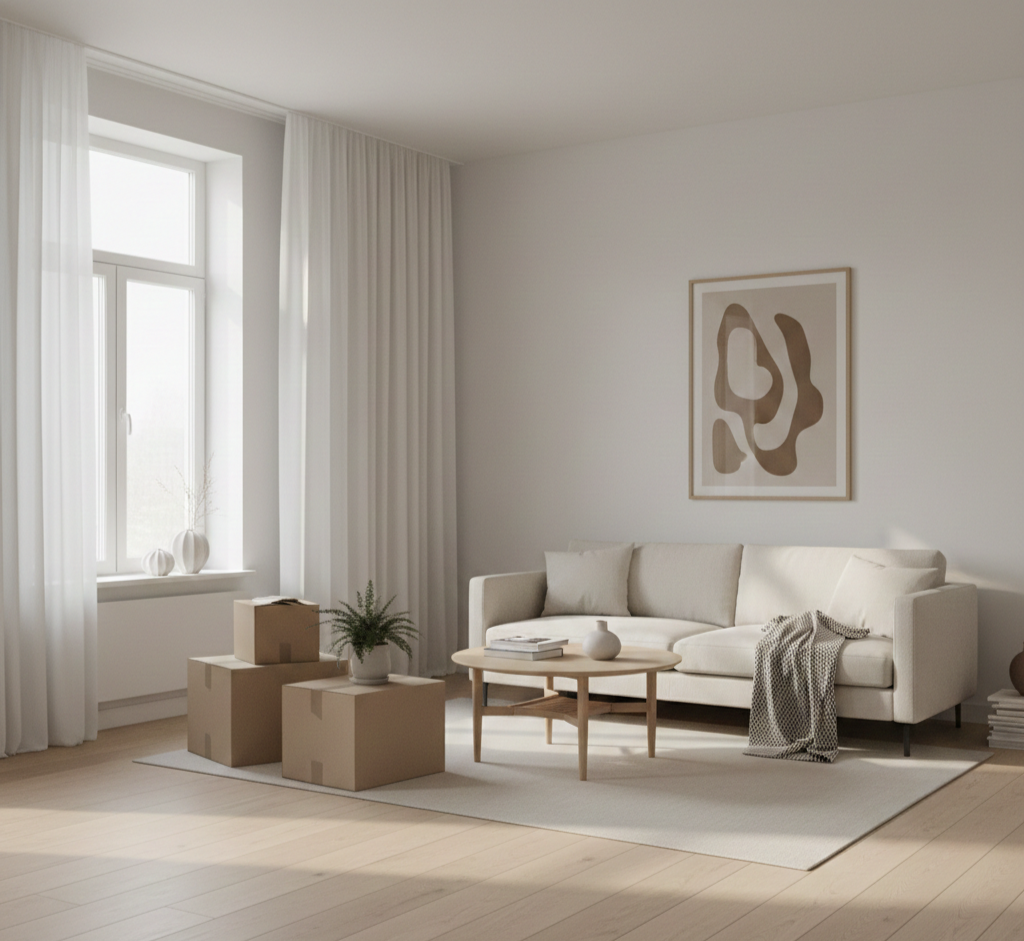
But life doesn’t wait for the next home.
It happens here. On this sofa. In this kitchen. Along these hallway walls. In the ordinary moments that deserve a space that supports them.
When you begin treating your current home as worthy of care and intention, something shifts. You slow down. You choose more carefully. You stop rushing toward perfection and start building connection.
Softness creates emotional grounding
One of the simplest ways to make a home feel calm and permanent is through softness and texture.
Natural materials, gentle colors, and tactile surfaces calm the nervous system. Linen curtains that move with the air. Warm-toned wood. Soft woven rugs. Subtle lighting instead of harsh overhead glare.
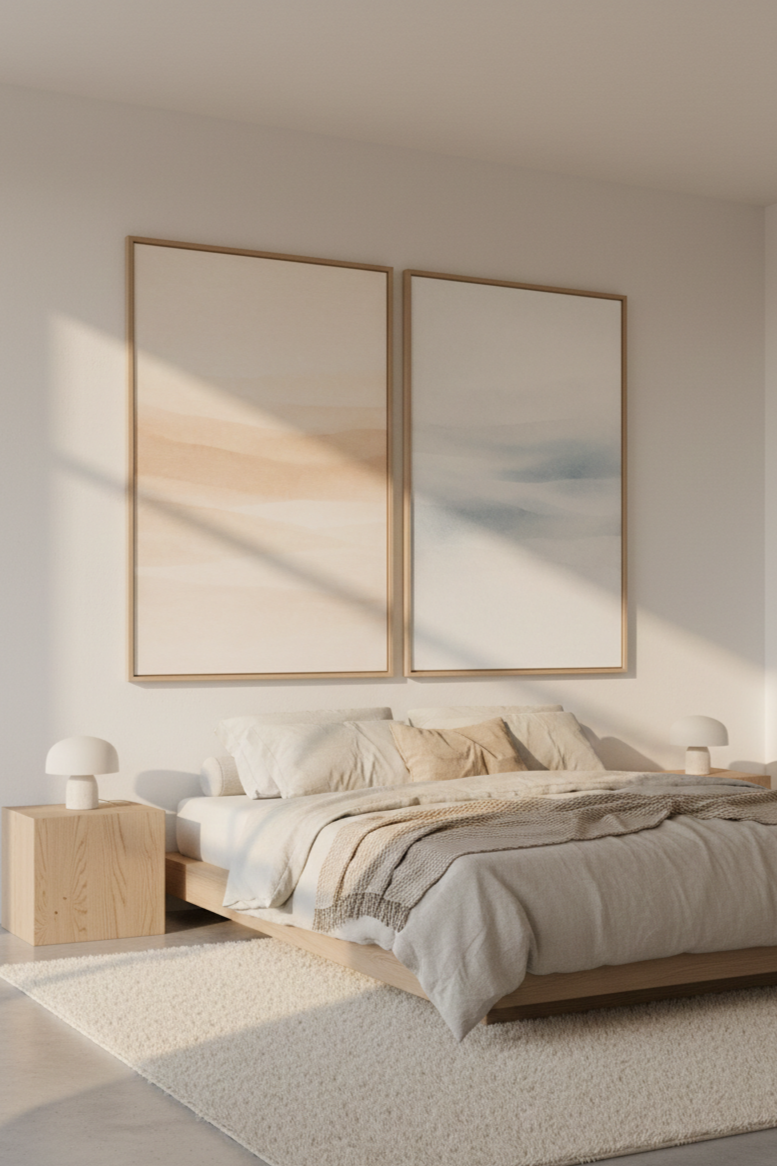
These details quietly tell your body that it is safe to rest.
Thoughtful wall art plays a similar role. Not decorative filler, but pieces that carry stillness. Art chosen for emotional presence rather than trend anchors a room. It becomes a visual pause — a place for the eyes and mind to soften.
I wrote more about this connection between visual softness and emotional grounding in Nursery Wall Art That Actually Makes a Room Feel Calm, where I explore how gentle forms and muted color palettes can completely change the feeling of a space.
This is the philosophy behind the artwork I create for my Etsy shop — minimalist, calming wall art designed to support peaceful homes rather than dominate them.
Lighting shapes how a home feels
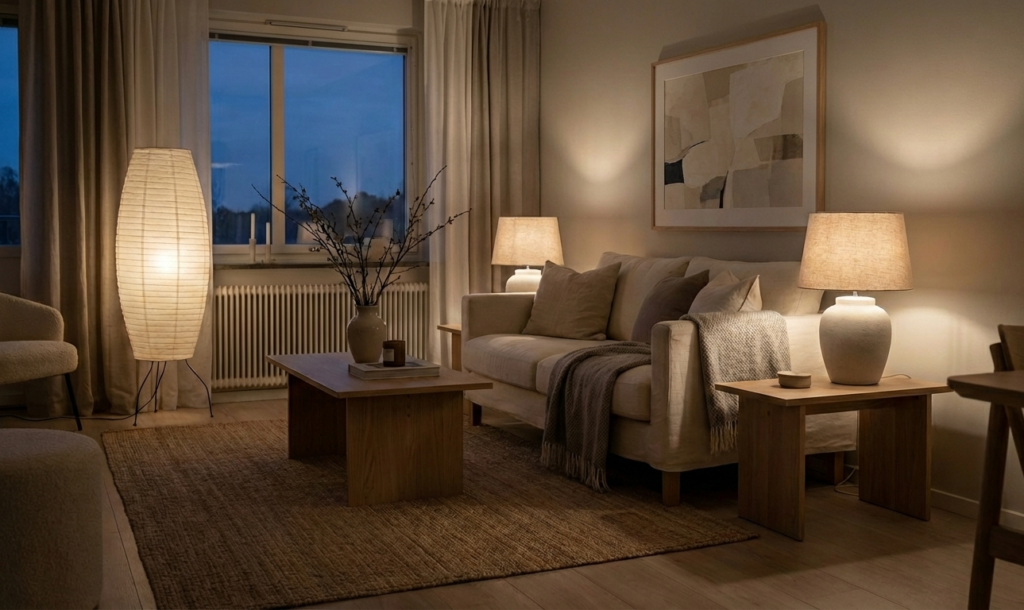
Lighting is one of the most powerful tools in interior design, yet one of the most overlooked.
Temporary homes often rely on a single overhead light. Calm homes layer light. A soft lamp near the sofa. A warm glow in the corner. Gentle illumination that shifts throughout the day.
A few thoughtfully chosen lighting pieces can completely transform the atmosphere of a room, helping it feel warmer, softer, and more inviting.
A home never needs to be finished
Homes that feel permanent are not frozen in time.
They evolve.
They grow alongside the people living in them. They adapt to changing seasons, shifting needs, and different stages of life. Instead of chasing completion, they allow slow dialogue between space and inhabitant.
When you release the pressure to finish your home, it begins to settle naturally.
You start noticing what feels right. You move furniture because the light feels better there. You choose objects because they calm your breath. You hang art because it softens the room, not because the wall feels empty.
This is how homes stop feeling temporary.
Not through upgrades. Not through perfection. But through presence.
When your home reflects how you want to feel rather than how you want it to look, it becomes a place you belong to — not just a place you occupy.
And belonging changes everything.
Affiliate disclosure: Some links in this article may be affiliate links, which means I may earn a small commission if you choose to make a purchase, at no extra cost to you. I only recommend products and artwork that genuinely align with my values and the calm, intentional home philosophy of Peaceful Mind Living.