
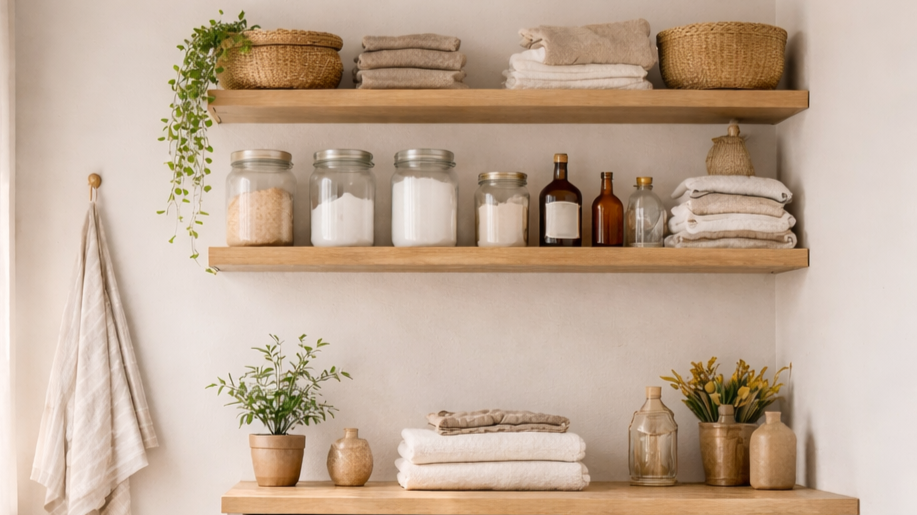
The laundry room is the messiest part of the house.
And it’s the one I avoid the longest.
Not because I hate laundry, but because it never really ends. There are always piles — clean, half-sorted, waiting to be folded, waiting to go upstairs, waiting for someone to remember whose socks are whose. Even when I’ve just finished a load, something is still sitting there, quietly reminding me that I’ll be back soon.
Over time, I realised that the frustration doesn’t come from the amount of laundry itself. It comes from how much of the process stays visible all the time.
In our laundry room, the work used to spill into every corner. Baskets on the floor, clothes draped over surfaces, detergent bottles lined up simply because they didn’t quite fit anywhere else. Nothing was technically wrong, but the room constantly felt unfinished. Walking past it felt like a small mental tap on the shoulder: you still need to deal with this.
When everything stays visible, the job never feels complete
Laundry is already repetitive. Wash, dry, fold, repeat. When every stage of that cycle is on display at once, it turns into background noise. Even a small pile can make the whole room feel busy, because there’s nowhere for the process to pause.
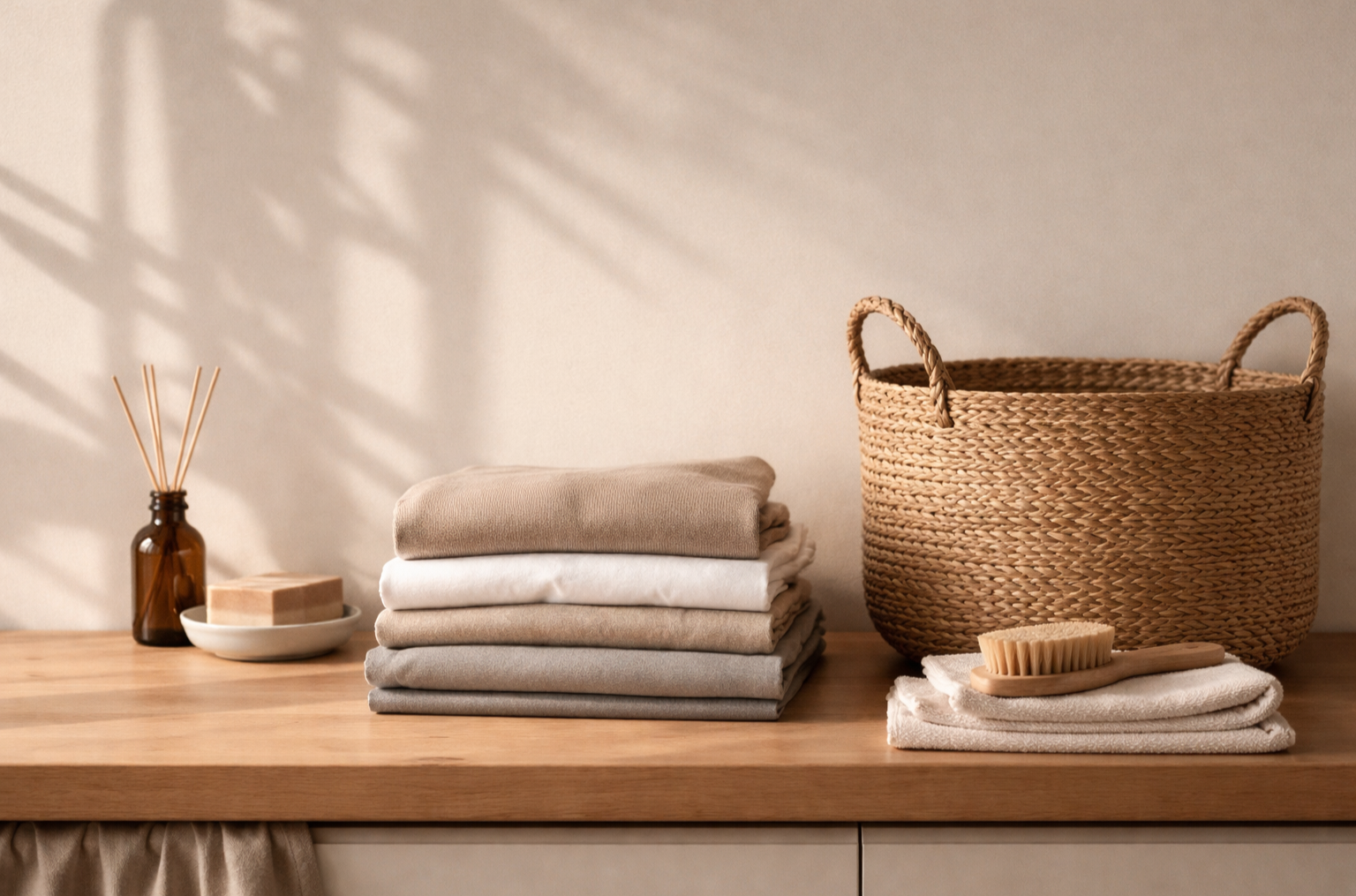
I noticed that on days when the room was visually quieter — fewer items out, fewer decisions waiting — it was easier to start. The space wasn’t asking for my attention all at once.
I wrote about a similar feeling in the kitchen too, especially how constant visibility keeps tasks mentally “open”, in Why Some Kitchens Are Hard to Switch Off at Night. The laundry room turned out to work the same way.
What helped wasn’t more storage — it was clearer roles
We didn’t add more shelves or try to optimise the room. We just changed what each area was allowed to hold.
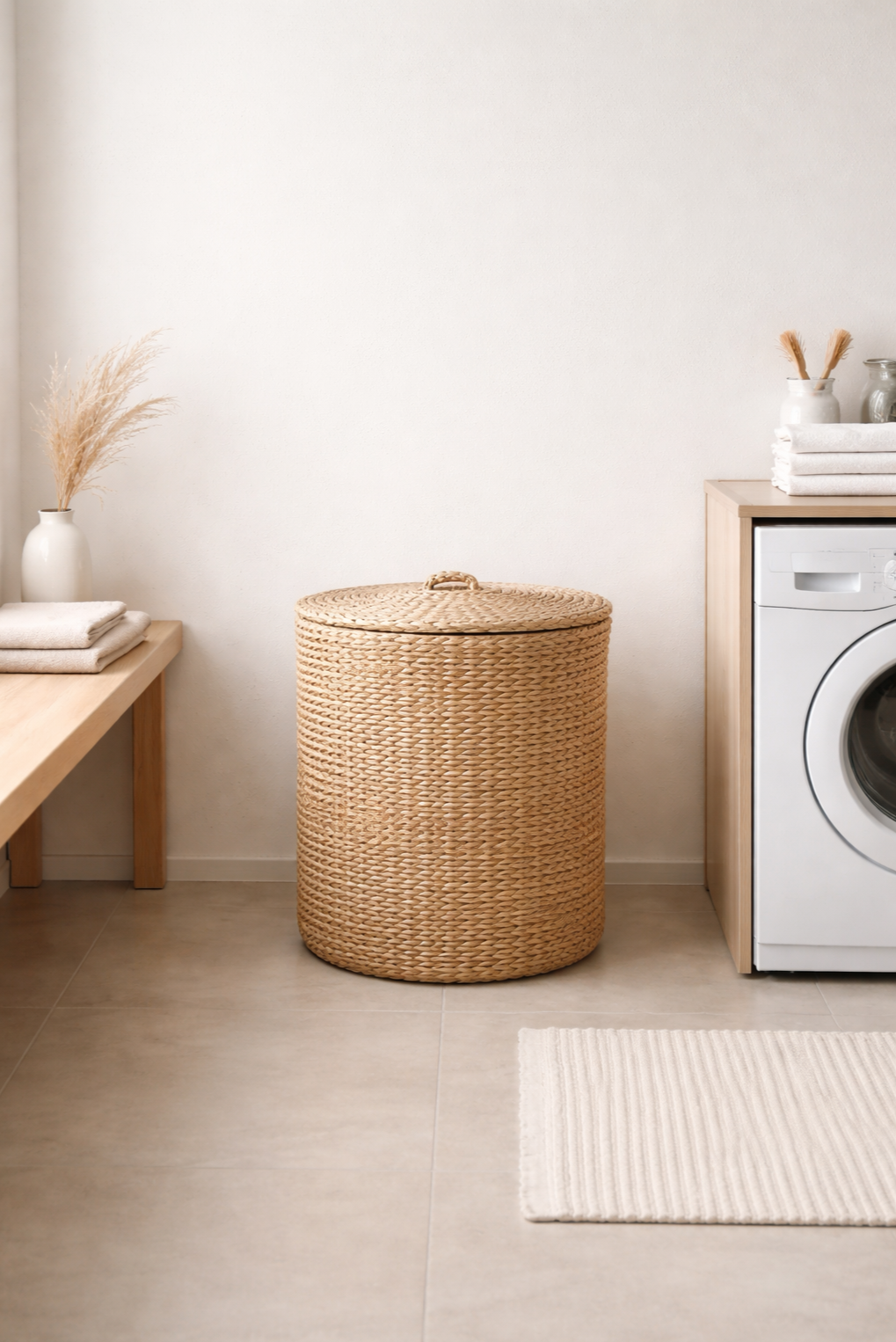
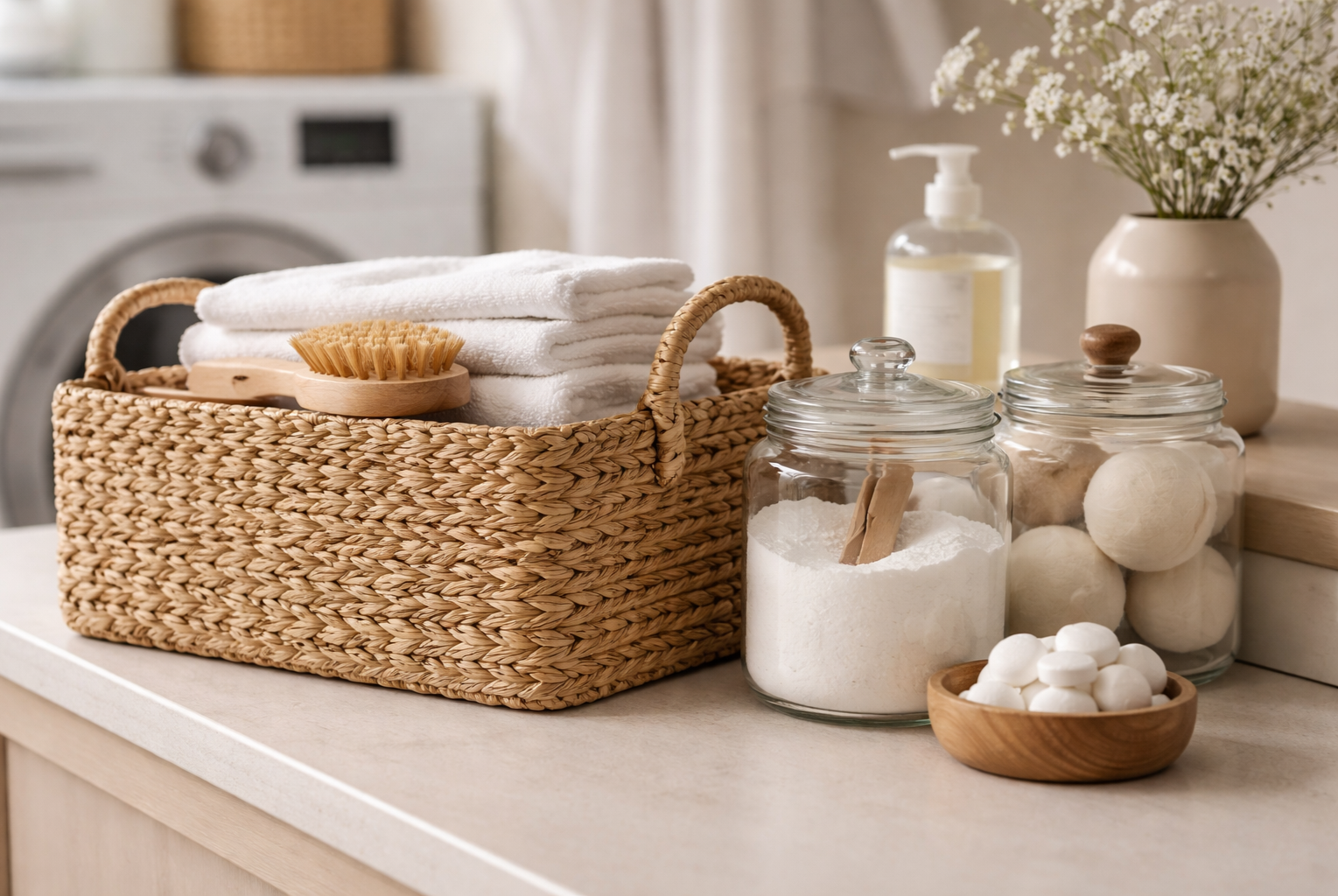
Clean laundry waiting to be folded now goes in one place only — usually one larger woven laundry basket with soft sides. Having a single container instead of several smaller ones made a surprising difference. The laundry is either inside it or it isn’t. There’s no visual negotiation.
Detergents and cleaning supplies are grouped instead of scattered. I moved everyday items into simple glass jars with lids, not to make them look prettier, but because they suddenly read as one category instead of many separate things.
Anything that isn’t part of today’s load gets tucked away. Opening a door or drawer feels easier than seeing unfinished work every time I walk past.
Why a bit of visual softness matters here
Laundry rooms are practical spaces by nature. Hard surfaces, bright lights, functional everything. That’s exactly why adding one soft, grounding element helped more than I expected.
For me, that was a small piece of calm wall art — nothing bold, nothing with sharp contrast. Just a soft abstract print in warm, neutral tones, framed simply and hung where my eyes naturally land while folding.
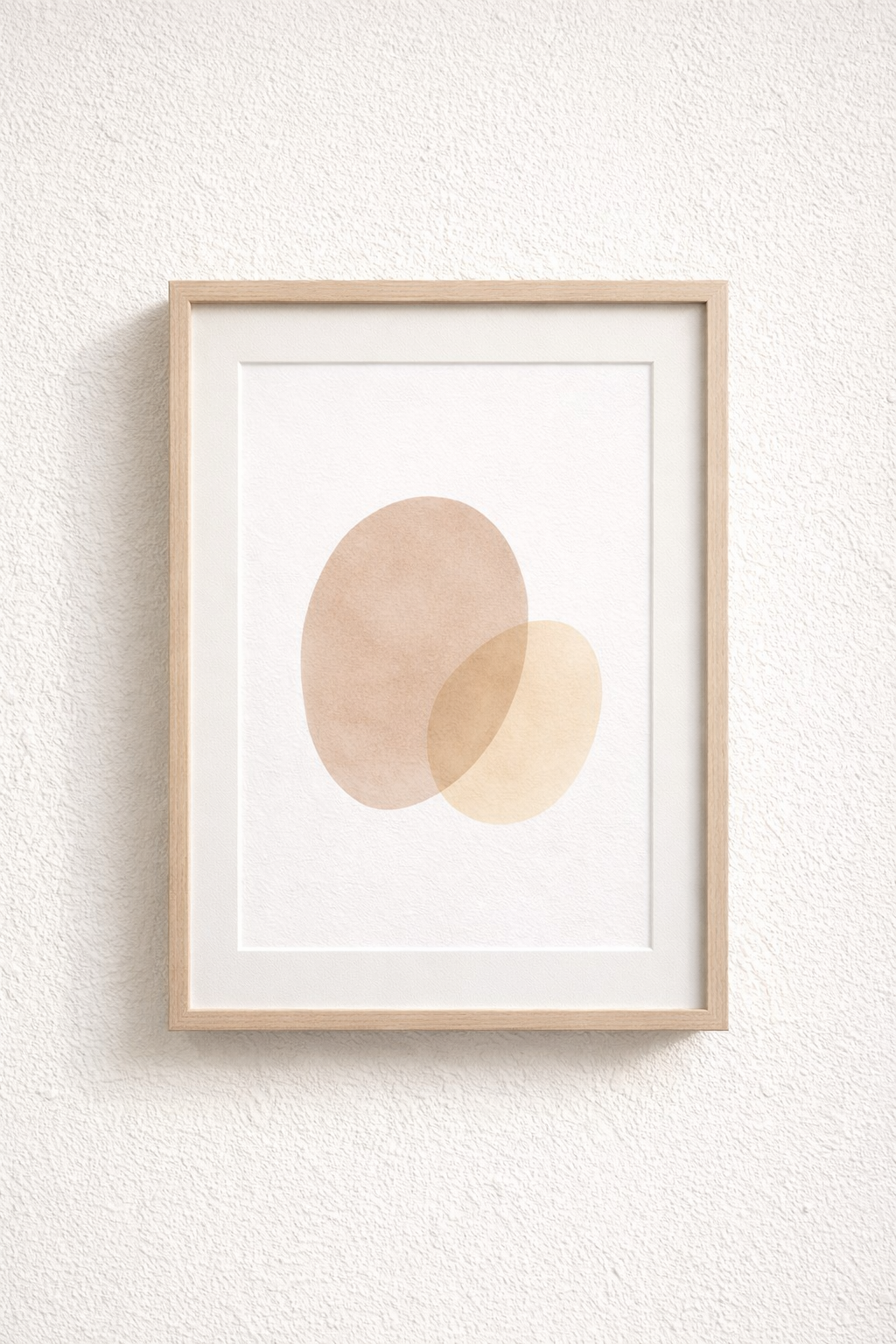
It didn’t make the room decorative. It made it feel less like a task zone and more like part of the home. A place where I could stand for a moment without feeling rushed.
A simple wooden helped too. The artwork stayed quiet, instead of becoming another thing demanding attention.
The goal isn’t a perfect system — it’s less resistance
The laundry room will never be finished. That part doesn’t change. But it doesn’t have to feel heavy every time you walk past it.
What’s helped most is letting the room hold fewer “in-progress” signals at once. One basket instead of three. One clear surface to fold on. Supplies grouped instead of scattered. One calm element that reminds the room it doesn’t have to work so hard.
Now, when I walk in, I know exactly what needs doing — and just as importantly, what doesn’t need my attention yet.
And that makes starting feel possible.
Some links in this post may be affiliate links. This means I may earn a small commission if you choose to make a purchase, at no extra cost to you. I only link to items that genuinely fit the calm, functional approach I write about here.