
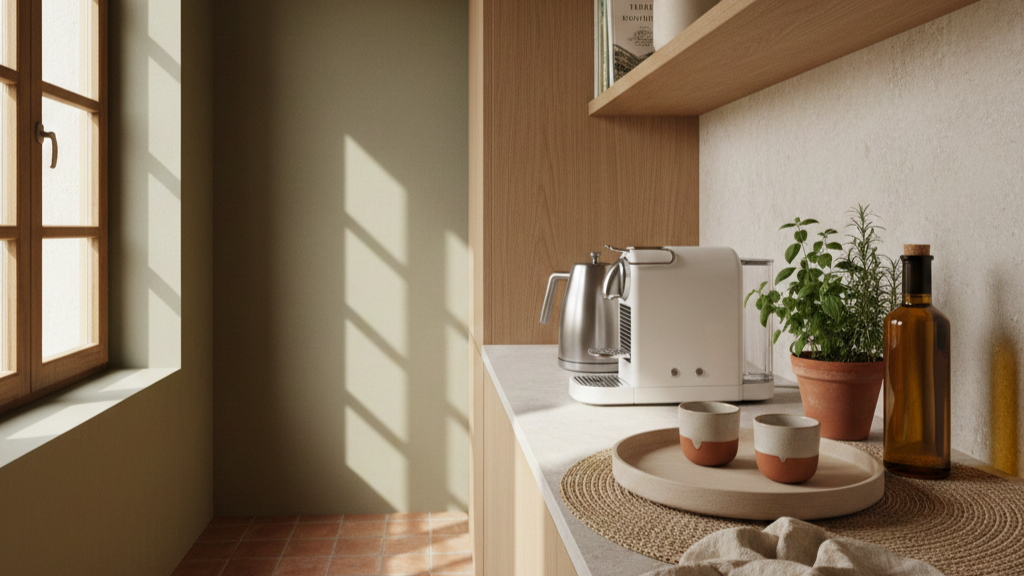
In small kitchens, calm isn’t just a visual thing — it’s sensory.
Sound travels faster in compact spaces, and the everyday noises we barely notice in larger homes can quickly feel overwhelming when everything is close together.
A loud kettle.
A rattling blender.
A coffee grinder that dominates the entire room.
Over time, these sounds add friction to daily routines. The kitchen may be tidy and well-designed, yet still feel busy or stressful — especially in the morning.
One of the simplest ways to soften a small kitchen is to pay attention not just to what we use, but how it sounds. Quiet appliances don’t just reduce noise; they change how a space feels to live in.
Why Quiet Matters More in Small Kitchens
Research around environmental psychology shows that constant or unpredictable noise increases cognitive load and stress — even at low levels. In compact homes, sound reflects more, lingers longer, and competes with conversation, thought, and focus.
That’s why kitchens designed for calm often prioritize:
- fewer, more intentional tools
- softer mechanical sounds
- appliances that blend into routines instead of interrupting them
Quiet isn’t about silence — it’s about smoothness.
1. Gentle Mornings Start With a Quieter Kettle
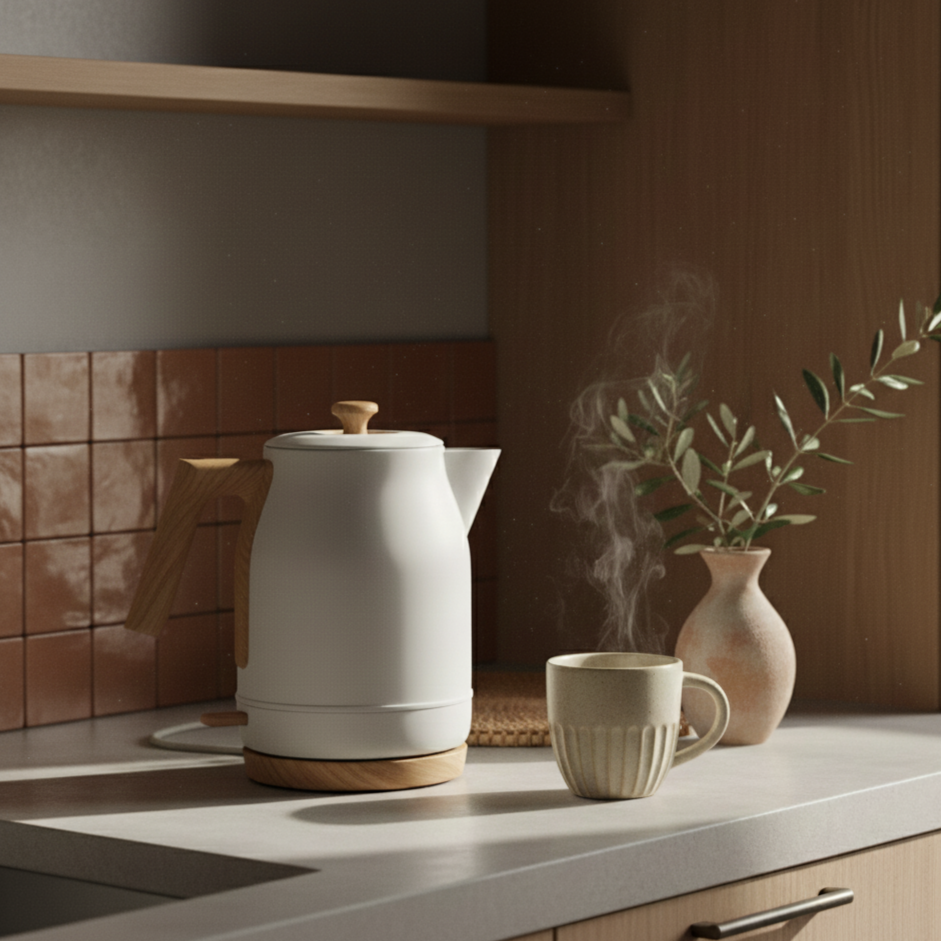
The kettle is often the first appliance used each day. A sharp click, aggressive boil, or sudden auto-off can feel surprisingly jarring in a quiet home.
Many modern electric kettles are designed with smoother heating cycles and better insulation, resulting in a softer overall sound profile.
Look for:
- solid stainless steel construction
- minimal exposed plastic
- smooth, controlled boiling rather than rapid bubbling
→ Link to Philips HD9350/90 electric kettle on Amazon
→ Link to Russel Hobbs electric kettle on Amazon
→ Link to KRUPS 1.5L Electric Kettle on Amazon
These models are widely available internationally and known for consistent performance without unnecessary noise or visual clutter.
2. Compact Prep Tools That Don’t Take Over the Room
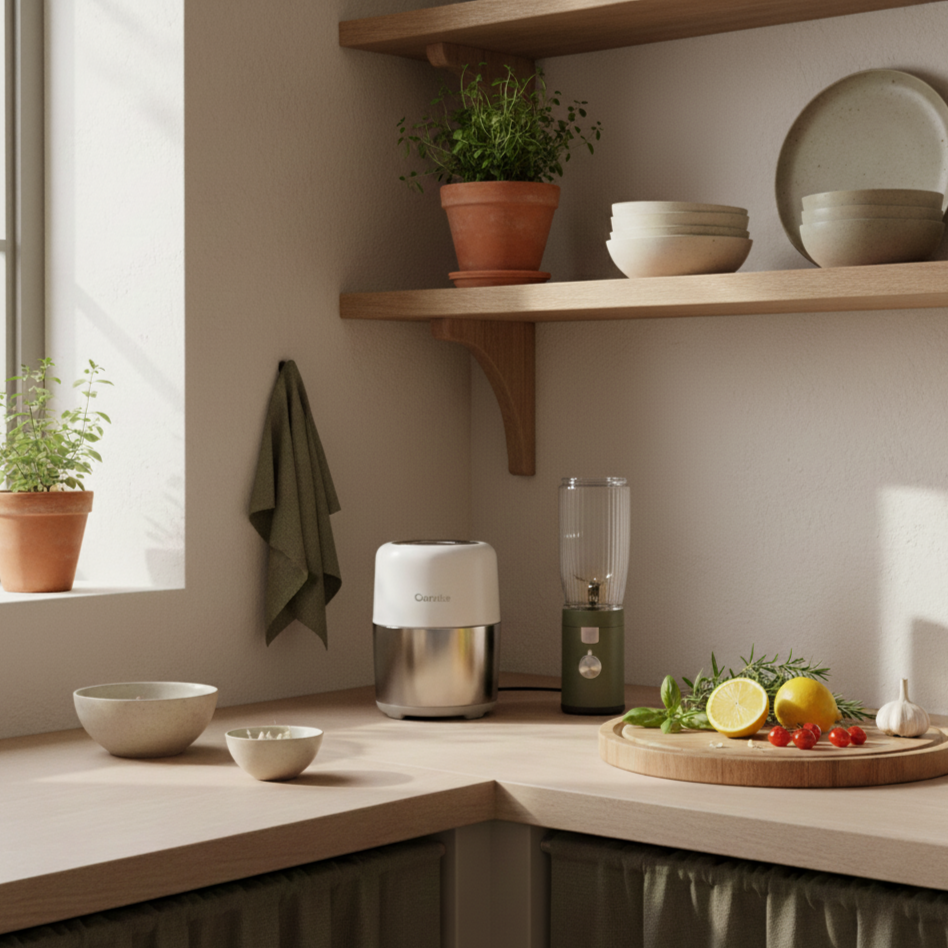
Large, high-power appliances can feel excessive in small kitchens — both visually and sonically. For everyday prep, smaller tools often work better and create far less disruption.
A compact mini chopper, for example, can handle herbs, nuts, onions, and dressings without the roar of a full-size food processor.
→ Link to Ninja Food Chopper Express Chop on Amazon
For smoothies or quick blends, portable or low-power blenders are often quieter and easier to store — making them better suited to apartment living.
→ Link to Nutribullet Portable Blender on Amazon
The key is choosing tools that match real daily needs instead of maximum capacity.
3. Slow Juicing Instead of High-Speed Noise
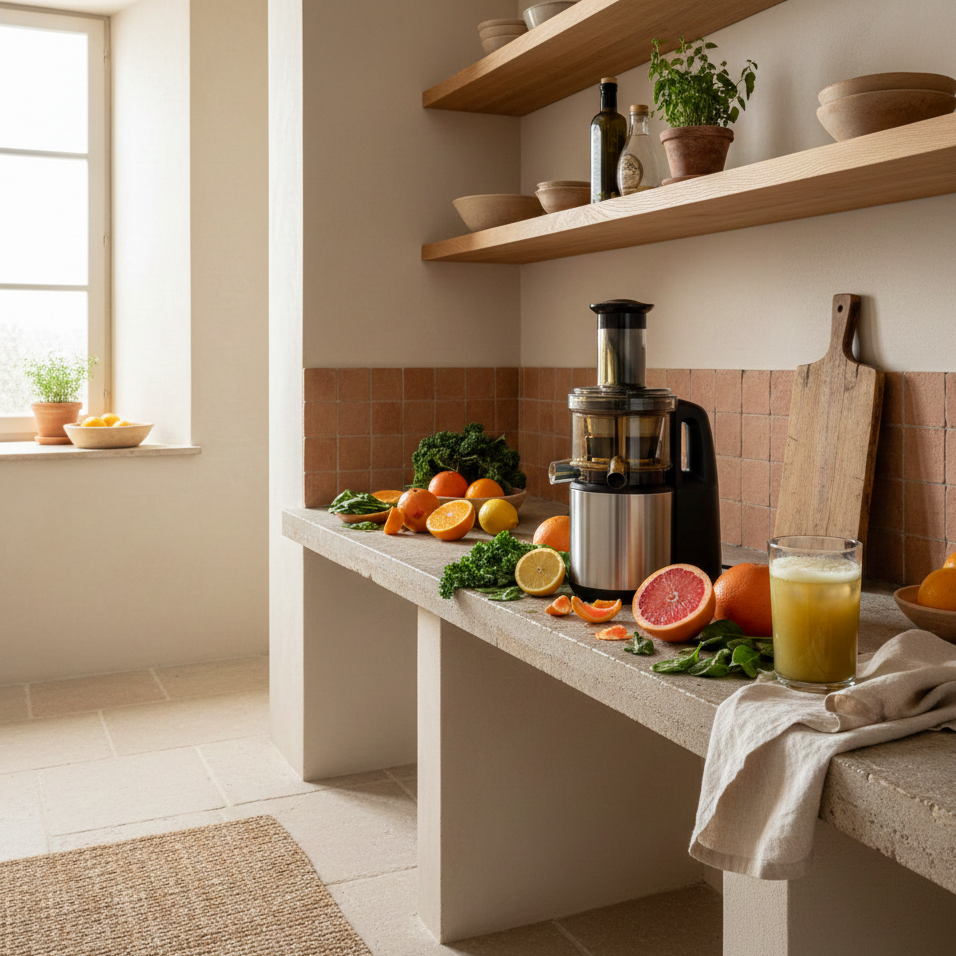
If juicing is part of your routine, the difference between high-speed centrifugal juicers and slow (cold-press) models is immediately noticeable.
Slow juicers:
- operate at lower speeds
- produce less vibration
- create a steadier, calmer sound
They’re especially suitable for early mornings or shared living spaces where noise carries easily.
→ Link to Anybear Cold Press Juicer on Amazon
Even occasional use can feel more intentional when the process itself is quieter.
4. A Calmer Coffee Ritual With Fewer Moving Parts

Coffee machines vary widely in how much noise — and mental effort — they introduce into the kitchen.
Bean-to-cup machines, in particular, can reduce clutter and decision fatigue by combining grinding and brewing into one contained process. While no coffee machine is silent, some designs feel more contained and predictable than others.
→ Link to De’Longhi Magnifica S automatic coffee machine on Amazon
For small kitchens, this kind of all-in-one setup can feel calmer than multiple separate tools spread across the counter.
If you’re interested in how coffee setups influence the overall feel of a kitchen, you may also enjoy this earlier post on why Scandinavian homes often design coffee and breakfast routines behind closed doors — a concept that pairs beautifully with quieter appliances.
What to Look for When Choosing Quiet Appliances
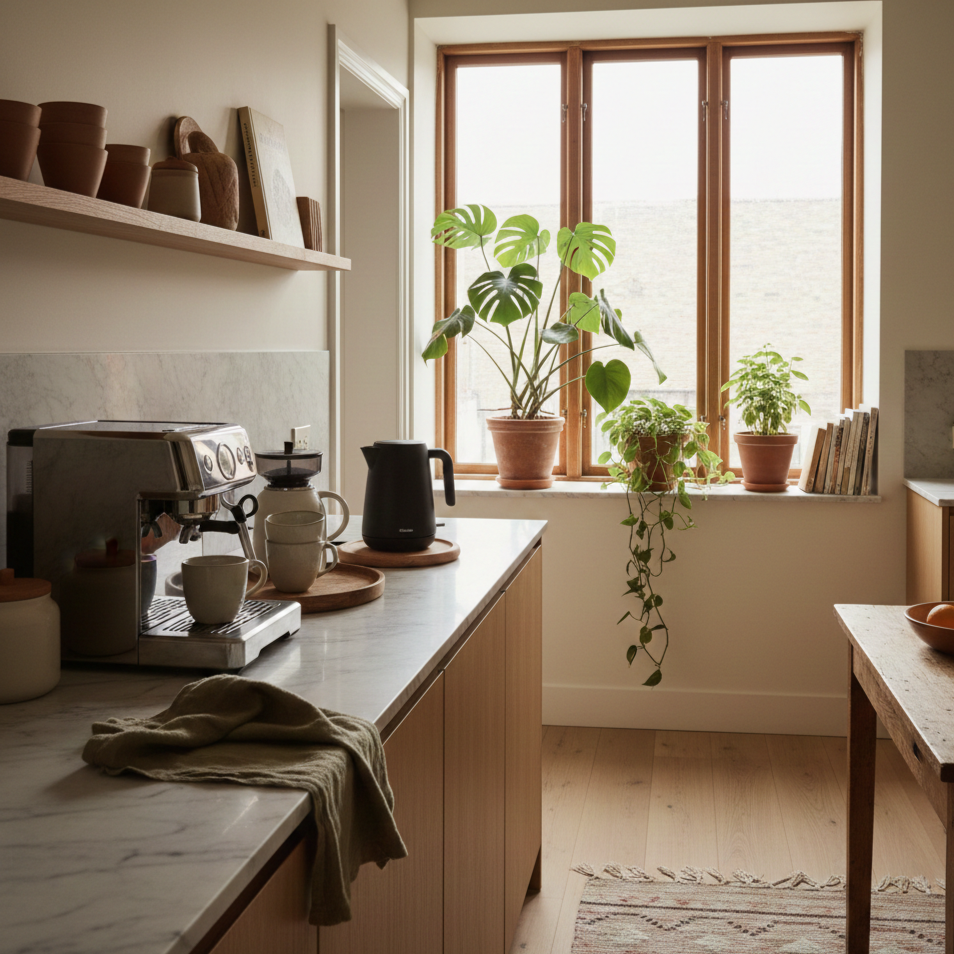
Rather than searching for “silent” (which rarely exists), look for appliances described as:
- smooth
- controlled
- insulated
- compact
- well-balanced
Customer reviews often reveal more about sound experience than technical specs. Phrases like “not harsh,” “less aggressive,” “pleasant to use,” or “doesn’t startle” are good indicators.
Calm Kitchens Are Built From Small Decisions
A calmer kitchen isn’t created all at once. It’s shaped through small, thoughtful choices — including how the space sounds during everyday moments.
Quiet appliances:
- reduce background stress
- make small kitchens feel larger
- support slower, more intentional routines
They don’t demand attention. They simply do their job and fade into the background — which is often exactly what a busy space needs.
Affiliate disclosure
Some links in this post may be affiliate links. This means I may earn a small commission if you choose to purchase — at no extra cost to you. I only recommend products that naturally support calm, functional living and fit the ideas discussed here.