
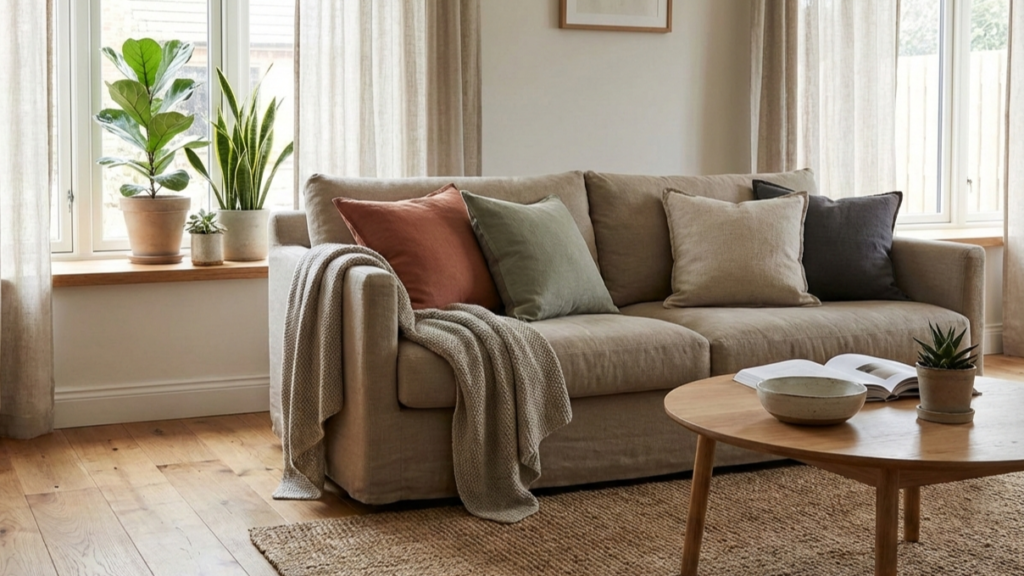
You can vacuum, fold the blankets, fluff the pillows — and yet, the living room still feels off.
This is a surprisingly common experience. And the reason usually isn’t cleanliness.
It’s how the room is processed visually.
A living room can be spotless and still feel messy because the brain isn’t responding to dirt — it’s responding to visual overload. Understanding this difference is the key to creating a calmer space without constant tidying.
This post contains affiliate links. As an Amazon Associate, I earn from qualifying purchases at no extra cost to you.
Clean and Calm Are Not the Same Thing
Cleaning removes dirt.
Calm comes from clarity.
Environmental psychology shows that the brain continuously scans a room for information: shapes, contrasts, textures, edges, and movement. When too many elements compete for attention, the space feels mentally “busy” — even if nothing is technically out of place.
Living rooms are especially vulnerable to this because they serve many roles:
- resting
- socializing
- watching TV
- storing everyday items
When all of these roles show up visually at once, the room feels cluttered by default.
Visual Weight Is the Real Culprit
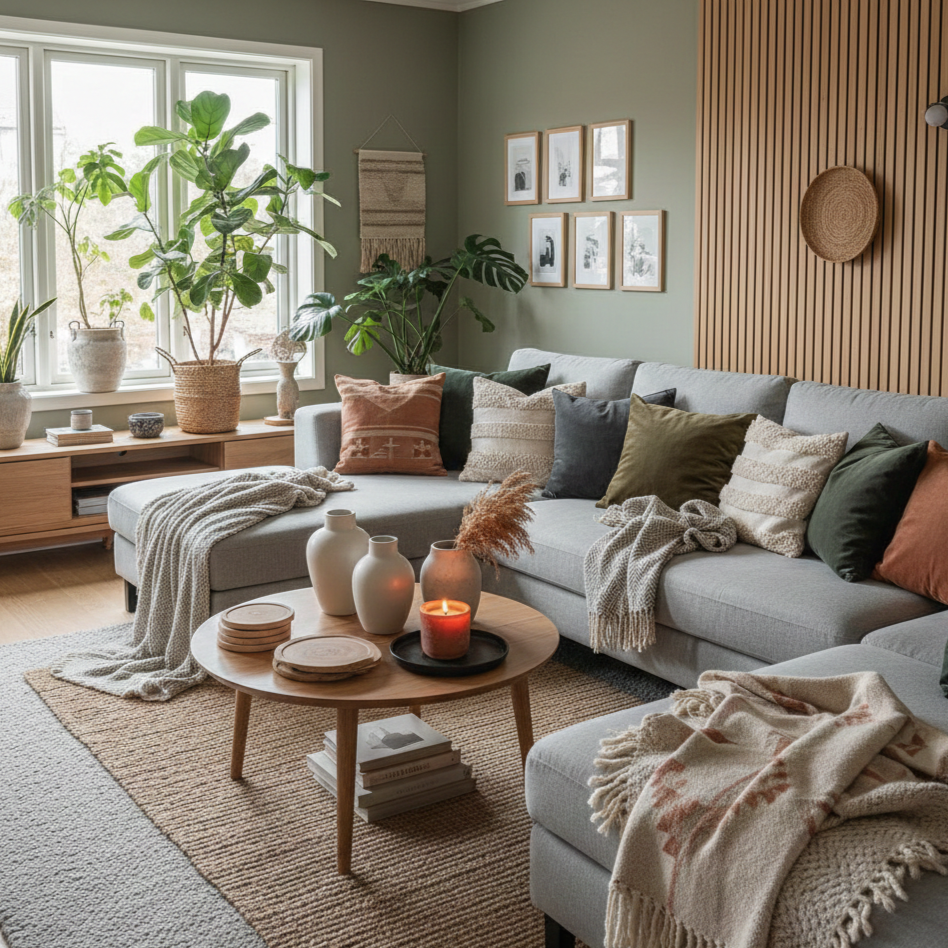
Every object carries visual weight.
Darker colors, strong contrast, sharp edges, and dense groupings all feel heavier to the eye. When too much visual weight gathers in one area, the room feels chaotic — even if everything is neatly arranged.
Common examples:
- dark furniture clustered together
- heavy throws layered on top of each other
- bold pillows competing for attention
- decor items grouped too tightly
What helps isn’t removing everything — it’s redistributing visual weight.
Lighter colors, softer textures, and fewer high-contrast items give the eye places to rest.
Links to relevant products that would help you achieve this:
light-colored throws, neutral pillow covers, simple trays that visually “contain” small items
Scale Mistakes Make Rooms Feel Busier Than They Are
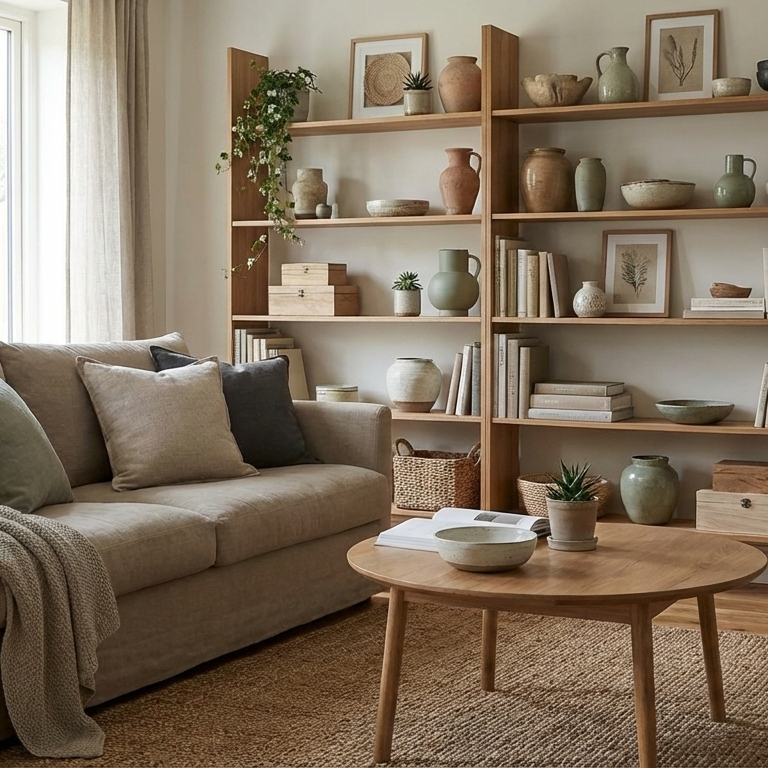
Scale is one of the most overlooked reasons a living room feels messy.
Too many small items create visual noise.
Too many large items create visual pressure.
Typical scale issues:
- shelves filled with many small decor pieces
- coffee tables crowded with little objects
- lamps that are too small for the space, multiplying visual points instead of anchoring the room
Calmer rooms usually rely on:
- fewer, slightly larger anchor pieces
- more empty space around objects
- one strong visual statement instead of many weak ones
This doesn’t make a room boring — it makes it legible.
Links to relevant products that would help you achieve this:
larger floor lamps, oversized baskets, simple coffee table books
Furniture Spacing Changes How a Room Feels
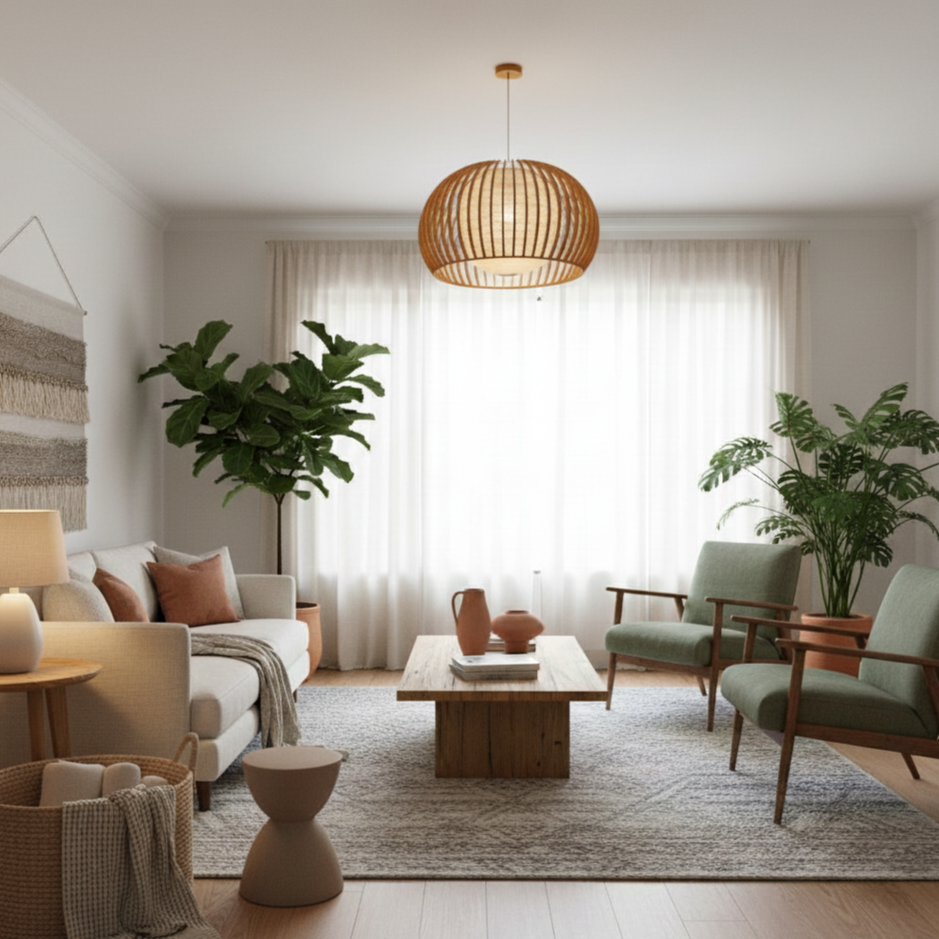
Even small spacing adjustments can shift the emotional tone of a room.
When furniture sits too close together:
- movement feels restricted
- the room feels tense
- the eye has no clear paths to follow
Creating just a bit more breathing room helps the brain relax.
Simple changes that often help:
- pulling furniture a few centimeters away from walls
- creating clearer walkways
- avoiding “in-between zones” where items don’t quite belong
The goal isn’t emptiness — it’s flow.
Links to relevant products that would help you achieve this:
slim side tables, narrow consoles, appropriately sized rugs
Open Storage vs. Closed Storage (This Is Where Most Go Wrong)
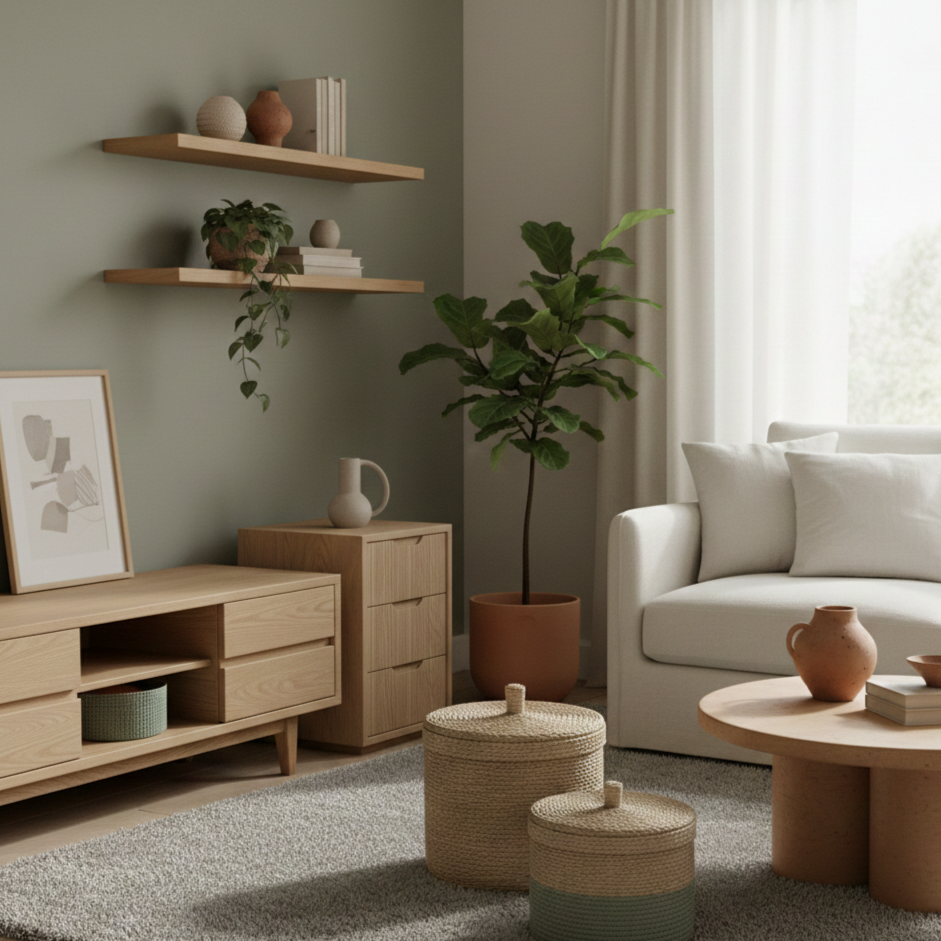
Open shelves look calm in photos because they’re constantly edited.
In real life, open storage:
- requires daily visual maintenance
- turns functional items into visual tasks
- keeps the brain in “scanning mode”
Closed storage allows mental rest.
When items can disappear behind doors, lids, or fabric, the brain no longer needs to process them — even if they’re still in the room.
This doesn’t mean everything must be hidden.
It means choosing one or two open surfaces intentionally, instead of many.
Links to relevant products that would help you achieve this:
lidded baskets, storage ottomans, closed side tables
Lighting Zones Can Make a Room Feel Instantly Calmer
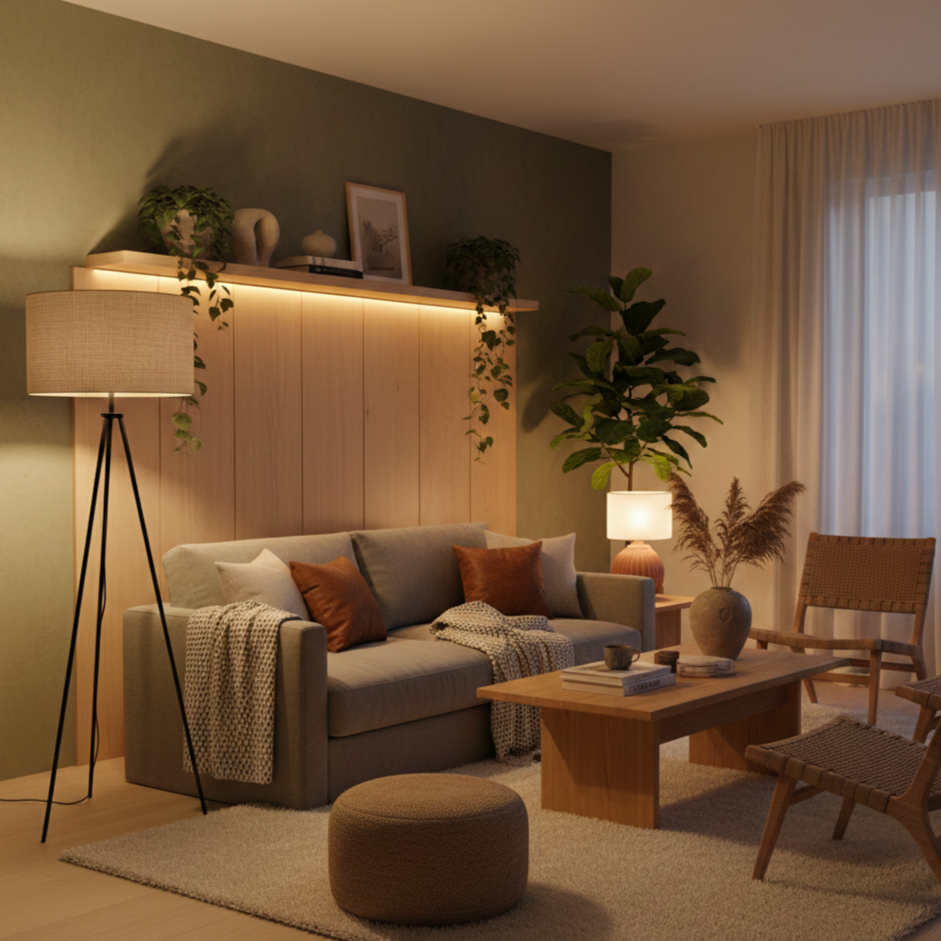
A single overhead light flattens a room and exaggerates visual clutter.
Multiple, softer light sources create zones — and zones reduce mental noise.
Think in terms of:
- one reading light
- one ambient background light
- one soft accent light
This layered approach:
- softens shadows
- reduces contrast
- makes the room feel finished sooner
Warm lighting also lowers perceived messiness by smoothing edges and reducing harsh highlights.
Links to relevant products that would help you achieve this:
floor lamps, table lamps, warm LED bulbs
Fabric Overload Is a Real Thing
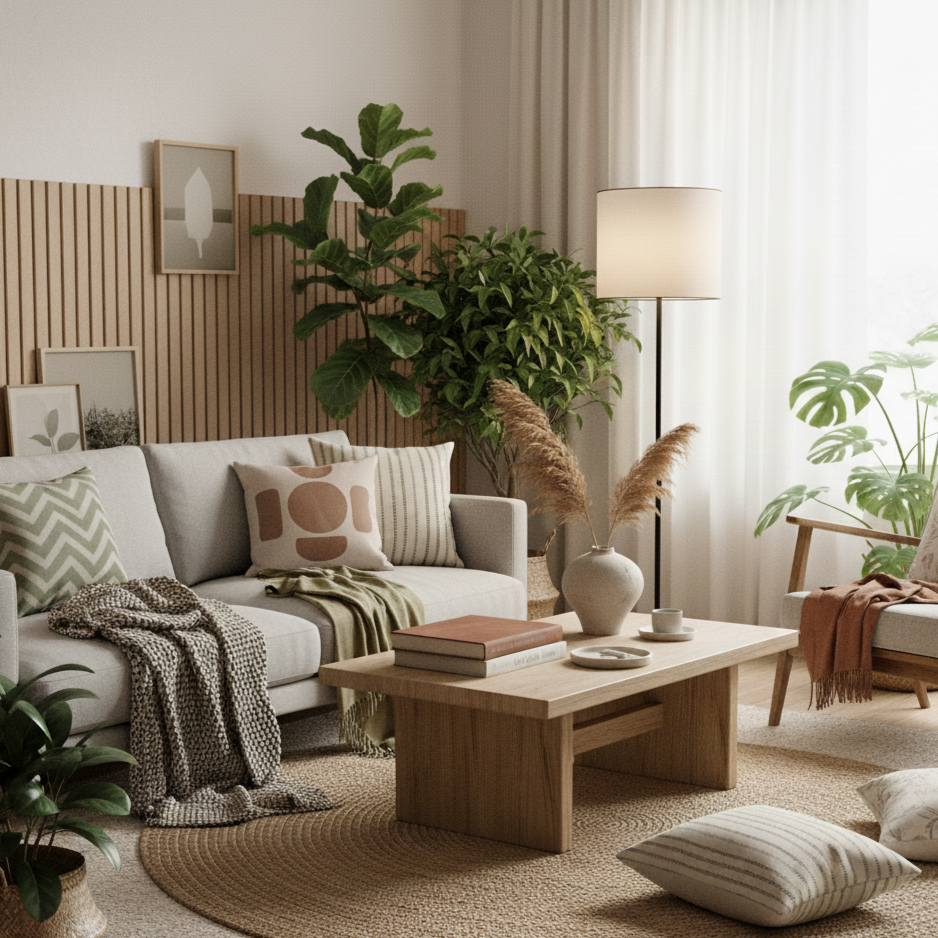
Textiles add warmth — but too many competing fabrics add chaos.
A living room often includes:
- pillows
- throws
- rugs
- curtains
- upholstery
When all of these differ in texture, pattern, and color, the eye never settles.
Calmer spaces usually:
- repeat similar textures
- limit strong patterns
- rely on solids or very subtle variations
This creates cohesion without stripping away comfort.
Links to relevant products that would help you achieve this:
matching pillow covers, neutral throws, simple curtains
A Calm Living Room Has One Clear Focal Point
Calm rooms usually have one place the eye naturally lands first.
That focal point might be:
- the sofa
- a piece of artwork
- a window with light
- a fireplace
- a coffee table arrangement
Everything else in the room quietly supports that main element.
When there is no clear focal point, the eye jumps from object to object:
- pillows compete with throws
- shelves compete with the TV
- lamps compete with decor
- every surface asks for attention
Even when the room is clean, that competition feels like clutter.
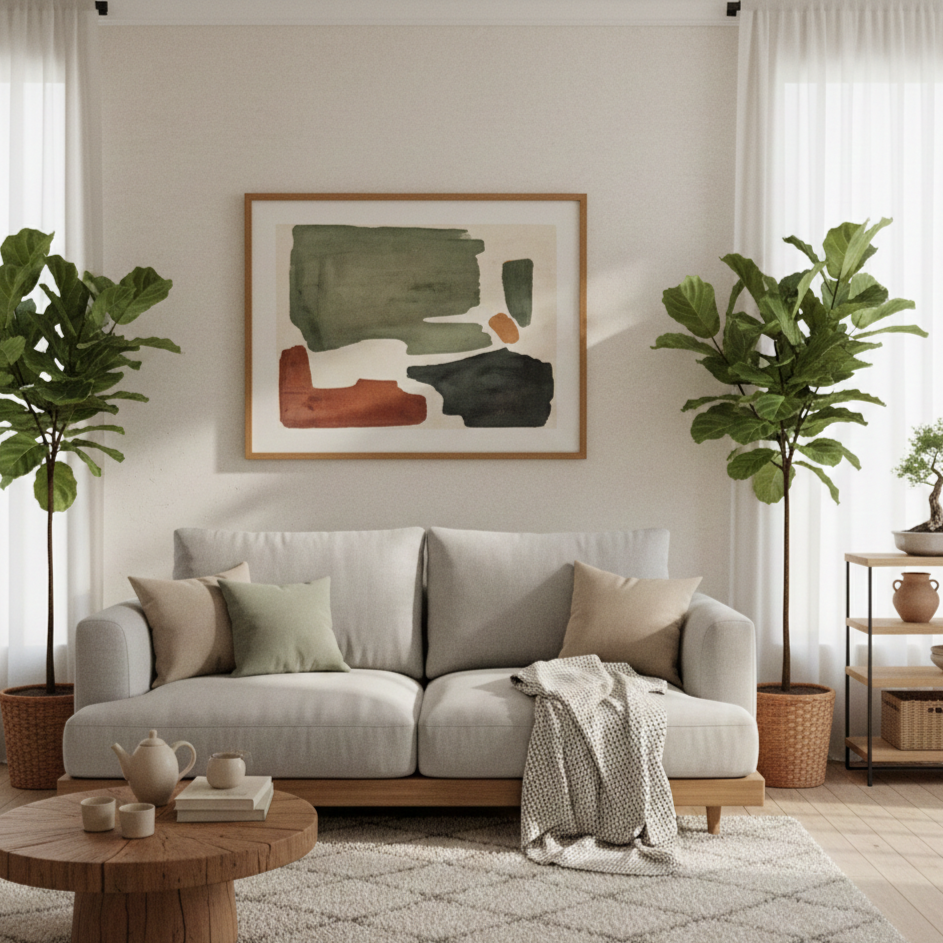
For example, imagine a living room where:
- the sofa is neutral
- the wall behind it is calm
- one piece of artwork anchors the space
- side tables are simple
- decor is minimal around that area
Your eye knows where to rest.
Now compare that to a room where:
- the sofa has multiple bold cushions
- shelves are filled with small decor
- the coffee table is busy
- there’s artwork on every wall
Nothing is technically messy — but nothing leads the eye either.
A focal point doesn’t mean decoration.
It means clarity.
When one element leads, the room feels calmer without changing anything else.
Calm Is About Editing, Not Effort
A calm living room isn’t the result of constant cleaning.
It’s the result of fewer competing signals.
When visual weight is balanced, scale is right, storage is forgiving, and lighting is soft, the room holds itself together — even on imperfect days.
That’s not minimalism.
That’s a space designed to support real life.
If you’re working toward a calmer home overall, you may also find this Calm Kitchen Reset Checklist helpful. Also, go ahead and read my blog post about creating a calmer kitchen in a small apartment.
Pingback: The “Hidden” Secret to a Stress-Free Morning: The Scandinavian Breakfast Cupboard - peacefulmindliving.com