
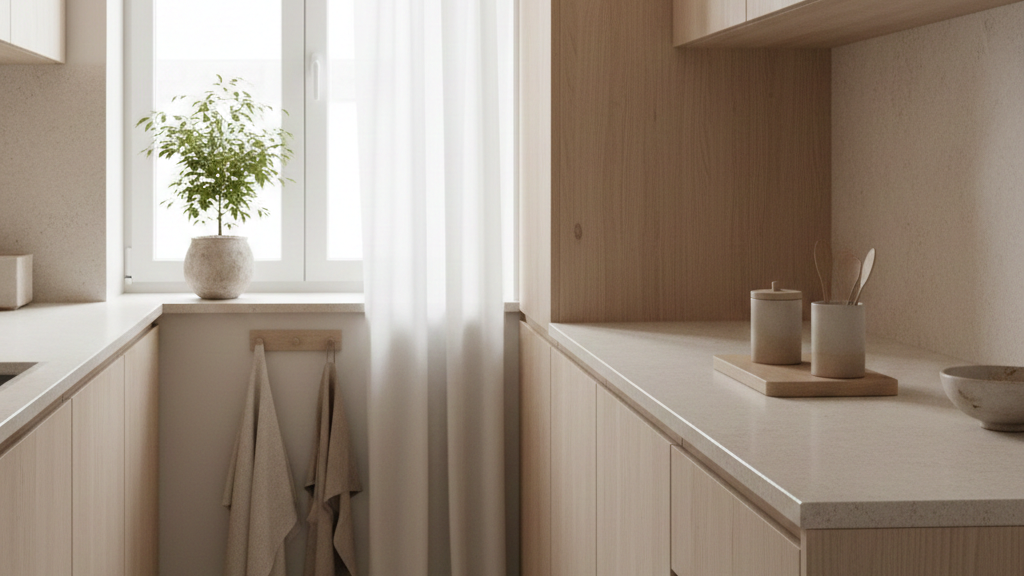
Small kitchens aren’t just physically smaller — they’re mentally louder.
Research in environmental psychology shows that cramped, visually busy spaces increase cognitive load. In simple terms: when too many things compete for your attention, your brain works harder just to exist in the space. That’s why a small kitchen can feel exhausting even when it’s technically clean.
The good news?
You don’t need more storage or a renovation to fix this. You need better cues, clearer zones, and fewer friction points.
Below are small, thoughtful kitchen fixes that help reduce visual noise, mental effort, and daily stress — especially in small apartment kitchens. These ideas go beyond basic drawer organizers and focus on why certain changes work.
This post contains affiliate links. As an Amazon Associate, I earn from qualifying purchases at no extra cost to you.
1. Fewer Visible Categories (Not Fewer Items)
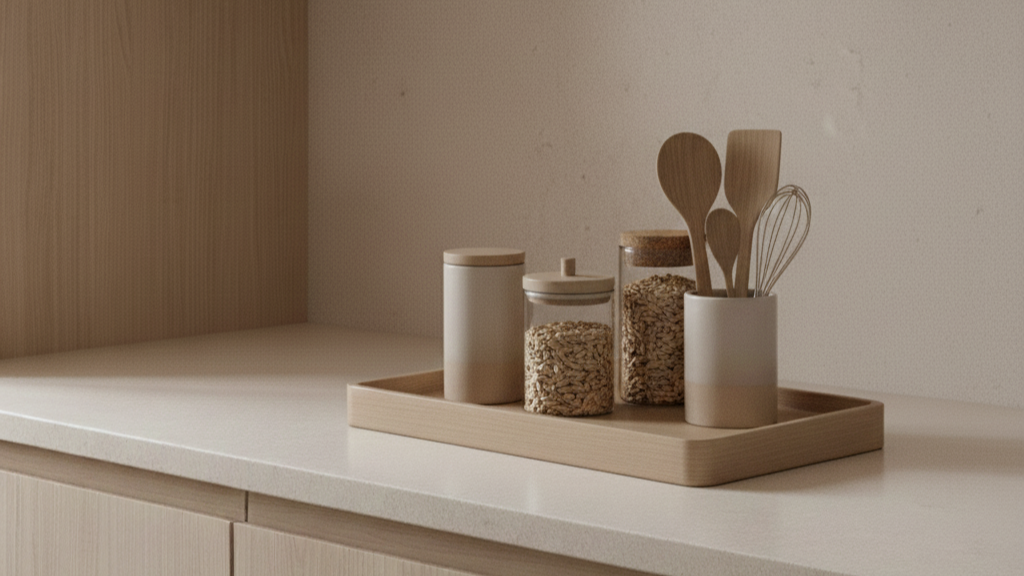
One of the biggest stressors in small kitchens isn’t clutter — it’s category overload.
When the brain sees many different shapes, colors, and item types at once, it struggles to group them. Studies on visual processing show that our brains relax when objects are visually similar and grouped logically.
What helps:
- Limiting how many types of items are visible
- Grouping related items together
- Using containers that look consistent
Practical fix:
- Use matching containers for everyday items
- Place mixed items inside a single tray or bin instead of spreading them out
👉 Good product links here:
Uniform containers, neutral trays, jars
2. Create “Pause Zones” on the Counter
In small kitchens, every surface tends to become a work surface — which means there’s nowhere for the eye to rest.
Design theory calls this the need for negative space. Even small amounts of visual breathing room lower perceived chaos.
What helps:
- Intentionally leaving one small area empty
- Defining where items don’t go
Practical fix:
- Use a small tray to contain daily-use items
- Leave the rest of the counter intentionally clear
This creates a visual pause without reducing function.
👉 Good product links here:
Small wooden or stone trays, minimalist counter organizers
3. Reduce “Decision Fatigue” at Eye Level
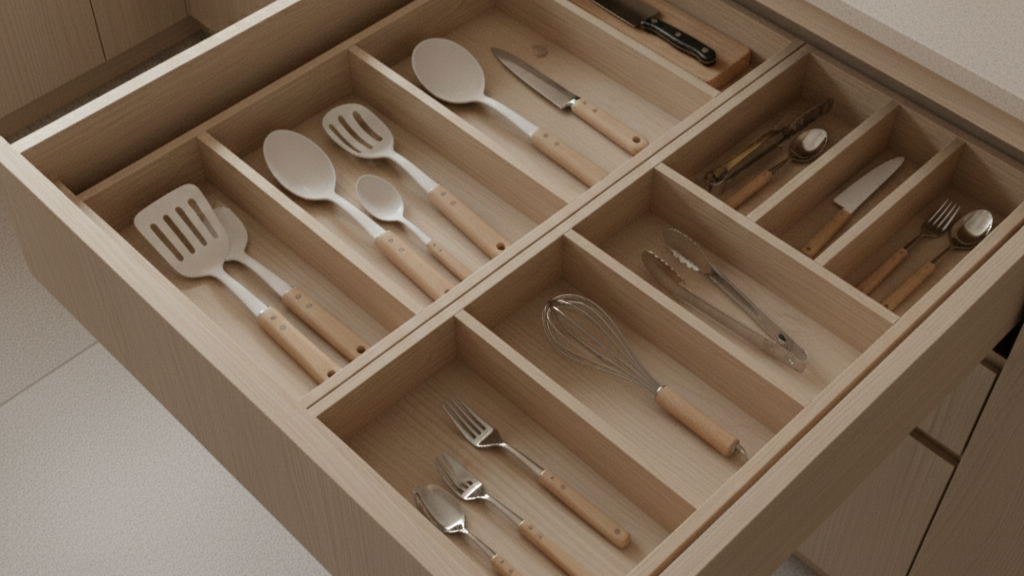
Every decision you make — even tiny ones — adds up.
In kitchens, this often happens when:
- drawers are chaotic
- tools are mixed together
- nothing has a clear “default” place
Psychologists call this decision fatigue, and it’s amplified in small spaces.
What helps:
- Clear defaults
- Fewer choices at once
- Consistent placement
Practical fix:
- Use drawer dividers to create fixed zones
- Keep only daily-use tools in prime locations
- Store rarely used items out of sight
👉 Good product links here:
Drawer organizers, adjustable dividers
4. Light Temperature Matters More Than You Think
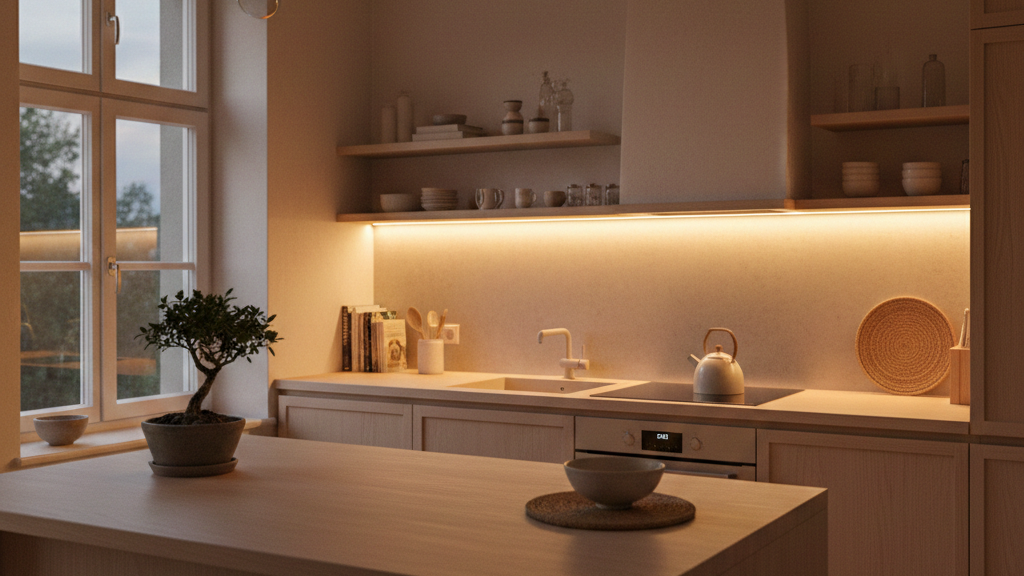
Lighting has a measurable effect on stress levels.
Cool, blue-toned lighting increases alertness — which is useful in offices, but not ideal for a space where you’re trying to feel calm, especially in the morning or evening.
What helps:
- Warm lighting (2700K–3000K)
- Light sources below eye level
- Multiple small lights instead of one harsh overhead source
Practical fix:
- Add under-cabinet LED lights with warm tones
- Use a small lamp if space allows
This immediately softens the entire room.
👉 Good product links here:
Warm LED strips, small countertop lamps, warm bulbs
5. Sound Absorption Is an Overlooked Stress Factor
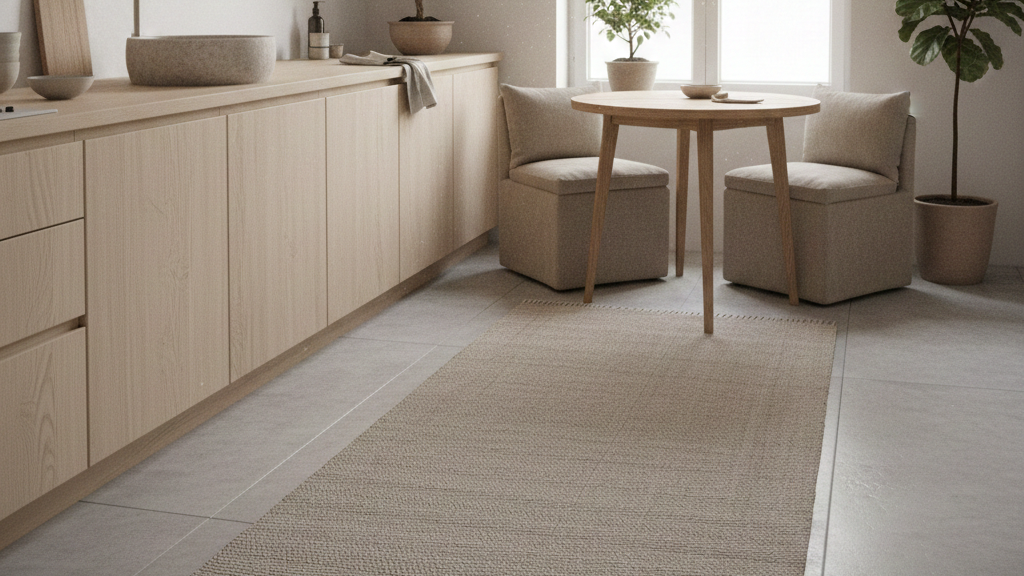
Small kitchens amplify sound — clanging utensils, cabinet doors, appliances.
Noise research shows that repetitive, sharp sounds increase irritation even when we don’t consciously notice them.
What helps:
- Softer materials
- Reducing hard-on-hard contact
Practical fix:
- Add a washable runner or mat
- Use drawer liners
- Store metal tools in lined containers
These changes reduce noise and make the space feel instantly calmer.
👉 Good product links here:
Kitchen runners, drawer liners, utensil trays
6. Simplify the “Cleaning Loop”
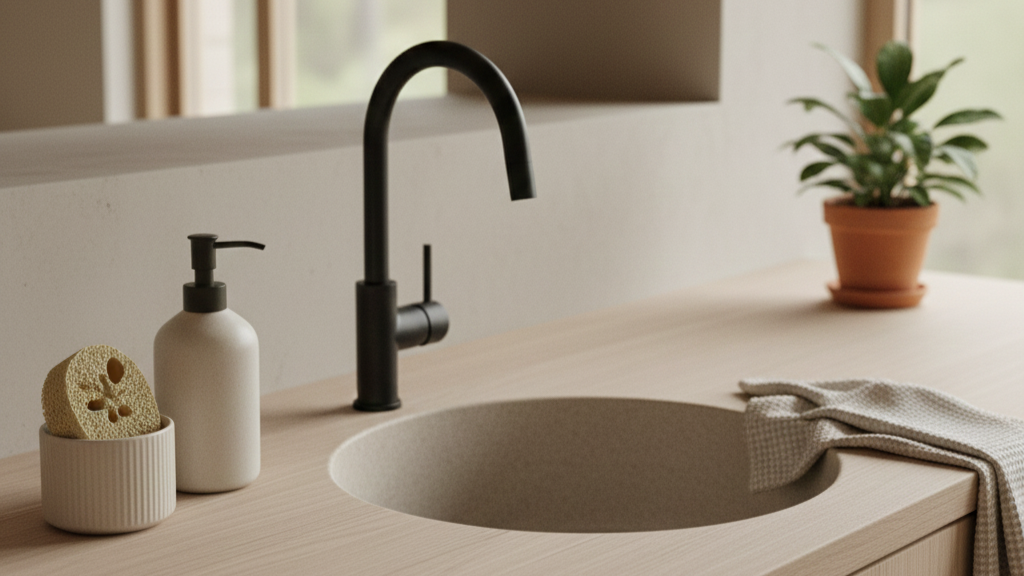
A kitchen feels calmer when it’s easy to reset.
Behavioral studies show that people are more likely to clean immediately when the tools are visible, pleasant, and easy to grab.
What helps:
- One designated cleaning zone
- Tools that look intentional, not industrial
Practical fix:
- Create a small sink-side setup with:
- soap dispenser
- sponge holder
- folded cloth
This removes friction and keeps mess from piling up.
👉 Good product links here:
Soap dispensers, sponge holders, microfiber cloths
7. Use Vertical Space — But Calmly
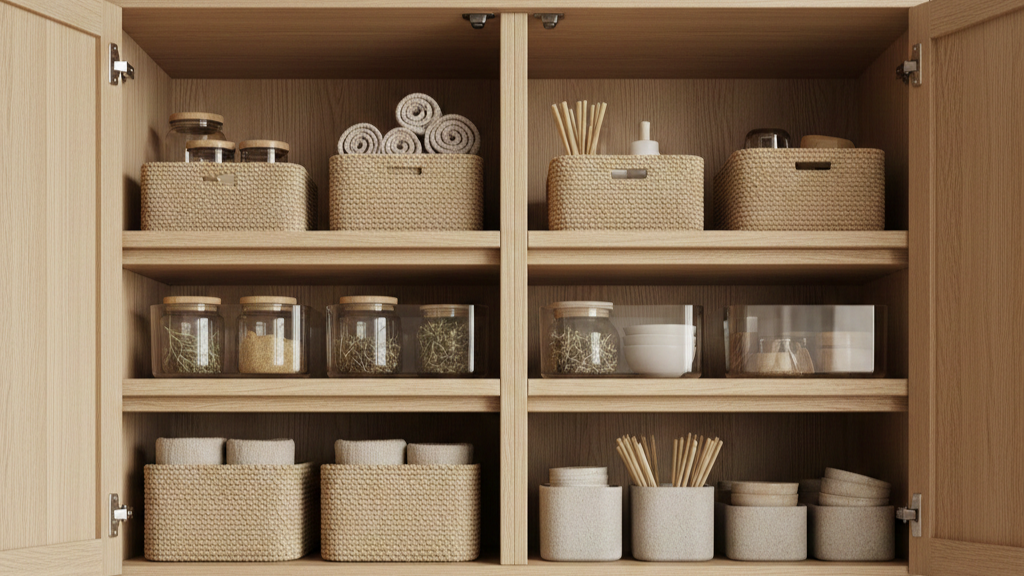
Vertical storage is essential in small kitchens, but too much open storage can increase visual stress.
The trick is partial visibility.
What helps:
- Containing vertical storage visually
- Avoiding mixed, exposed items
Practical fix:
- Use shelf risers inside cabinets, not open shelves
- Choose bins or containers instead of loose stacking
👉 Good product links here:
Shelf risers, cabinet bins, stackable organizers
Final Thoughts
A calm kitchen isn’t about perfection or minimalism — it’s about reducing mental effort.
When fewer decisions are required, when visual noise is reduced, and when daily routines flow more easily, even a small apartment kitchen can feel supportive rather than stressful.
The most effective changes are often the quietest ones.
Pingback: Why Your Living Room Feels Messy Even When It’s Clean - peacefulmindliving.com